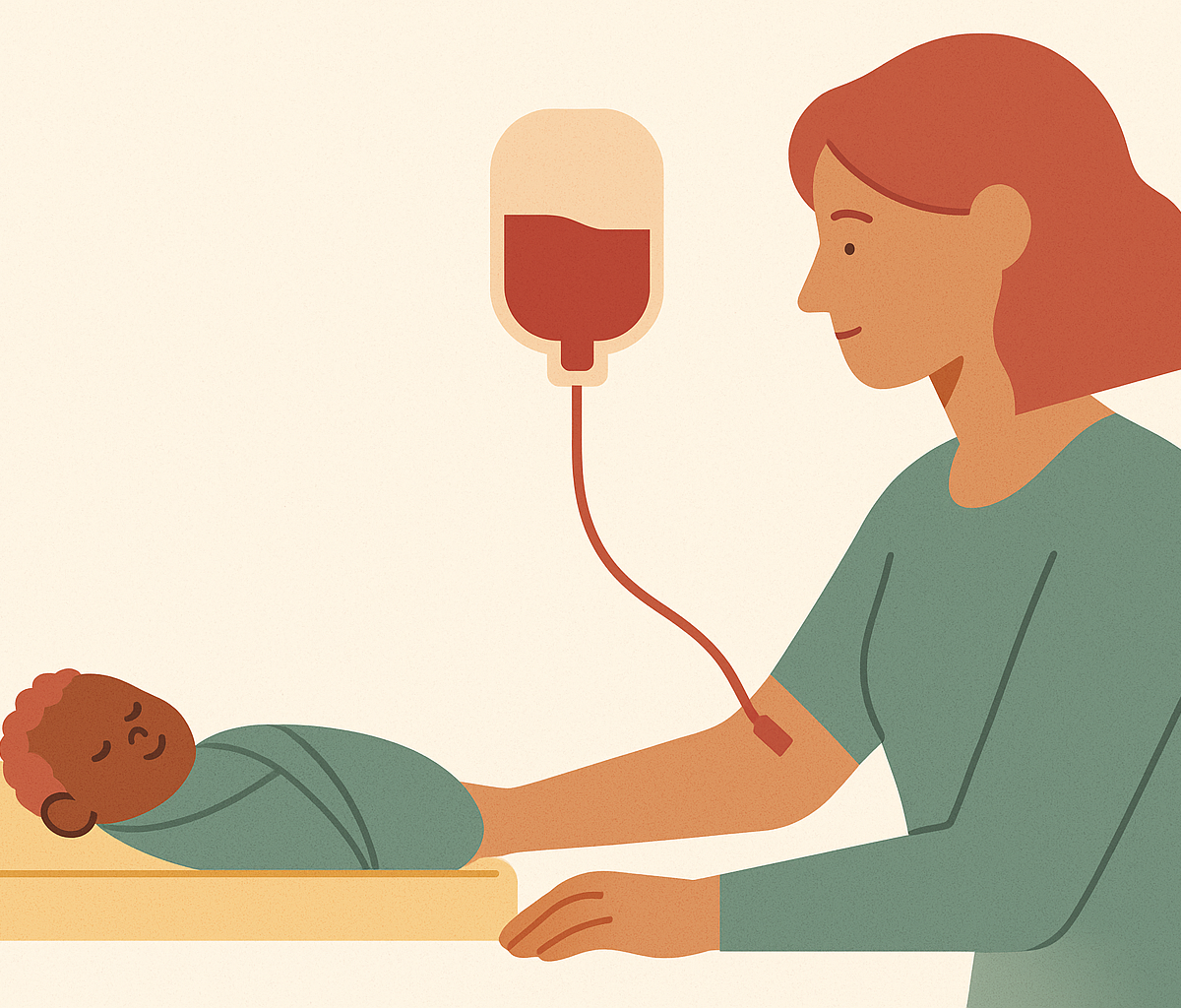
What Birth Center and Home Birth Parents Need to Know About Sample Collection
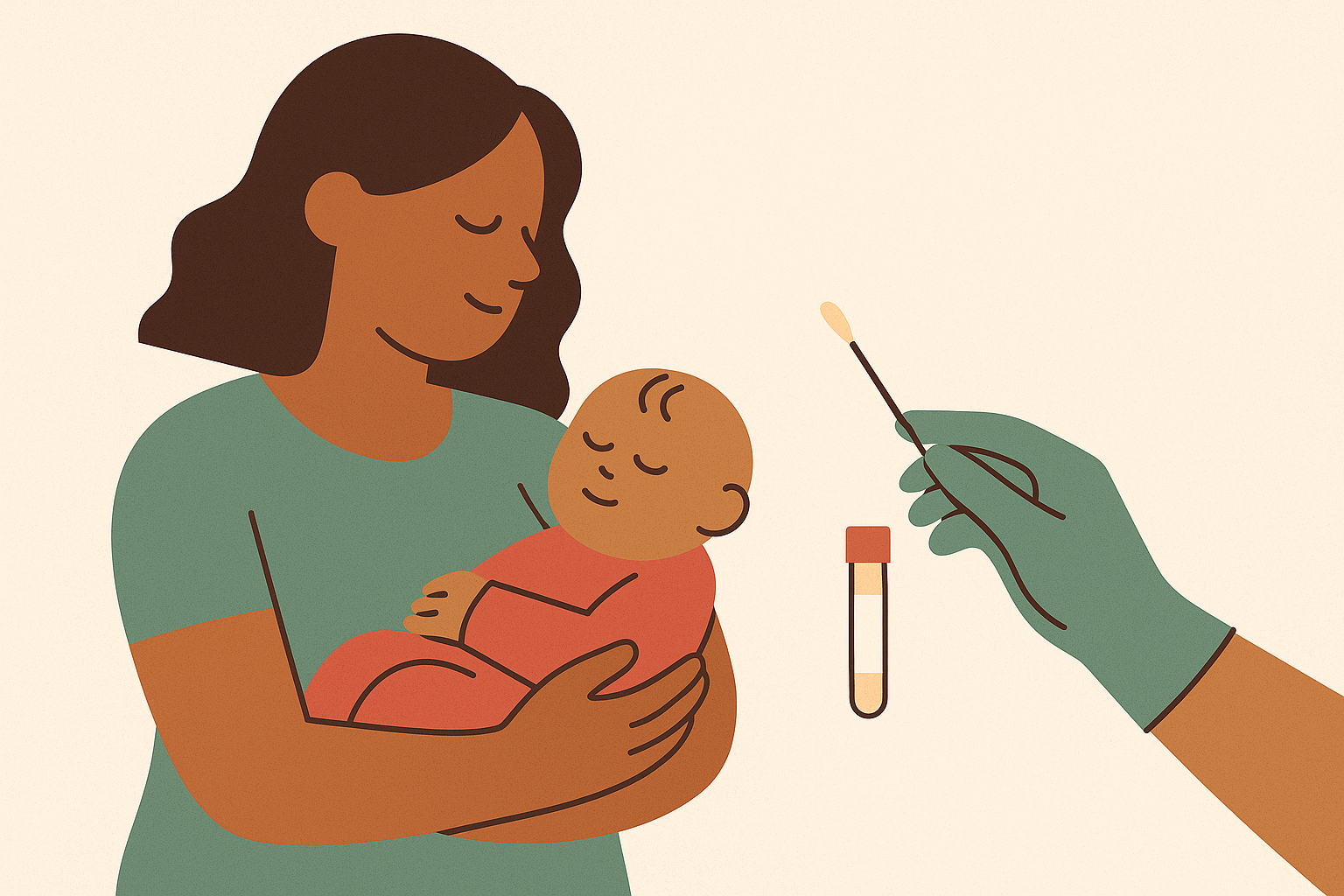
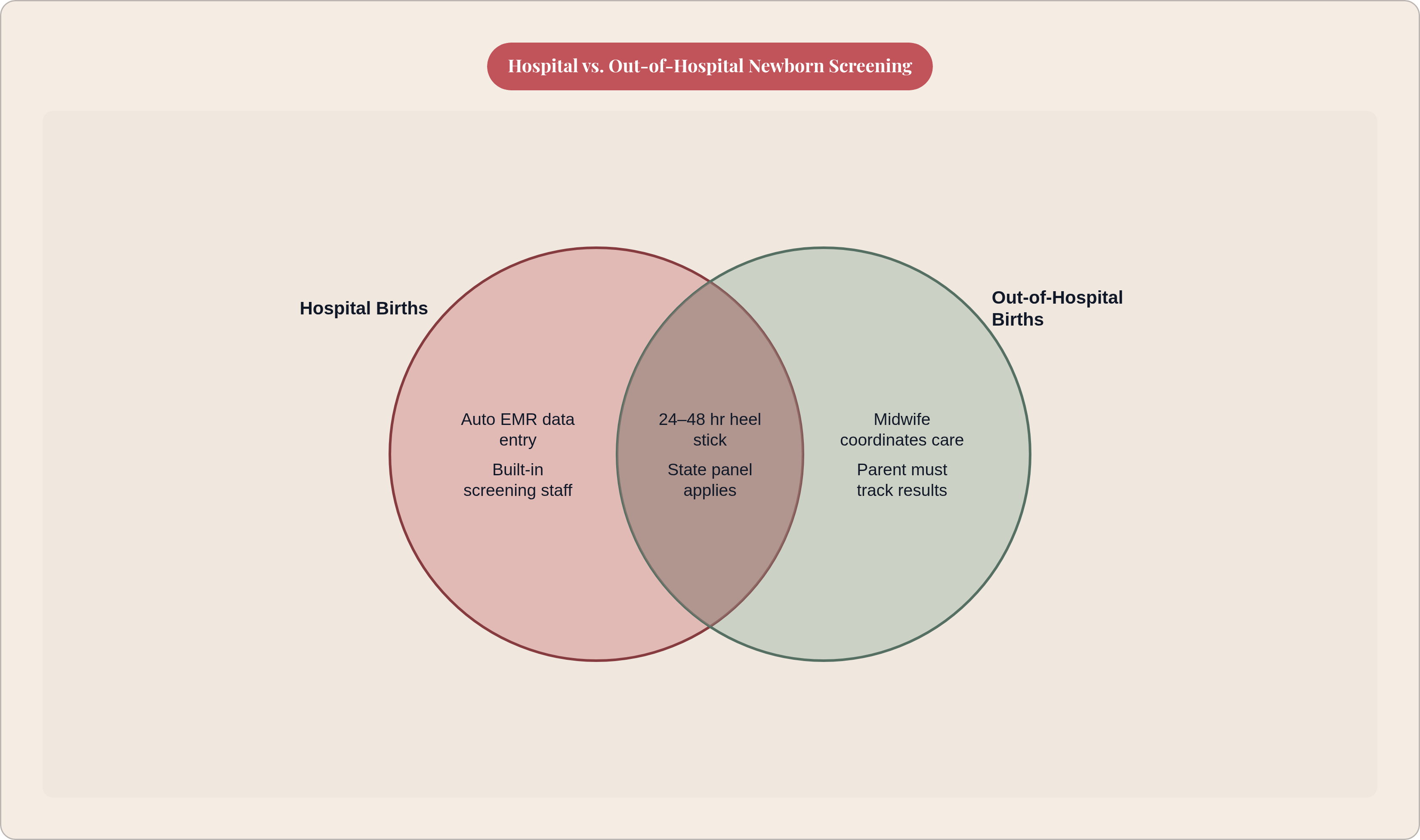
Newborn screening is the one piece of postnatal care that hospitals handle automatically and out-of-hospital births don't. When a baby is born at home or in a birth center, the job of making sure that screening happens correctly, on time, and with a complete paper trail falls on the parents and midwife instead of a hospital system built to do it without anyone asking. Roughly 1.5% of U.S. births happened outside a hospital in 2023, and against about 3.6 million births in 2024, that works out to tens of thousands of newborns a year whose screening depends entirely on whether someone got the logistics right beforehand. In Idaho, home birth accounts for 4.7% of deliveries; in Montana, 3.9%. That's not a fringe scenario, and it's routine enough that it deserves the same planning as choosing a provider or packing a birth bag, and I'd argue it deserves more.
What newborn screening actually tests for and why missing it has consequences
Three separate procedures travel under one name: the dried blood spot test (the heel stick, if you've heard it called anything), pulse oximetry for critical congenital heart disease, and a hearing screen. The blood spot carries the longest history of the three, and it covers the most ground.
Worth knowing why this whole field exists. In the early 1960s, Dr. Robert Guthrie built a test for phenylketonuria, a metabolic disorder that leaves a newborn looking completely fine while it quietly wrecks the brain over the following weeks, with symptoms showing up only after the damage is done. Guthrie's test caught PKU early enough to act, usually with a modified diet, and it changed the outcome for those kids entirely. Catch what the eye can't see before the body pays for it: that's still the whole premise of newborn screening, sixty years later.
As of July 2024, the federal Recommended Uniform Screening Panel lists 38 core conditions and 26 secondary ones. But the RUSP is a recommendation, not a mandate. Each state builds its own panel, and the spread is wide: some states test for roughly 30 conditions, others for more than 70. A parent who assumes their state screens for everything on the national list is often wrong about that. Results typically land within days, early enough to start treatment before real harm sets in, but only if the sample was drawn and sent in correctly to begin with.
How the federal screening framework is structured and where state variation creates uneven coverage
HHS's Secretary approves RUSP additions after a formal review, most recently Duchenne Muscular Dystrophy and Metachromatic Leukodystrophy in December 2025, following Krabbe Disease in 2024. None of that obligates a single state to actually adopt them.
Thirteen states have passed laws requiring alignment with the RUSP; Virginia joined them in 2025. That covers roughly 68% of U.S. births. The rest, nearly a third of babies born in this country, get screened according to whatever list their home state separately decided on, federal recommendation or not. And the system got messier still in April 2025, when the Advisory Committee on Heritable Disorders in Newborns and Children, the body that historically reviewed evidence and proposed RUSP additions, was terminated. What that does to the pace of future additions is genuinely unclear right now, and nobody in the field has given me a confident answer on that one.
For a family planning an out-of-hospital birth, this is homework, not trivia. Look up your state's actual panel before the birth, and don't assume the federal list covers you, because for close to a third of babies, it doesn't fully. Families who want more coverage than their state offers can get supplemental screening through private labs, and that's a conversation to have with a midwife or pediatrician well before labor starts, not after the baby's already here.
The timing rules for sample collection and what happens when they are missed
Most states want the blood spot drawn between 24 and 48 hours after birth. That window isn't arbitrary. Draw too early, before 24 hours, and certain metabolic markers simply haven't built up to detectable levels yet in the baby's blood. The sample can miss a real condition purely because it looked too soon, and when that happens, a second draw isn't optional.
This isn't a home-birth problem specifically. Hospitals discharging babies earlier and earlier have pushed plenty of hospital-born infants into pre-24-hour collection too, which has driven up false-negative risk across the board. Out-of-hospital births run the same risk whenever collection gets rushed: a home visit scheduled too soon, a birth center trying to work around a family's early departure.
Pulse oximetry should also wait past the 24-hour mark. Hearing screening has more slack; it needs to happen before one month of age, which still isn't generous but gives families a little room. At least 12 states, by the most recent count, also require a routine second blood spot around two weeks out. Know before the birth whether your state is one of them, because building that second draw into the plan now beats scrambling for it two weeks in, with a newborn, on no sleep. Missing a window doesn't sink screening for good, but it does mean a re-draw, delayed results, and, if something's actually wrong, a delayed diagnosis right when early detection mattered most.
What correct blood spot collection actually involves and where things go wrong
The heel stick sounds simple. In trained hands, it is, but the technique has real specificity to it. The puncture goes on the medial or lateral plantar surface of the heel, not the fingertip, not wherever's convenient. Blood drops straight onto the filter paper from the puncture site; the heel itself never touches the paper.
Each circle on the card needs one clean application, filled fully. No stacking drops, no dabbing from both sides. Once collected, the card lies flat, off any surface, drying for at least three hours before it goes anywhere. Sunlight, heat, humidity, all of it degrades the sample during that stretch, so where the card sits for those three hours actually matters.
Cards expire, and an expired one gets bounced by the lab outright, which means a re-draw plus days of delay that count. Some midwives reach for a syringe instead when a heel stick isn't cooperating, but those specimens clot, layer, or contaminate more easily, and labs reject them more often. The direct heel stick to card is the standard, and it earned that spot. Bad technique, whether from rushing, drying the card wrong, or grabbing an expired one, produces false positives and false negatives alike, and neither is harmless: a false positive sends a family into panic and follow-up testing they didn't need, a false negative sends a sick baby home with nobody the wiser. CLSI publishes NBS01, an illustrated reference built specifically for people outside the newborn screening lab who still have to do this correctly, and any midwife doing collection should know it cold.
What gets recorded on the screening card and why complete paperwork affects the baby's results
The card has two parts: the filter paper where blood goes, and a demographic section that needs to be filled out completely. That second part gets shortchanged more than it should.
The required fields: baby's name, sex, birth weight, date and time of birth, date and time of collection, gestational age, feeding type, antibiotic exposure. Some conditions have reference ranges that shift with gestational age or birth weight, so a card missing that context can produce results the lab literally can't interpret. That's another re-draw stacked on whatever delay already happened.
In a hospital, the electronic medical record spits this out automatically. At a home birth or birth center, a midwife or parent writes it by hand, in the moment, usually while everyone in the room is running on fumes and thinking about the baby, not the form. Know ahead of time what information the card needs so it actually gets written down right when the moment arrives.
How to plan for newborn screening before the birth and what to confirm with your midwife
The first conversation, and have it well before labor: is your midwife equipped to draw the blood spot, run pulse oximetry, and arrange the hearing screen? Not every midwife carries all three, and that's not automatically a red flag, but it does mean a backup plan needs to exist for whatever's missing.
If a midwife can't handle a piece of it, line up the alternative in advance rather than figuring it out postpartum. A second trained midwife, a birth center set up for screening, a nearby hospital, clinic, or health department all work. Confirm the midwife is carrying current, unexpired cards, specifically the one for your state; these vary state by state, and using the wrong card isn't a minor inconvenience.
Ask what your state's panel actually covers and whether a two-week second screen applies to you. Find out where the finished card gets sent and who's responsible for getting it there; that handoff is exactly the detail that slips through the cracks when nobody's explicitly on the hook for it. For hearing screening and pulse oximetry, confirm the equipment exists and who runs it, or get a referral lined up if it doesn't. Some parents want broader coverage than their state's panel offers; private labs run expanded panels for exactly this, and it's worth raising with a midwife or pediatrician while there's still time to do something with the answer.
What to do in the days after birth to make sure screening is complete and results are received
Once the sample's drawn, confirm it actually made it to the lab, since the heel stick happening is not the same thing as the card being submitted.
Results generally come back within days and route to a pediatrician or primary care provider. If there's no follow-up visit scheduled yet, get one on the calendar now; that visit is also how any required second screen gets tracked instead of quietly forgotten. If results haven't shown up in the expected window, chase it down directly, either through the midwife or the state's newborn screening program. Most states keep a contact line open specifically for this.
A positive or abnormal result is not a diagnosis. It means more testing, fast, and answering that callback promptly is the entire reason the system works. If a second screen is required, plan it now, usually timed to the two-week visit, rather than letting it become an afterthought. Parents who moved states mid-pregnancy, used an out-of-state midwife, or aren't sure which lab got the card should call the state program directly and confirm the sample arrived and is being processed. A baby born at home deserves the same protection a hospital hands out by default, and that just doesn't happen unless someone plans for it.