Is Cord Blood Collection Safe for Mother and Baby
The procedure is safe, but delayed cord clamping shrinks the usable sample.
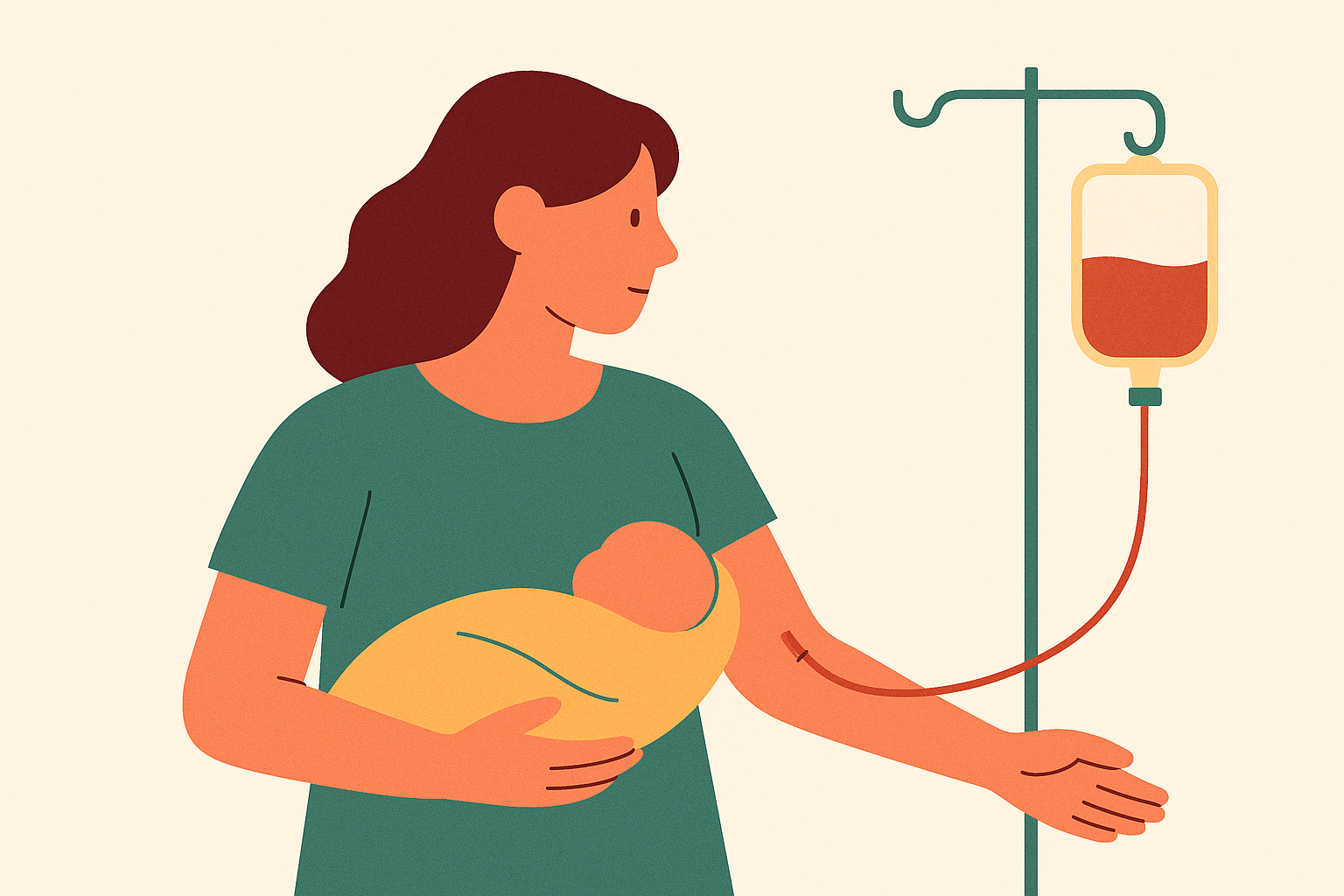
Cord blood collection is one of the least understood procedures in modern obstetrics, and one of the safest. The needle never touches the mother's bloodstream or the baby's, because the cord has already been clamped and cut by the time anyone reaches for a collection bag. I've sat through enough of these draws to know where the real tradeoffs live, and it isn't in the safety data. It's in a scheduling decision most families never see coming until they're already in the delivery room.
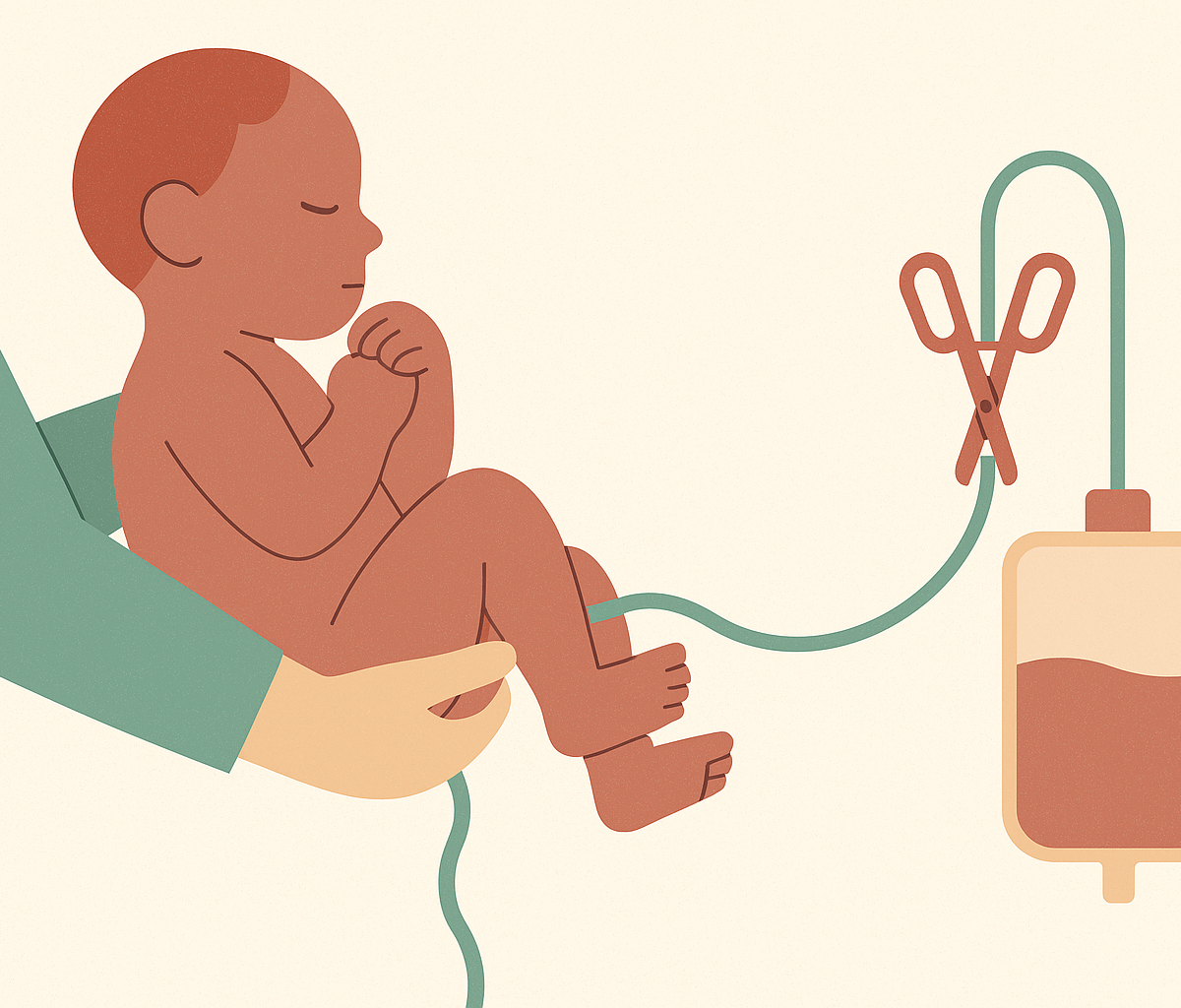
The mechanics are unglamorous once you get past the anxiety people bring to them. Collection happens during the third stage of labor, the window between the baby's birth and the delivery of the placenta, so the cord is already separated from the newborn before anyone touches it. The same OB-GYN or midwife who delivered the baby inserts a sterile, large-bore needle into the detached cord and lets gravity do the work, draining blood into a bag pre-loaded with anticoagulant. Nobody pages a specialist. The whole draw has to finish within about 15 minutes of birth to keep the sample viable, and it looks identical after a vaginal delivery or a cesarean. Average yield runs around 110 mL per placenta, with 40 mL generally the floor for a sample worth banking at all. The cord has no nerve endings, so neither mother nor baby feels a thing.
Why the procedure carries no meaningful risk to the mother
Her body barely enters into it. The blood comes from a cord already separated from both patients, so her circulation and recovery never touch the draw. No evidence links collection to changes in third-stage labor or to higher rates of postpartum hemorrhage. The delivery team doesn't deviate from the standard plan for it; they add one step on tissue that's already been cut away.
Her real job happened earlier, when she signed consent before labor started. Everything after that is procedural.
There's one exception worth naming: hemorrhage, fetal distress, anything that pulls the full attention of the team. Collection gets dropped without a second thought when that happens. Staff make that call in real time, and the health of mother and baby overrides a research sample every time. That's the whole point of the protocol, actually, to make sure a collection step never competes with patient care in a tense moment.
Why the procedure carries no meaningful risk to the newborn
Same logic, flipped around. The cord is clamped and cut before collection starts, so the infant's circulation never enters the picture, and no blood leaves the baby's body. The clinical literature hasn't documented complications tied to the collection process itself.
What the safety finding buys is access to something genuinely rare. Cord blood carries roughly ten times the concentration of hematopoietic stem cells you'd get from a typical bone marrow collection, and it's about half as likely to trigger rejection compared to stem cells from an adult donor. Hospitals threw this stuff out with the rest of the delivery waste for most of the 20th century. Nobody thought twice about it. Now they don't, because it turned out to be both safe to collect and biologically dense in a way almost nothing else at birth is.
The real tension: how delayed cord clamping affects collection yield
Here's where it actually gets complicated, and none of it touches safety. Delayed cord clamping, waiting one to three minutes after birth or until the cord stops pulsating, carries a recommendation from the World Health Organization, especially for preterm infants. The 2020 guidance from the American College of Obstetricians and Gynecologists lays out the benefits plainly: better transitional circulation, less need for transfusion, lower rates of necrotizing enterocolitis and intraventricular hemorrhage.
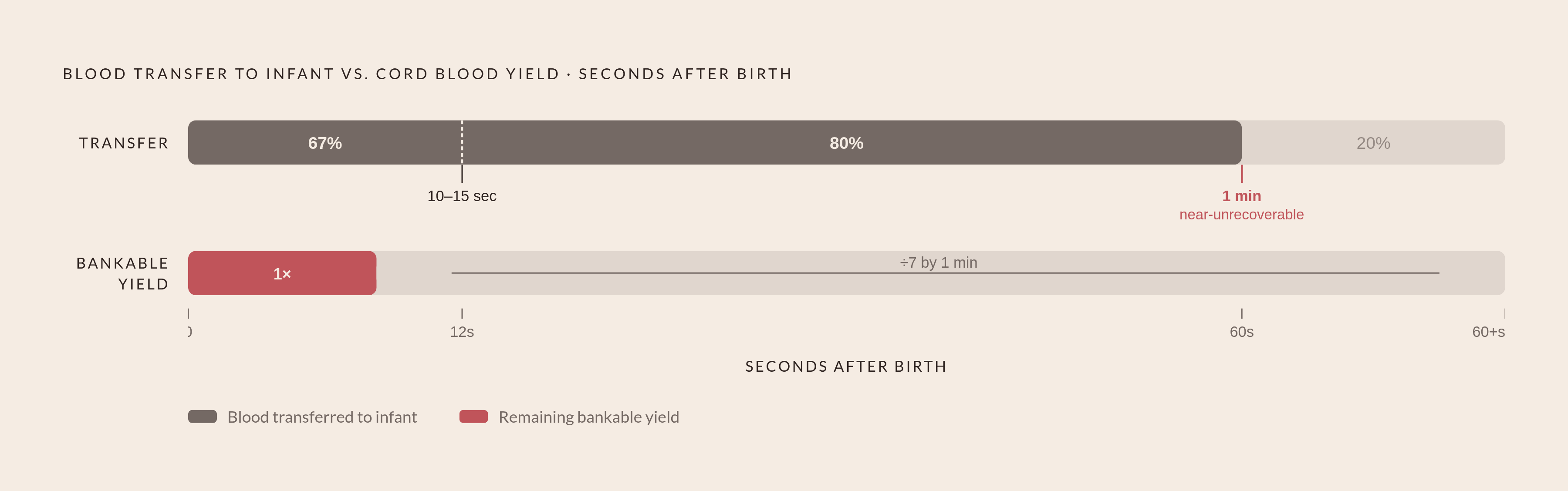
The math working against collection is blunt. The longer clamping is delayed, the more blood moves from placenta to infant, leaving less behind to draw. By 10 to 15 seconds after birth, 67% of that blood has already transferred; by one minute, that number hits 80%. Data compiled by Parents Guide Cord Blood shows usable yield dropping by a factor of seven once clamping is delayed past that one-minute mark. Close to the entire gap between a clinically useful sample and nothing worth banking sits inside that sixty-second window.
Nobody's health is on the table here, since delayed clamping doesn't harm the mother and collection doesn't harm the baby. What's on the table is a question of what a specific birth is optimizing for, and ACOG and the Mayo Clinic both land on the side of placental transfusion when the two goals compete. In a healthy, full-term birth the tension barely registers; there's more total volume either way, so both goals get served reasonably well. Preterm delivery is where it turns sharp. Preterm infants are precisely the population that benefits most from delayed clamping, and precisely the population where yield drops hardest against them. If banking matters to a family with a preterm birth on the horizon, this is the variable to plan around.
The safety protocols that govern collection and storage quality
None of this happens in a vacuum. Every donor gets screened: a questionnaire plus a review of medical history looking for red flags around transmissible disease or genetic risk. Maternal blood gets tested within seven days of birth for HIV-1, HIV-2, hepatitis B, hepatitis C, HTLV-I, HTLV-II, syphilis, and whatever additional markers local regulation adds to that list.
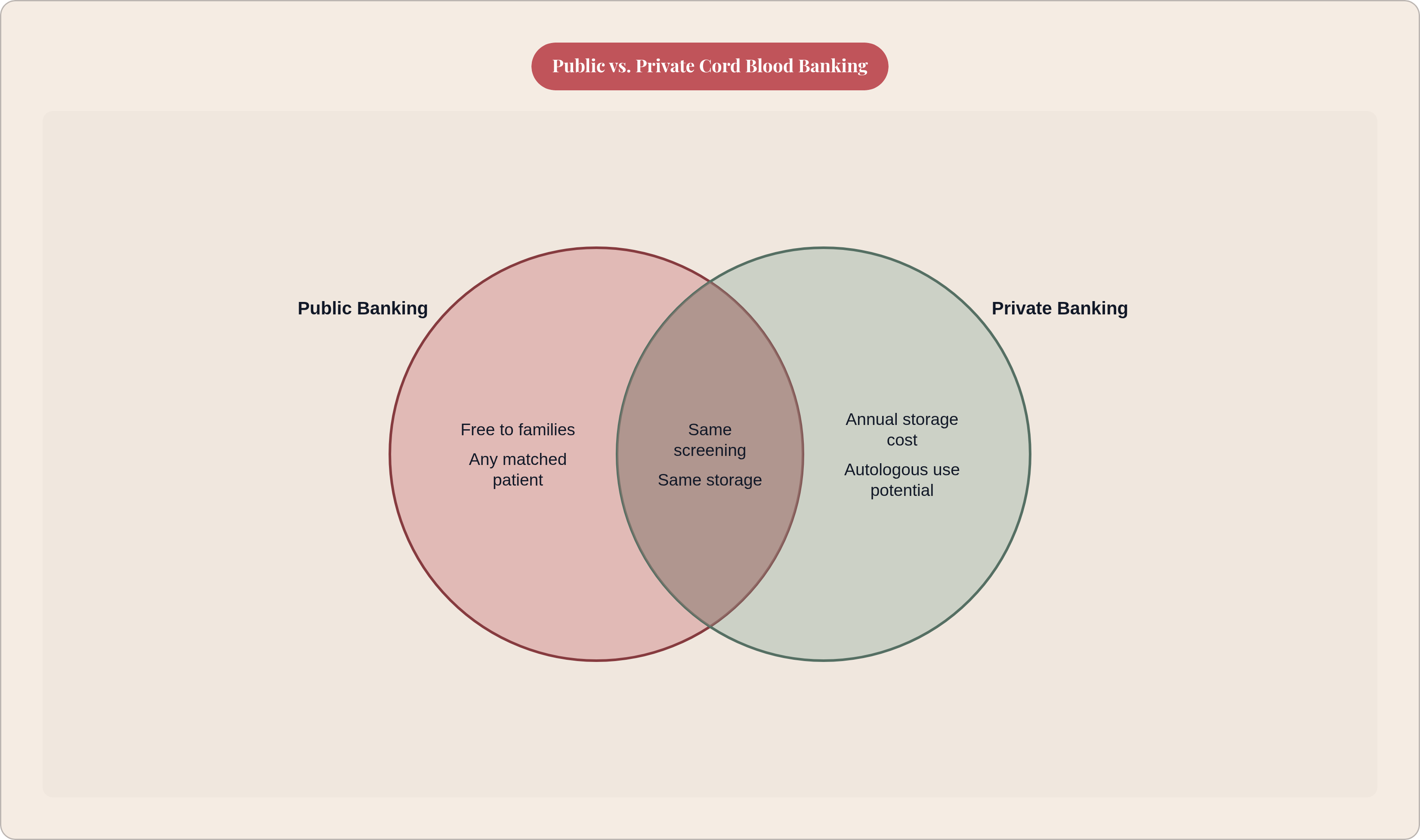
The draw itself uses a closed bag system, limiting exposure to airborne or surface contaminants, and the staff performing it train specifically for the procedure. After the draw, the sample moves fast: to the lab, treated with anticoagulant, then frozen at negative 196 degrees Celsius, cold enough to hold viability for decades. A unit headed to a public registry goes through the identical screening and freezing process as one headed to a private family bank. Only the outcome differs. The protocol stays fixed.
The scale of therapeutic use that gives collection its medical weight
Cord blood was medical waste for most of the 20th century, tossed after every birth without a second thought. That changed once researchers recognized it as the richest known source of hematopoietic stem cells outside of bone marrow. More than 80 diseases and conditions get treated with cord blood stem cells today, among them leukemias, lymphomas, blood disorders like sickle cell disease, and a range of inherited metabolic conditions.
The global transplant count depends a lot on who's counting. MiracleCord puts the total anywhere from more than 45,000 to more than 85,000 cord blood transplants worldwide, with the lower figure showing up elsewhere in other tallies. Different methodologies, presumably; the direction isn't in dispute, only the exact altitude.
In the U.S., the numbers get more concrete. HRSA's 2025 data shows more than 247,900 cord blood units available through the C.W. Bill Young Cell Transplantation Program registry, with more than 129,700 units collected through the National Cord Blood Inventory specifically. HRSA also estimates roughly 18,500 people in the U.S., ages 0 to 74, could benefit from a bone marrow or cord blood transplant in a given year. Against that need, the Center for International Blood and Marrow Transplant Research logged 22,579 hematopoietic cell transplantations in 2024. Supply and demand still aren't lining up cleanly, and they probably won't for a while.
Emerging evidence for cerebral palsy and neurological conditions
This is the frontier. Trials are now testing cord blood infusion for cerebral palsy, autism, and a handful of other neurological conditions, and the data has moved past anecdote into something with real statistical weight behind it.
A 2025 meta-analysis in Pediatrics pooled individual patient data across 11 studies covering more than 400 children with cerebral palsy. Children who received a cord blood infusion showed greater gains in gross motor function at both the six-month and twelve-month marks, with 68% of treated kids outperforming controls. Higher cell doses tracked with larger gains, younger children showed the clearest benefit, and most of these studies used the child's own banked cord blood. Autologous use, in other words: the exact scenario that makes this research matter to a family deciding whether to bank privately.
Separately, the CORD-SaFe study, published in eBioMedicine in 2025, looked at autologous cord blood reinfusion in highly preterm neonates, a population nobody had studied closely before. The finding was modest but real: feasible and safe, in a genuinely high-risk group, with immune modulation as the suspected mechanism and preclinical models backing that pathway up. Early-stage work, and it deserves to be read as exactly that.
What public and private banking mean for the decision parents are actually making
The safety question is settled. What's left is a risk-benefit calculation with two very different paths attached to it. Public banking donates the unit to a registry where any matched patient can draw on it. It costs the family nothing and lines up directly with the clinical demand described above. Private banking reserves the unit exclusively for the family, at a cost, for a scenario, a healthy child with no known condition, that carries genuinely low odds of ever needing it.
ACOG, the American Academy of Pediatrics, and the American Medical Association land in roughly the same place: none recommend or advise against cord blood banking as blanket policy, but all three push back against treating private banking as routine biological insurance for a healthy family with no specific medical indication. The one clear exception, where both AAP and ACOG do recommend private banking outright, is when a full sibling already has a condition a cord blood transplant could treat. That's a concrete case built on evidence, not speculation, and it's the rare instance where the guidance stops hedging.
The 2025 neurological research is starting to shift that calculus for families with specific reason to anticipate neurological risk. A settled recommendation may still be a ways off, and I wouldn't oversell where the evidence stands today, but the odds look different now than they did a decade ago, and that's worth raising at a prenatal appointment rather than dismissing out of hand.
Whichever path a family picks, the safety story doesn't change. Collection, screening, timing: all of it applies the same way whether the unit ends up in a public registry or a private freezer. What actually moves the needle is timing the conversation itself. Tell your provider your preference on delayed cord clamping and your intent to bank well before labor starts, so the birth plan reflects it rather than scrambling to accommodate it. Get that conversation done weeks out, and the yield-versus-benefit tension stops being a decision made under fluorescent lights with a nurse waiting for an answer.