Banking a Sibling's Cord Blood When an Older Child Has Sickle Cell or Thalassemia
Cord blood banking becomes medical strategy when a sibling has sickle cell or thalassemia.
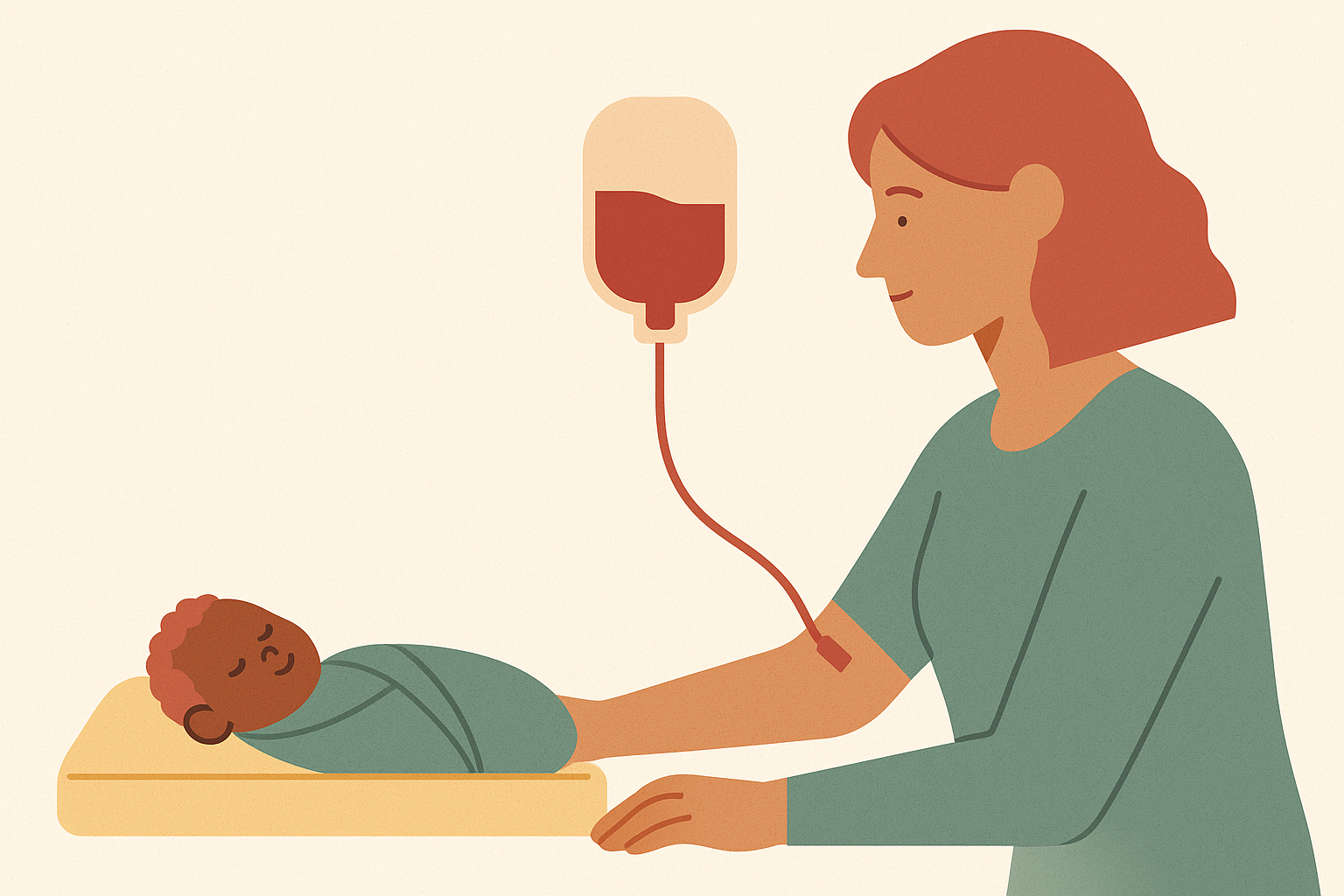
When a family already has a child with sickle cell disease or thalassemia, banking a new baby's cord blood is a specific bet that this particular baby's stem cells might cure the sibling who already has the disease, not a hedge against some unlikely future illness. That changes banking from a consumer decision into a medical one, and it runs on a clock that closes at birth.
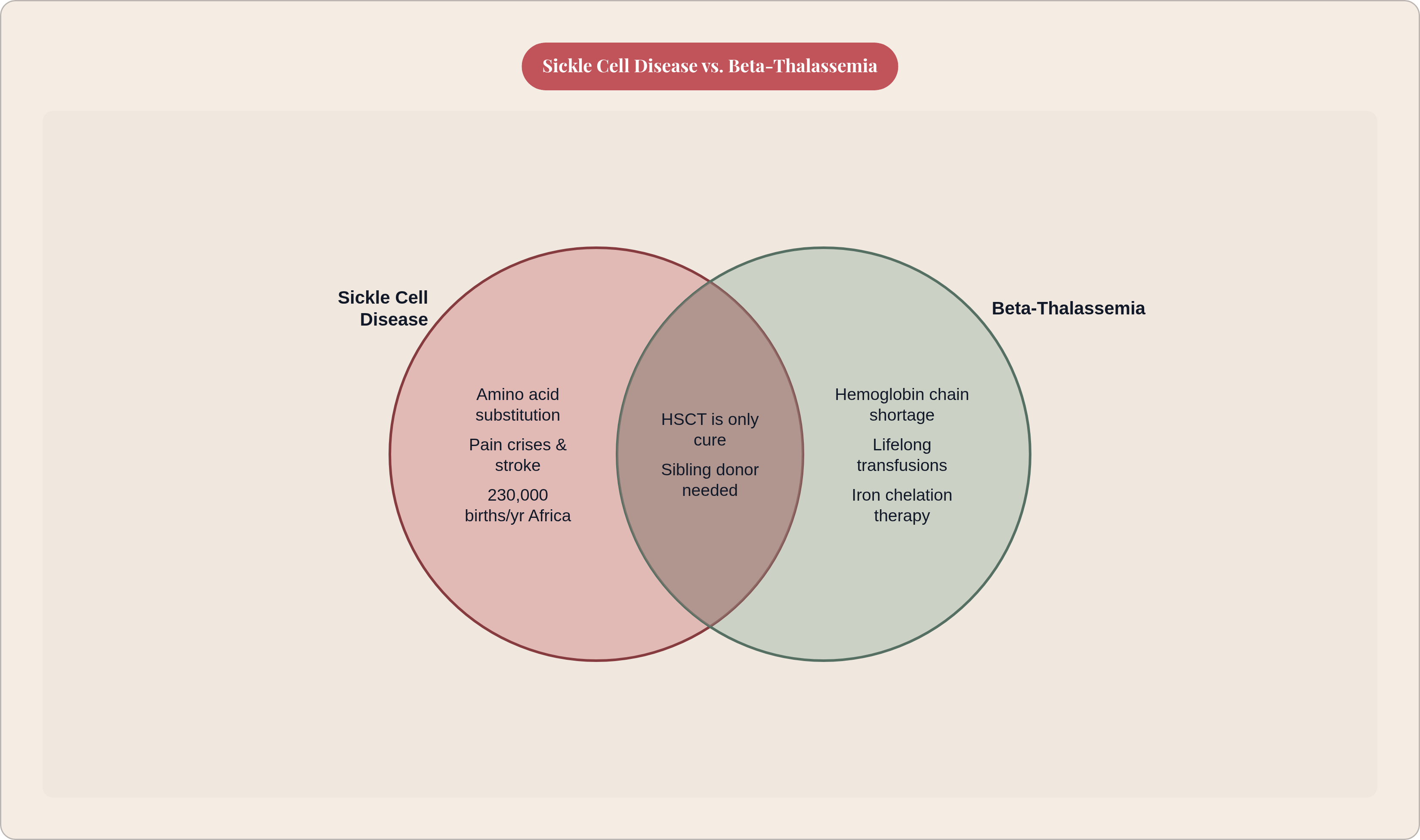
Both diseases are inherited blood disorders. Sickle cell disease comes from a single amino acid substitution that causes red blood cells to distort under stress, blocking vessels and triggering pain crises, stroke, and organ damage starting in childhood. Beta-thalassemia comes from a shortage of properly formed hemoglobin chains, which forces patients into a lifetime of transfusions and iron chelation therapy just to stay stable. Neither disease is episodic. Both get worse with age if left unmanaged, and both take something from the patient that doesn't come back.
The numbers are not small. Global sickle cell disease births rose 13.7% between 2000 and 2021, and the number of people living with the disease grew from around 5.46 million to 7.74 million, a 41.4% increase. Sub-Saharan Africa sees roughly 230,000 affected births a year; North America sees about 2,600, and Europe about 1,300. Beta-thalassemia carriers make up an estimated 1.5% of the world's population, somewhere between 80 and 90 million people, and India alone sees 12,000 to 14,000 severe births annually. Over 90% of American children with sickle cell disease now survive into adulthood, but cumulative organ damage drives a steep rise in mortality in their twenties and thirties; median survival runs roughly half that of unaffected siblings. Ordinary treatment manages symptoms rather than curing either disease. One intervention does, and it depends entirely on a decision families have to make months before anyone knows if they'll need it.
Why allogeneic transplant is the only established cure, and why the donor source decides everything
Sickle cell disease and thalassemia both start in the bone marrow, in the stem cells that make blood. Those same cells show up in cord blood in large numbers right after birth. An allogeneic hematopoietic stem cell transplant, HSCT for short, replaces a patient's defective marrow with healthy donor stem cells that go on to make normal hemoglobin for the rest of that person's life. Done once, it ends the disease instead of managing it.
A patient's own banked cord blood is useless here, worth saying plainly since it trips people up. Their cells carry the same mutation that caused the disease in the first place. There's nothing to transplant back in. The donor has to come from somewhere else, and where that donor comes from decides almost everything about the outcome.
Transplants from an HLA-matched sibling donor achieve disease-free survival above 90%. Transplants from unrelated or partially matched donors carry meaningfully higher rates of graft failure, graft-versus-host disease, and death. Cord blood brings a few practical advantages over bone marrow or peripheral blood as a source: it's collected at birth with zero risk to the infant, it carries a lower rate of clinically significant graft-versus-host disease because the cells are immunologically less mature, and it sits ready in a freezer instead of requiring a donor search when the transplant is needed. HLA matching is also looser for cord blood. A 4-of-6 marker match is generally workable, where bone marrow usually needs 6-of-8 or full 8-of-8.
That 90%-plus cure rate assumes a matched sibling donor exists. Fewer than 18% of sickle cell patients in the US have one. Everything else in this piece is about that gap, and about the one moment families get to close it.
The 25% odds that make a new pregnancy a strategic moment
HLA markers come from one haplotype inherited from each parent. Run the genetics and each sibling has a 25% chance of being a full HLA match to another sibling, and a substantially higher chance of being a half match. For hemoglobinopathies, a matching sibling also has to be disease-free, not just a carrier, which pushes the combined odds of a matched, unaffected sibling down to somewhere between 1-in-8 and 1-in-16, depending on how the mutation is inherited.
One detail widens the pool slightly. Carrier siblings are acceptable donors for hemoglobinopathies, which is not true of inherited metabolic disorders, where a carrier's own metabolic function is too compromised to use. Here, a carrier's marrow works fine.
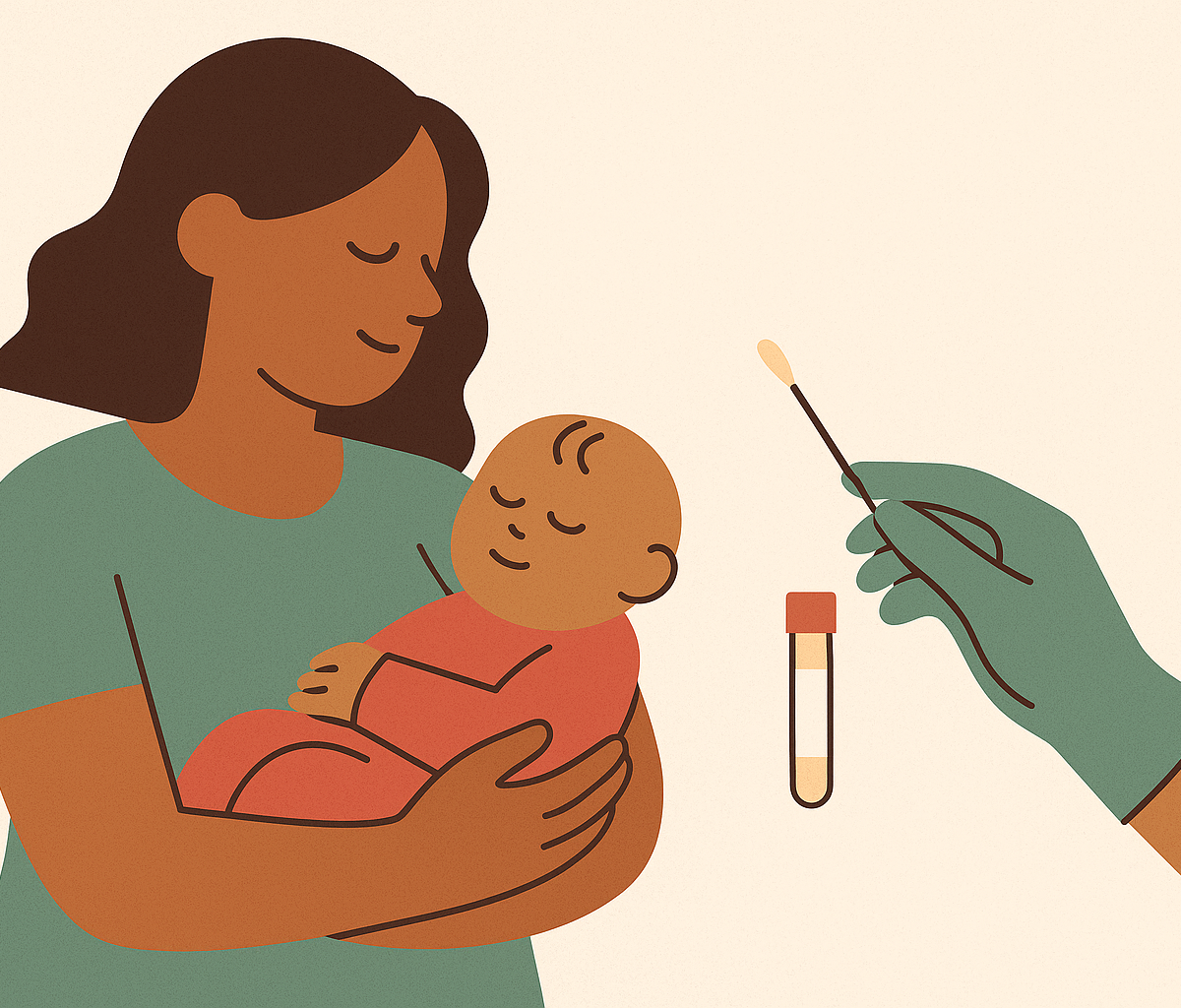
None of this has to stay theoretical. Typing the sick child's HLA markers ahead of time, and testing the newborn's cord blood at collection, tells the family within days whether they've got a match. What can't be undone is the timing of the collection itself. It happens at birth, in the minutes after the cord is clamped, and there is no second attempt. Families need a plan by around 34 weeks of pregnancy, since many hospitals require the collection kit shipped ahead of the due date. Miss that window and this baby's stem cells are gone for good, no matter how badly they end up being needed. A new pregnancy, in a family already living with sickle cell disease or thalassemia, carries an added weight beyond a new child arriving: it's the one shot at a cure for the child who's already sick.
What the transplant outcomes data actually show for sibling cord blood
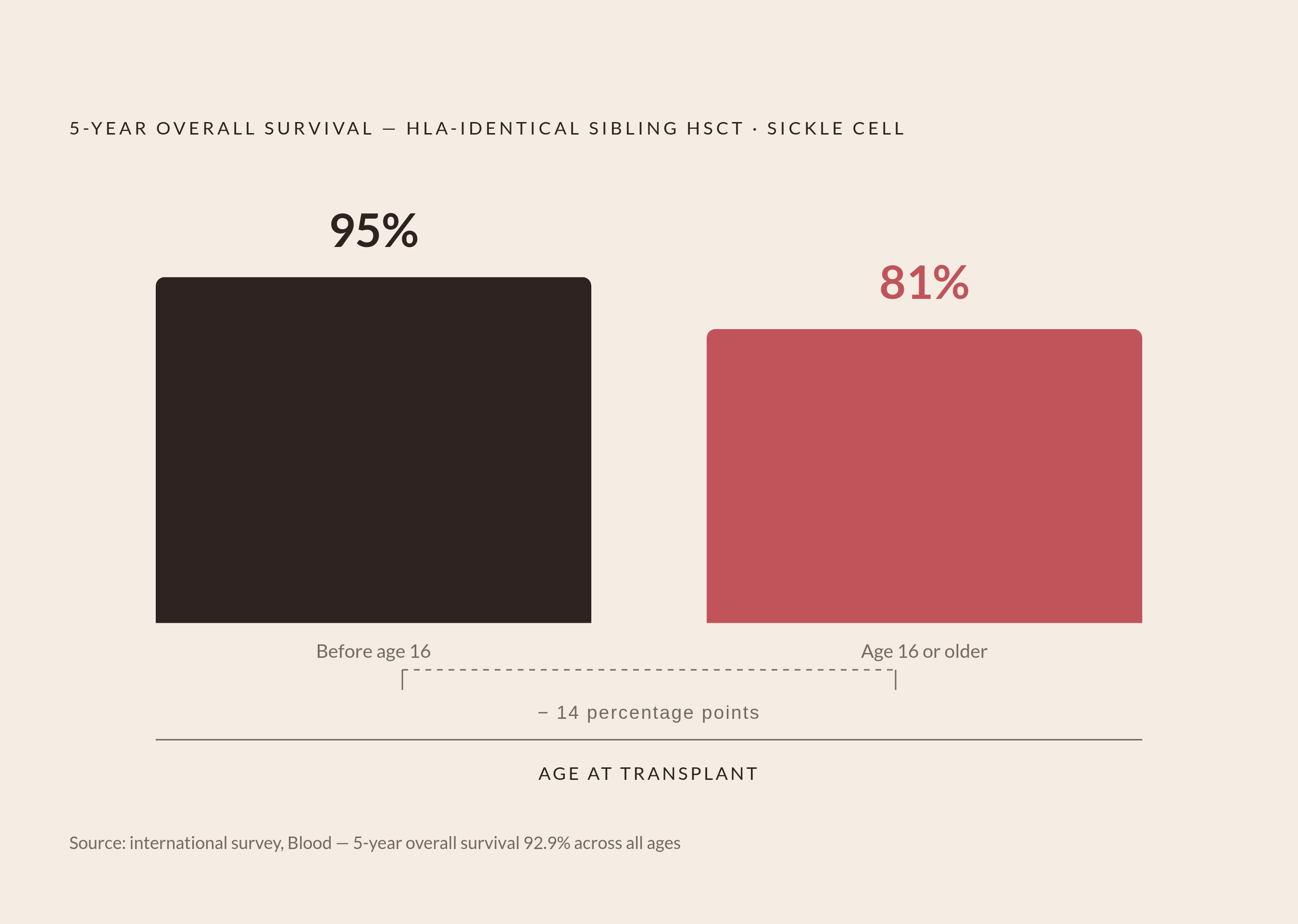
An international survey published in Blood looked at HLA-identical sibling HSCT for sickle cell disease and found 5-year event-free survival of 91.4% (95% CI, 89.6%–93.3%) and 5-year overall survival of 92.9% (95% CI, 91.1%–94.6%). Age at transplant turned out to be the biggest modifier: overall survival was 95% for patients transplanted before age 16, versus 81% for those transplanted at 16 or older. The case for early transplantation rests on that fifteen-point survival gap.
Cord blood and bone marrow from a matched sibling produce roughly equivalent outcomes: mortality under 5%, graft rejection in the 5% to 10% range, long-term survival close to 90%. For thalassemia, a study using fresh sibling cord blood reported estimated 5-year overall survival of 97.1% and thalassemia-free survival of 94.2%, with median follow-up of 45 months. A combined analysis pulling data from two dedicated public cord blood banks found 5-year overall survival of 100% for hemoglobinopathy patients transplanted with family-directed cord blood. That's about as strong a signal as this kind of data ever produces.
A large Blood registry study from 2013 confirmed that cord blood and bone marrow transplants from an HLA-identical sibling produce comparable long-term cure rates for the most common hemoglobinopathies, with one condition attached: adequate cell dose. That condition turns out to be the whole ballgame.
The cell dose problem and what families can do about it
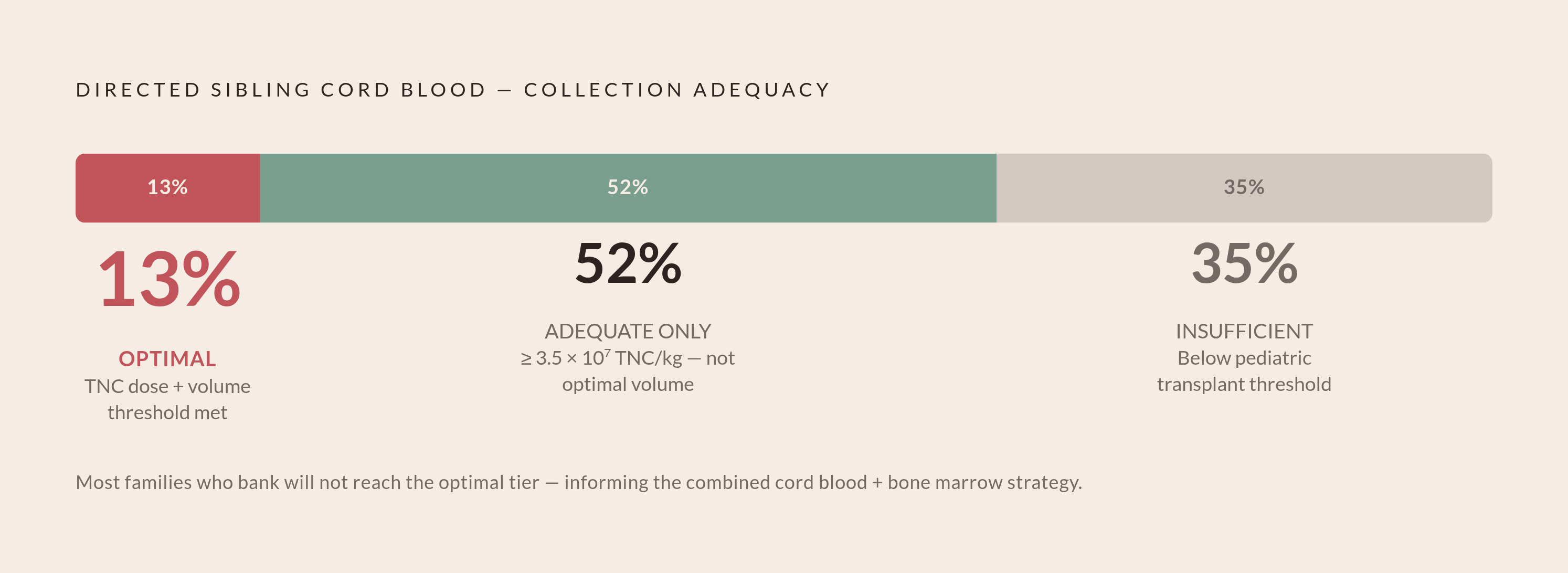
Total nucleated cell dose, TNC for short, is the single strongest predictor of whether a cord blood transplant engrafts. The 2013 Blood registry study tied equivalent outcomes to a threshold above 3.5 × 10⁷ cells per kilogram of the recipient's body weight. Below that line, the math gets worse fast.
Here's the part nobody likes to hear. Among directed sibling cord blood collections, 65% had cell counts adequate for pediatric allogeneic transplantation. Only 13% hit the TNC dose and volume considered optimal. Most banked units are usable, but the ideal case is the exception, not the rule, and families should go in knowing that.
A few things shift the odds. A larger baby, a well-executed collection, and a younger, lighter recipient all improve the ratio of cells to body weight, since the dose has to scale to the size of the person receiving it. Transplanting the sick sibling earlier, while they're still small, raises the odds that a given unit clears the threshold. When a unit comes back borderline, some transplant centers combine the stored cord blood with bone marrow collected from the same sibling donor, using both together to reach an adequate dose. That combination is part of why banking is worth doing even when the cord blood alone might fall short: it becomes one component of the transplant, not the whole plan. Storage duration isn't the constraint people assume, either; cord blood units have stayed viable after 29 years of cryopreservation. A family that banks early has time working for them, not against them.
How the directed banking process works from pregnancy through storage
Planning starts around 34 weeks, early enough that the delivering hospital has the collection kit in hand. HLA typing of the sick child should happen around the same time or earlier, so the family knows whether they've got a match the moment the newborn's cord blood is typed.
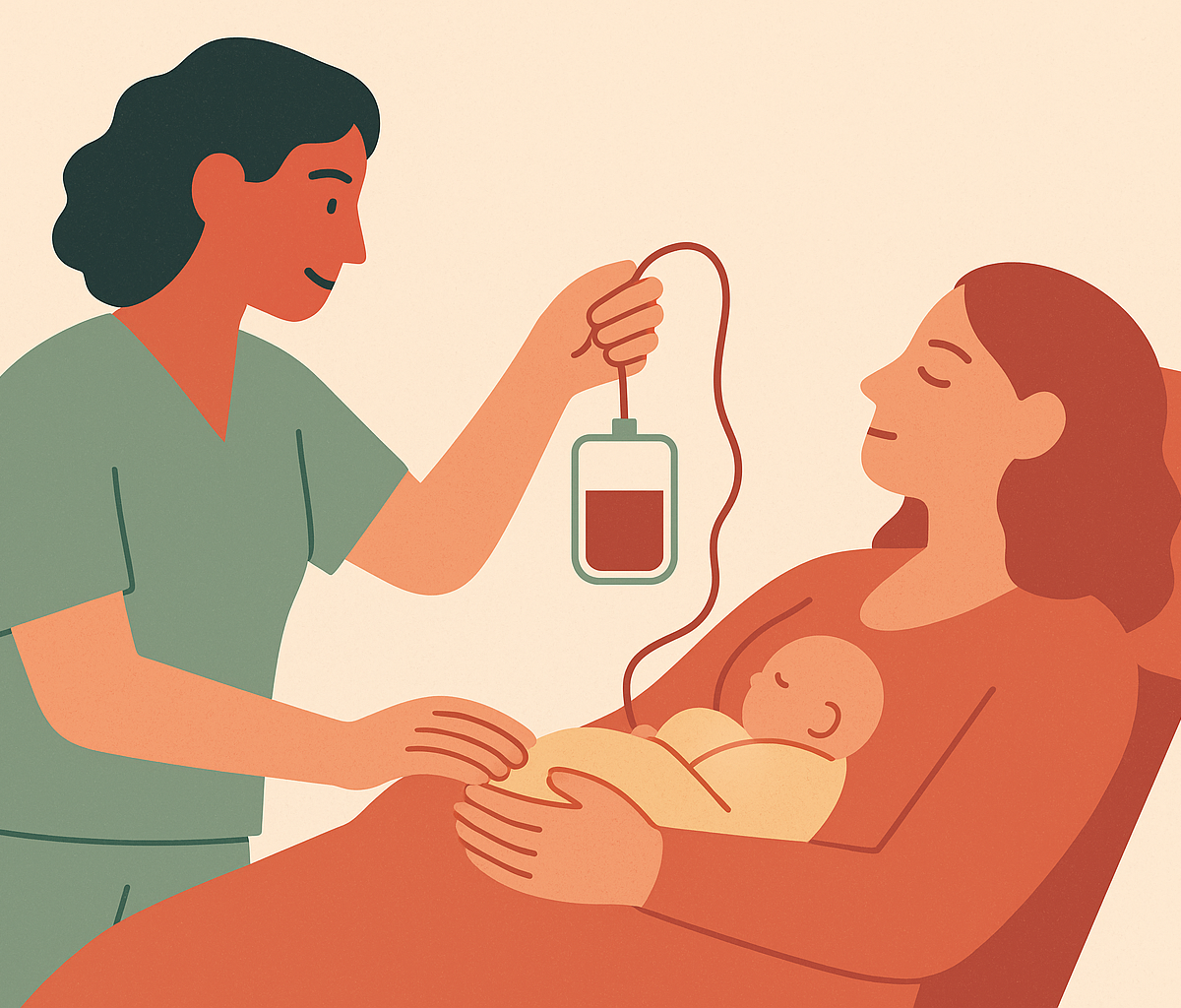
Collection itself is fast. Right after the cord is clamped and cut, a needle goes into the cord and blood drains into a sterile bag. The whole thing takes a few minutes and doesn't interfere with delayed cord clamping or routine newborn care. There's no risk to the baby.
From there, the unit travels to the bank, gets processed to strip out plasma and red cells, and goes into cryopreservation. Directed units then sit in medical quarantine: no one can release or use the unit without a transplant physician submitting a specific written request. That's a real safeguard, and it's part of why medical bodies treat directed banking differently from banking done on spec. The American Academy of Pediatrics doesn't generally recommend routine private banking, but it specifically endorses banking when a sibling has a condition treatable by cord blood transplant. The American Medical Association takes the same position, pointing to an existing family medical indication as the reason banking privately makes sense.
None of this is untested logistics. The Sibling Donor Cord Blood Program, started in 1998, enrolled 540 families across 42 states and collected units at several hundred different hospitals, most of them community hospitals rather than major transplant centers. Directed banking works outside big-city academic medical centers. It's been proven at scale, for years.
The cost of banking measured against the cost of not curing
Standard pricing at US private banks runs around $2,000 at collection plus roughly $200 a year in storage, which puts a decade of banking in the low five figures. The transplant costs more: a Medicare-claims analysis put the mean cord blood graft acquisition and related-services cost at $36,321, and a single-institution study reported a mean transplant cost of $58,910.
Outside the US, the arithmetic looks different. In Iran, one of the more established directed banking programs, private cord blood storage runs at a modest cost and the transplant around $2,500, which makes a curative transplant dramatically cheaper than decades of ongoing care.
That's the comparison that actually decides this. Lifelong management of thalassemia (regular transfusions, chelation drugs, routine monitoring, complications from iron overload) adds up over decades to a bill that dwarfs a one-time transplant. Sickle cell disease runs the same math from a different angle: repeated hospitalizations for pain crises, strokes, and organ damage across a shortened life, versus a single procedure that, if it works, ends the disease. The few thousand dollars spent on banking functions as a deposit against the alternative, which is decades of the disease running its course unopposed.
When a natural pregnancy is unlikely to produce a matched donor: the PGT-HLA path
Some families don't want to leave the outcome to a 1-in-8 or 1-in-16 shot, especially after one or two pregnancies have already come and gone without a match. For them, IVF combined with preimplantation genetic testing for HLA, known as PGT-HLA, lets embryos get screened before implantation for both HLA compatibility with the sick sibling and absence of the disease-causing mutation.
That second part matters as much as the first. PGT-HLA confirms both a match and that the embryo won't be born with the disease. Get both right, and the family has engineered the outcome that natural conception left to chance.
Children born this way are sometimes called "savior siblings," a term that deserves honest treatment rather than celebration or discomfort. The child is a full sibling first, not defined by the role they were selected to play. Cord blood collection stays non-invasive and carries no risk to the newborn, which is part of why bioethics bodies generally treat cord blood donation differently from later requests for bone marrow or organ donation; those raise harder consent questions once the child is old enough to have a say. On the PGT-HLA path, IVF does the work of creating the match. Banking is still what preserves it. Skip the collection at birth and the entire point of the IVF process is gone.
What families with an affected child should do before the next pregnancy ends
Banking costs a known, modest amount and keeps an option open. Not banking closes that option forever, at the exact moment of birth, with no way to revisit the decision later. That asymmetry is the whole argument, and it doesn't need dressing up.
A few things need to happen, in order. Get the sick child's HLA type confirmed with their hematologist first; that's the reference point everything else gets measured against. Talk to the transplant team early in the pregnancy, since they can flag whether the expected cell dose is likely to be enough and whether a combined cord blood plus bone marrow approach is already part of the plan. Pick a bank with actual experience handling directed sibling units, not just general private banking, and ask directly about their quarantine procedures, their release protocol, and what cell counts they typically report on directed collections; not every bank treats these units with the same care. Then lock in collection logistics with the hospital where delivery will happen.
None of this guarantees a cure. A match might not appear. A cell dose might fall short even after collection. But families who bank get a shot that families who don't will never get back, and in a disease with a fixed, worsening trajectory, that shot is worth almost any price attached to it.