Do Gestational Diabetes or Preeclampsia Affect Cord Blood or Placenta Collection Eligibility
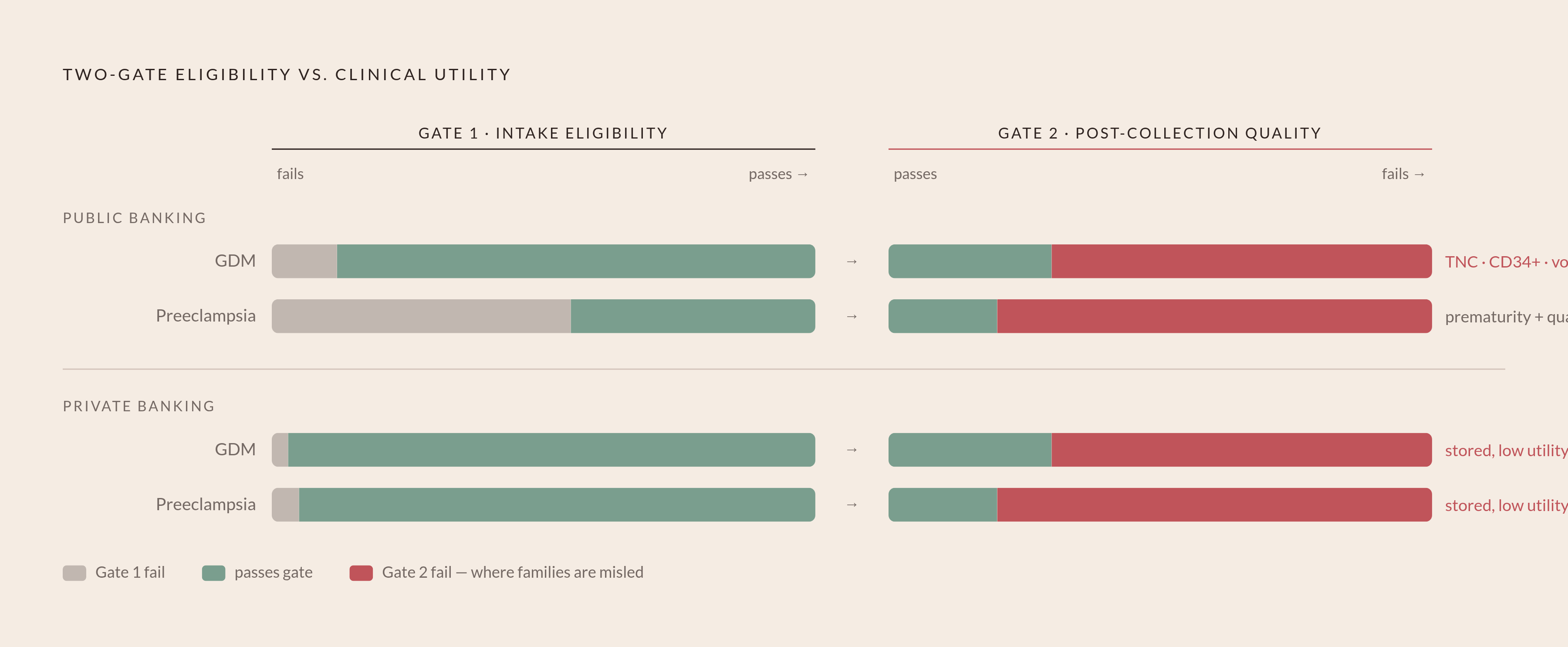
Eligibility at intake differs sharply from whether collected cells meet minimum banking thresholds.
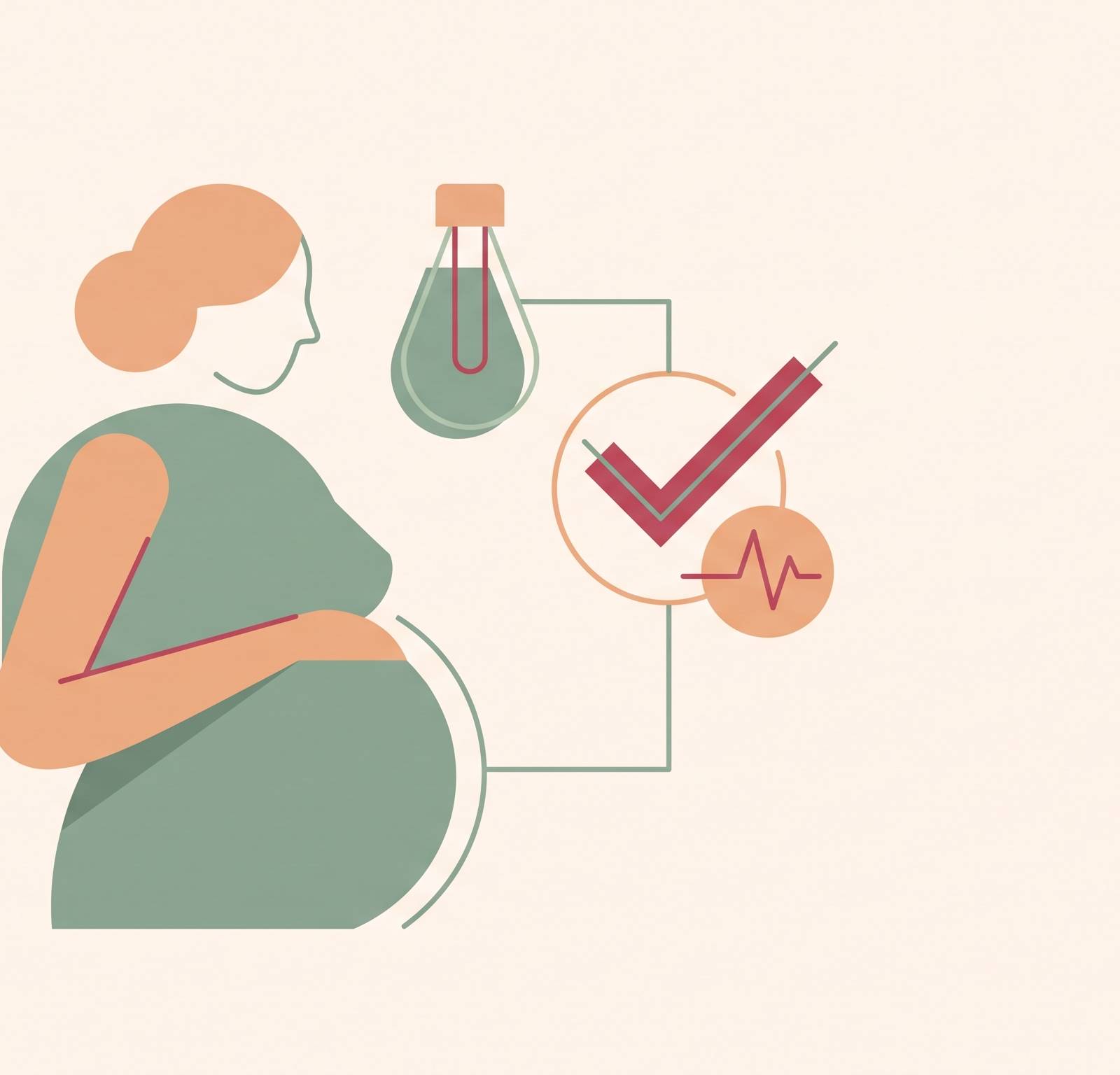
Three distinct pathways exist for banking biological material collected at delivery. They operate under different regulatory architectures, serve different purposes, and apply different gatekeeping logic. Getting this straight before any diagnosis enters the picture is the foundation for understanding what a subsequent diagnosis actually changes.
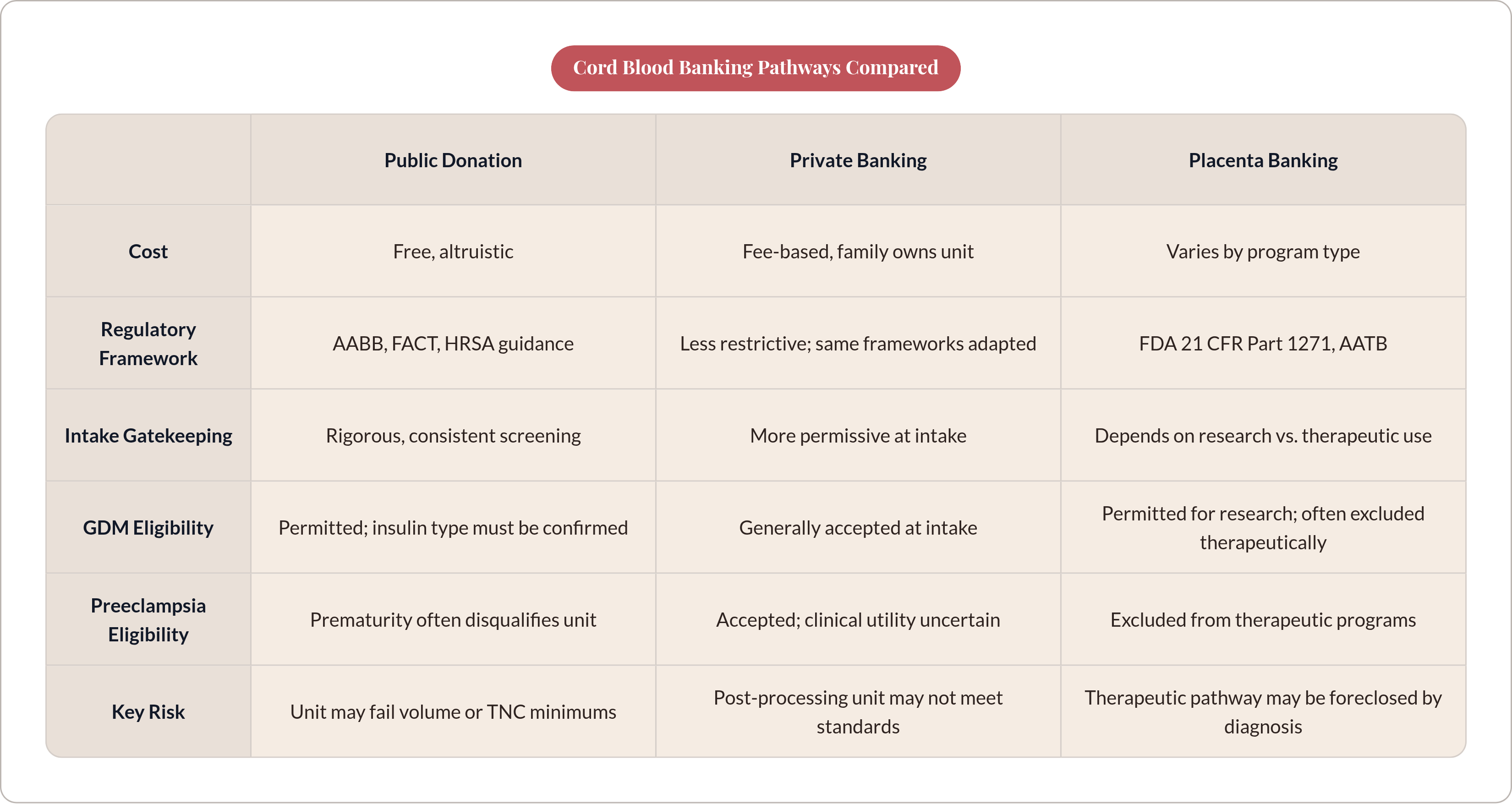
Public cord blood donation is altruistic and free. A family donates a collected unit to a registry where it becomes available to any matched patient. Because the unit is ultimately used in a transplant for a stranger, public banks apply rigorous donor screening modeled on frameworks developed by AABB and FACT and shaped by overarching HRSA guidance. The standards are high and applied consistently.
Private cord blood banking is fee-based; the family retains ownership of the stored unit. Gatekeeping at intake is less restrictive, partly because the regulatory infrastructure in this space was initially developed for the public donation arena. Private banks often accept collections that public banks decline. Biological quality still governs whether a stored unit will ever be therapeutically useful, but that determination happens after collection rather than before it.
Placenta tissue banking is a newer and distinct pathway governed by FDA 21 CFR Part 1271 and AATB standards. It encompasses multiple purposes: regenerative medicine applications, amniotic membrane grafts for wound care and ophthalmologic surgery, and stem cell storage. Its eligibility logic diverges from cord blood banking in ways that matter acutely for mothers with gestational diabetes or preeclampsia.
The structural gap between public and private cord blood banking is precisely why the same mother is turned away from a public bank but accepted by a private one. The American College of Obstetricians and Gynecologists and the American Academy of Pediatrics don't endorse private banking, citing cost relative to the low statistical probability of personal use. That position deserves to be taken seriously. It also clarifies why understanding quality thresholds, rather than just eligibility at intake, is the more consequential question a family can ask.
What the public donation rules actually say about gestational diabetes
The consensus across HRSA guidance and public bank protocols is unambiguous: gestational diabetes doesn't disqualify a mother from donating to a public cord blood bank. HRSA has explicitly named gestational diabetes as an example of a condition that still permits donation, with individual confirmation handled at intake.
The real complication is insulin source. If a mother has ever received bovine insulin, derived from cattle, that history is typically a contraindication for public donation. Insulin sourced from non-bovine origins, used to manage gestational diabetes or pre-existing type 2 diabetes during pregnancy, is generally acceptable. A mother who used insulin during pregnancy should ask her bank specifically about insulin type rather than assuming the condition as a whole forecloses her options. That is a discrete, answerable question, and it's worth asking early.
There is also a regulatory gap that shapes outcomes in practice. NetCord-FACT International Standards identify exclusion criteria organized around genetic diseases, malignant diseases, and communicable diseases. Common pregnancy disorders, including gestational diabetes and hypertensive conditions, sit outside that formal structure. A 2023 article in Gene Therapy (Nature) noted that no formal donor criteria exist around these conditions, leaving eligibility decisions bank-dependent and informal. That informality means the answer at intake is almost always permissive. It also means the family carries more responsibility for understanding what follows, because what follows is the more important question.
Why GDM-derived cord blood may still fall short of minimum banking thresholds
Every cord blood banking laboratory measures the same core parameters before deciding whether a unit is worth storing. Total nucleated cell count, or TNC, is the primary predictor of engraftment success in transplant. CD34+ cells represent the hematopoietic stem cell subset most directly relevant to transplant outcomes. Collection volume determines whether enough cells are present regardless of concentration. Cell viability, pre-cryopreservation, must typically reach at least 70% under established protocols for a unit to proceed.
Gestational diabetes affects all of these parameters. A 2021 study published in Frontiers in Medicine compared 42 GDM pregnancies against 38 normal pregnancies and found that volume, TNC, and total CD34+ cell counts were all significantly reduced in the GDM group. A separate line of research on Wharton's jelly mesenchymal stromal cells found that cells derived from GDM mothers showed low proliferative rate, increased population doubling time, reduced viability, and increased cell death compared to healthy controls.
A 2024 study in Archives of Gynecology and Obstetrics adds a complication that's easy to underestimate. GDM pregnancies show a higher proportion of hematopoietic stem cells in cord blood than healthy pregnancies, alongside higher rates of neonatal polycythemia. This altered differentiation profile affects how cells behave clinically even when raw counts appear adequate. A unit that clears a numeric threshold can still carry a functional liability that simple cell counting doesn't capture.
The mechanism matters here. Insufficient HSC numbers slow hematopoietic recovery after transplant, and recovery speed correlates directly with nucleated cell count and CD34+ yield. A unit that falls below minimum thresholds isn't merely suboptimal; it is not viable as a transplant product at all.
GDM doesn't trigger a formal rejection at intake. But the measurable reduction in cell counts means a GDM-derived unit is meaningfully more likely to fail the volume and cellularity minimums that public banks apply before accepting a unit for storage, and that private banks reference when assessing whether a stored unit will ever meet clinical utility standards. Eligibility at intake and clinical utility after collection are two separate questions, and conflating them is where most families get into trouble.
How preeclampsia creates a more complicated eligibility picture than GDM
Preeclampsia affects roughly 5% of pregnancies in the United States. Its eligibility picture is more layered than GDM's because the condition introduces two independent problems: a direct biological effect on cord blood quality, and a structural problem through prematurity.
Preeclampsia is a leading cause of premature delivery, and prematurity itself is a significant barrier to public donation. Premature deliveries produce smaller cord blood volumes with fewer stem cells. When volume and cell count fall below the thresholds a public bank requires, the unit is typically unsuitable for donation regardless of the mother's formal eligibility status. The earlier the delivery, the more severe this effect.
Preeclampsia also depresses cord blood quality independent of gestational age. A study published in Journal of Obstetrics and Gynaecology Research comparing 28 preeclamptic pregnancies against 19 non-preeclamptic controls found that cord blood volume, nucleated cell counts, and CD34+ counts were all significantly reduced in the preeclamptic group. Within that group, both systolic and diastolic blood pressure showed a negative correlation with total nucleated and CD34+ cell counts: the higher the blood pressure, the lower the yield. The same study identified a clinically actionable finding: selecting the heaviest term neonate from a preeclamptic mother improves cord blood yield, a consideration relevant to families banking privately who have some influence over delivery planning.
A 2020 study in BMC Pregnancy and Childbirth confirmed lower hematopoietic stem cell progenitor colonies in the preeclampsia group, correlating with reduced UCB volume, TNC, and CD34+ counts, and explicitly concluded that these findings should inform banking decisions and predictions of transplant success. A 2019 prospective study on preterm cord blood treated both GDM and preeclampsia as explicit confounders, excluding them from healthy-donor controls. That methodological choice reflects how seriously the research community regards their effect on baseline cell quality.
For private banking, collection is generally permitted. But the combination of lower gestational age and direct HSC depression means a stored unit is unlikely to meet the thresholds needed for future clinical use. That is a conversation families should have with their bank before delivery, not after.
What the quality thresholds actually mean for a borderline unit
The clinical stakes are concrete. The target range for transplantation nucleated cell dose is 1 × 10⁷ to 3 × 10⁷ cells per kilogram of recipient body weight, and higher cell doses correlate with faster engraftment. One established clinical protocol specifies a minimum pre-cryopreservation TNC of at least 2.5 × 10⁷/kg and a viability of at least 70%.
GDM and preeclampsia both push collected units toward the lower end of these ranges, or below them, without necessarily triggering a formal eligibility rejection at intake. Birth weight, gestational age, and the baby's sex all positively correlate with TNC content. Because GDM and preeclampsia alter birth weight in opposite directions, these variables compound the uncertainty in ways that are difficult to predict before collection happens.
What follows, too often, is a disappointment that could have been anticipated. A mother accepted as eligible by a private bank receives a post-collection report showing her unit didn't meet processing minimums. Banking laboratories process first, report second. The family has already made the decision, and often paid a processing fee, before learning the unit won't be stored. This is not a failure of science; it is a failure of counseling. Better pre-delivery conversations, grounded in an honest account of what these conditions do to cell yield, would change that outcome more reliably than any adjustment at intake. The controllable factors are real: delivery timing where clinically appropriate, collection technique, and volume maximization at the time of the cord blood draw. Those variables are worth optimizing precisely because they are within reach.
Placenta banking eligibility works by different logic for GDM and preeclampsia
Placenta banking isn't a single category. The eligibility rules for GDM and preeclampsia vary sharply depending on what the donated tissue will be used for.
Research biobanks actively seek placentas from pregnancies complicated by GDM and preeclampsia. These conditions are exactly what researchers want to study. CHLA's Placenta BioBank explicitly names preeclampsia and gestational diabetes among the conditions their banked tissue helps scientists investigate. For a mother with either diagnosis, a research biobank is a pathway where her donation carries direct scientific value, not despite her diagnosis but because of it.
Therapeutic placenta donation applies a higher bar. Programs using placental tissue for amniotic membrane grafts, wound care, or ophthalmic applications typically require an uncomplicated pregnancy, and GDM or preeclampsia disqualifies a donor under that standard. A ClinicalTrials.gov-registered protocol for placental tissue use lists as explicit exclusions current or prior history of insulin-dependent diabetes, current gestational diabetes treated with insulin, and preeclampsia. That exclusion list illustrates precisely where the line is drawn when the end use is clinical and the tissue enters a therapeutic supply chain.
The governing framework for therapeutic placenta donation is FDA 21 CFR Part 1271 and AATB standards, requiring a medical and behavioral risk questionnaire interview mandated by the FDA. For private placenta tissue banking, banks perform their own eligibility screening; infections, malignant disease, and autoimmune disorders are commonly named disqualifiers, while GDM and preeclampsia occupy a grayer zone that varies by bank and by intended use.
The same diagnosis that forecloses one pathway actively qualifies another. Knowing which pathway you're pursuing determines which set of rules applies, and that distinction is worth establishing before the question becomes urgent.
What families with either condition should actually do before delivery
Start the conversation with the chosen bank early. Not at 36 weeks. Early enough that the medical questionnaire is complete, insulin type is confirmed if applicable, and the bank's specific TNC and volume thresholds are known before delivery makes the conversation urgent.
For families considering public donation, gestational diabetes alone is unlikely to disqualify, but insulin type must be confirmed if medication was involved. For preeclampsia, the critical variable is gestational age at anticipated delivery. If significant prematurity is likely, the collected volume will fall below the threshold for public bank acceptance regardless of formal eligibility. Ask the bank directly what minimum TNC and collection volume they require. That number is available; knowing it replaces speculation with a realistic picture.
For families considering private banking, intake acceptance is more likely than with public donation, but acceptance at intake doesn't guarantee a post-processing result that meets therapeutic utility standards. Ask the bank whether they'll process and report cell counts before charging ongoing annual storage fees. If preeclampsia is present, work with the delivery team to maximize cord blood collection volume; evidence supports that delivery timing and collection technique can meaningfully affect HSC yield.
For families considering placenta banking or donation, establish clearly whether the program is a research biobank or a therapeutic application before anything else, because the eligibility logic runs in opposite directions between them. Ask explicitly about insulin use and blood pressure history rather than waiting for the bank to surface those questions. Cord banks both cord blood and placental tissue, which means these questions can be addressed across multiple pathways in a single conversation rather than separately, a practical advantage when a high-risk pregnancy has affected one option while leaving another viable.
Neither GDM nor preeclampsia is a reason to stop exploring banking. Both are reasons to ask more specific questions earlier, to understand which quality metrics determine whether a stored unit will ever serve its intended purpose, and to arrive at delivery with a clear-eyed sense of what the collection is realistically likely to yield.