Placenta Capsules Versus Raw Placenta Consumption Safety Comparison
Steaming before dehydration reduces bacterial risk.
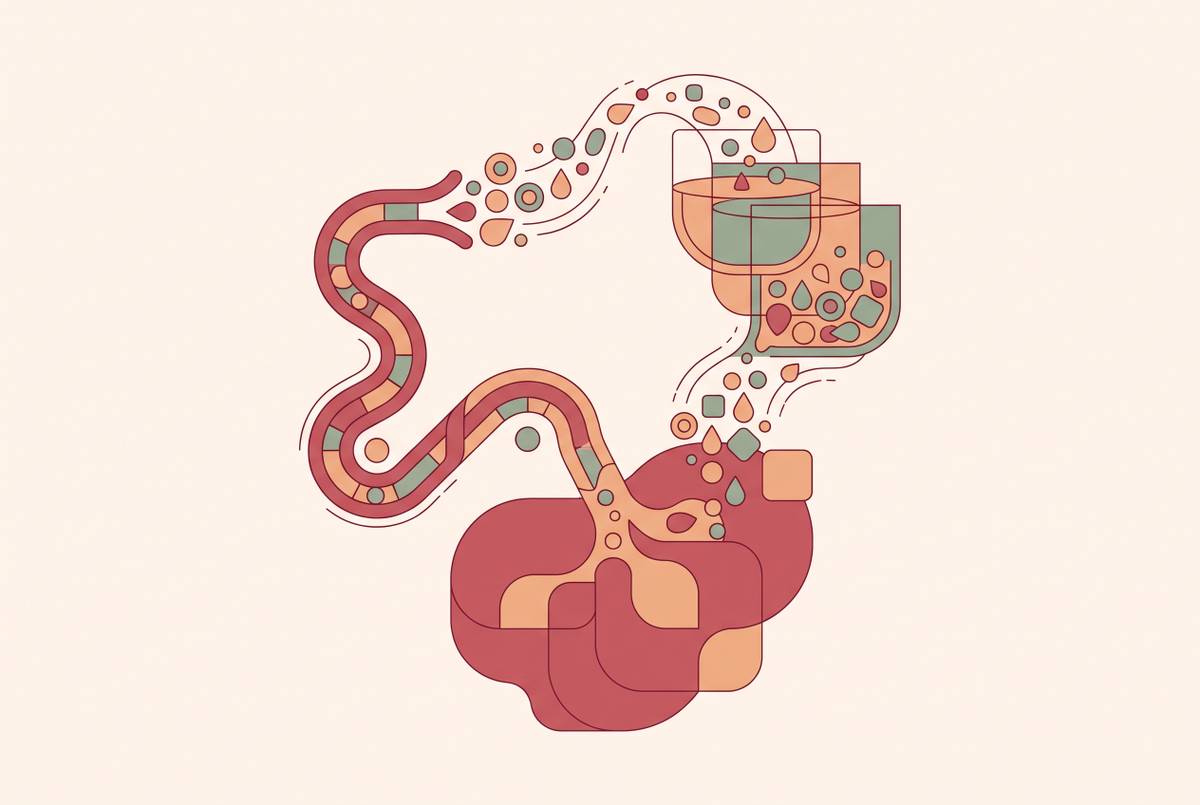
The placenta is the organ that keeps a pregnancy alive, so eating it afterward is a genuine safety question, not a lifestyle footnote. For nine months it delivers oxygen, nutrients, and hormones to the fetus and clears fetal waste in return, and it works as the busiest exchange point the body builds and then discards. Because it filters what the mother and baby are exposed to during pregnancy and labor, it also accumulates bacteria and other substances along the way, and none of that gets left behind when the organ leaves the body at birth. Eating the placenta sends those substances, bacteria, heavy metals, and leftover hormones among them, into the maternal digestive system, a path the organ was never built to travel. Cleveland Clinic OB/GYN Dr. Oluwatosin Goje states it directly: "If you later ingest the placenta, you're reintroducing those toxins and bacteria back into your system. She adds a second point that matters just as much: "You're also putting them into your stomach, which is a part of the body where the placenta is not meant to be." Understanding the placenta's role as a filter during pregnancy, and what that means for the substances it harbors, is also why some parents choose to preserve placental tissue at birth rather than consume it. Companies such as Anja bank cord tissue and placenta for potential future medical use, an approach that does not involve ingestion.
The two main preparation methods
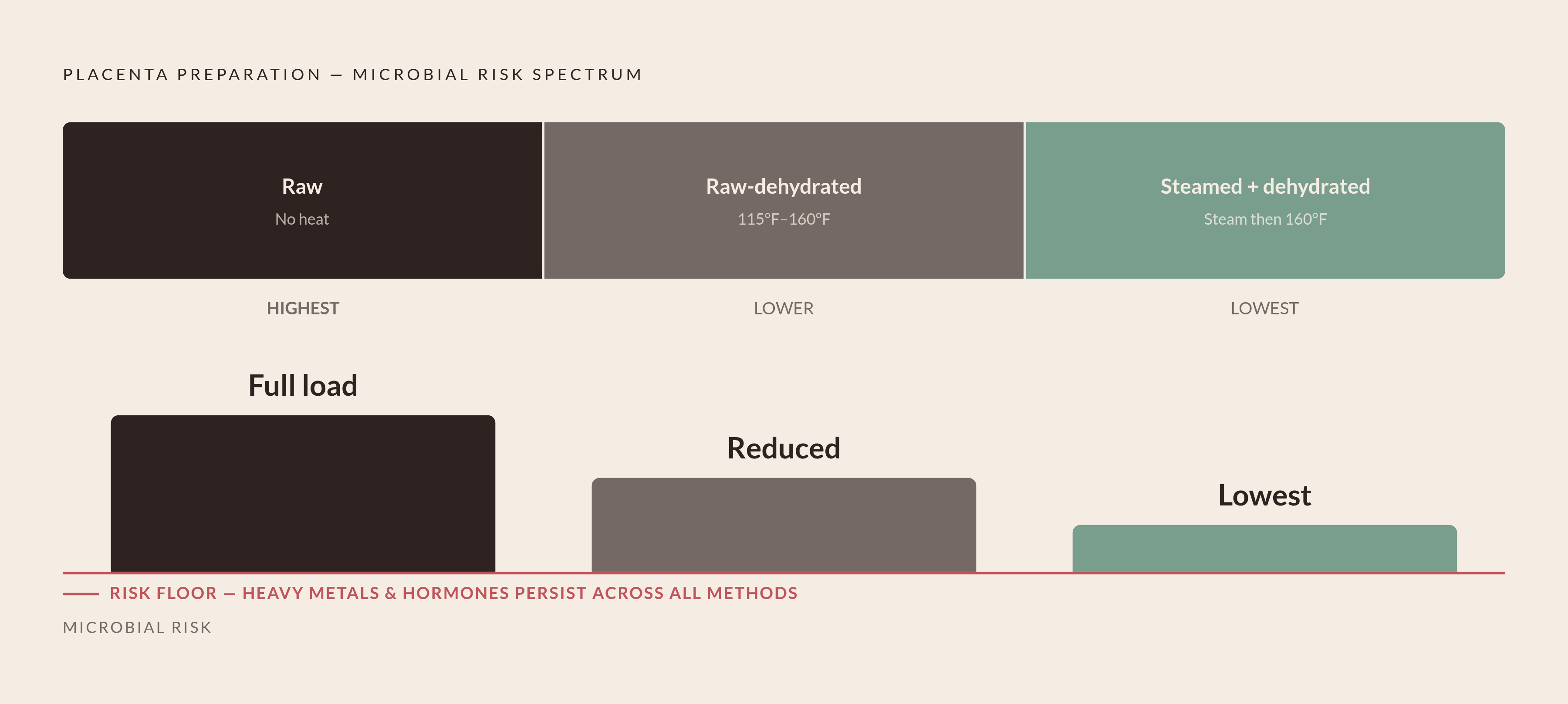
Placenta consumption splits into two broad paths, and heat is almost the whole difference between them. The first path is raw consumption: the placenta is eaten shortly after birth, blended into a smoothie, or folded into a meal with no dehydration and no heat treatment. This sits at the high-exposure end of the spectrum, because nothing in the preparation touches the tissue's bacterial load. The second path is encapsulation, which itself splits into two variants. Raw-dehydrated encapsulation slices the placenta and dehydrates it directly, with no steaming beforehand, then grinds the dried tissue into powder and packs it into capsules. The heat involved comes only from the dehydrator. Steamed-and-dehydrated encapsulation, a method drawn from Traditional Chinese Medicine, steams the placenta first, then slices, dehydrates, grinds, and encapsulates it, so the tissue passes through two separate heat exposures before it ever becomes powder. An overview of the encapsulation process from MiracleCord confirms these two variants are the ones in common use, and that whether steaming happens before dehydration is the single variable that separates them. A documented 2016 case from Oregon, recorded by the CDC, shows what the raw-dehydrated method looks like in practice: the company involved cleaned, sliced, and dehydrated the placenta at 115°F to 160°F, a single heat step with no steaming beforehand, before grinding it into capsules.
What heat processing does and does not eliminate
Heat reduces the bacterial load in placenta tissue, but it does not wipe it out, and how much reduction occurs depends on temperature, duration, and whether steaming happens before dehydration. The Oregon case is the clearest illustration on record: a newborn developed recurrent late-onset Group B Streptococcus sepsis after the mother consumed capsules made from placenta that had been dehydrated without any prior steaming. The CDC's MMWR report on the case states that the encapsulation process does not, by itself, get rid of infectious pathogens. The dehydration in that case reached 115°F to 160°F, but if you want to cut Salmonella counts by 7 log₁₀, the report says you need 130°F held for 121 minutes. Whether that mother's provider reached and held an adequate temperature long enough to reduce GBS counts is not established in the report.
Later microbiology research adds nuance to that warning. Studies examining steaming followed by dehydration found substantial reductions in GBS and E. coli colony counts compared to raw tissue. In the clinical arm of one such study, all 24 processed samples came back free of GBS, but raw placenta surfaces from GBS-positive mothers showed bacterial growth. In a separate experimental arm, where researchers deliberately inoculated tissue with both organisms, steaming and steamed-dehydration eliminated both completely. These results matter, but the research involved small sample sets, and how much reduction happened depended on whether you reached and held the right temperature, something that varies by operator and equipment. Dr. Goje's warning at Cleveland Clinic captures the limit of what any of this guarantees: "There's no guarantee it's being heated at the appropriate temperature and length of time needed to destroy any infectious bacteria and viruses it might contain." Raw consumption skips this step entirely: with no heat applied, the full bacterial load the organ picked up during labor stays in the tissue at the moment it's eaten. GBS-positive mothers face the steepest risk under any preparation method, and the steamed-capsule approach is the lowest-risk point on the spectrum, though it never reaches zero.
Risks that apply regardless of preparation method
Infection risk is not the only hazard, and some of what the placenta carries cannot be addressed by any amount of heat. The organ accumulates heavy metals, including arsenic, cadmium, lead, and mercury, drawn from the maternal bloodstream over the course of pregnancy. These elements remain in the tissue through encapsulation, and neither dehydration nor steaming removes them. MiracleCord's own overview acknowledges that bacteria, viruses, and environmental toxins like mercury or lead may be present in processed placenta. Hormones present a separate problem: the placenta contains estrogen and progesterone, and consuming it can elevate those hormones in ways that reduce milk supply and raise the risk of postpartum blood clots, an outcome that runs directly against one of the reasons women most often give for trying encapsulation. None of this depends on preparation method. Raw, raw-dehydrated, and steamed-and-dehydrated tissue all carry the same heavy metals and the same hormonal content, because the organ itself has these properties, and handling does not add or remove them. Cleveland Clinic stresses that the risk extends past the mother: toxins in the placenta can reach a breastfeeding infant as well.
The claimed benefits and what controlled research found
The case for eating the placenta usually rests on three claims: that it stabilizes mood, replenishes iron, and increases milk supply. Controlled research has not supported any of them. Cleveland Clinic and the broader research record agree on this point: no controlled study has found a meaningful difference between women who took placenta capsules and those given a placebo, whether the measure was mood, fatigue, milk production, or markers of recovery. The iron claim falls apart under similar scrutiny. The recommended daily dose of placenta capsules supplies only a small fraction of the iron a lactating woman needs, and a randomized, double-blind, placebo-controlled pilot study led by university researchers found no significant difference in iron status between women taking placenta capsules and those given a beef placebo. Researchers at Northwestern University reviewed the published research on placenta consumption in all its forms and found no data supporting claims that it protects against postpartum depression, reduces pain, boosts energy, helps with lactation, or restores iron levels.
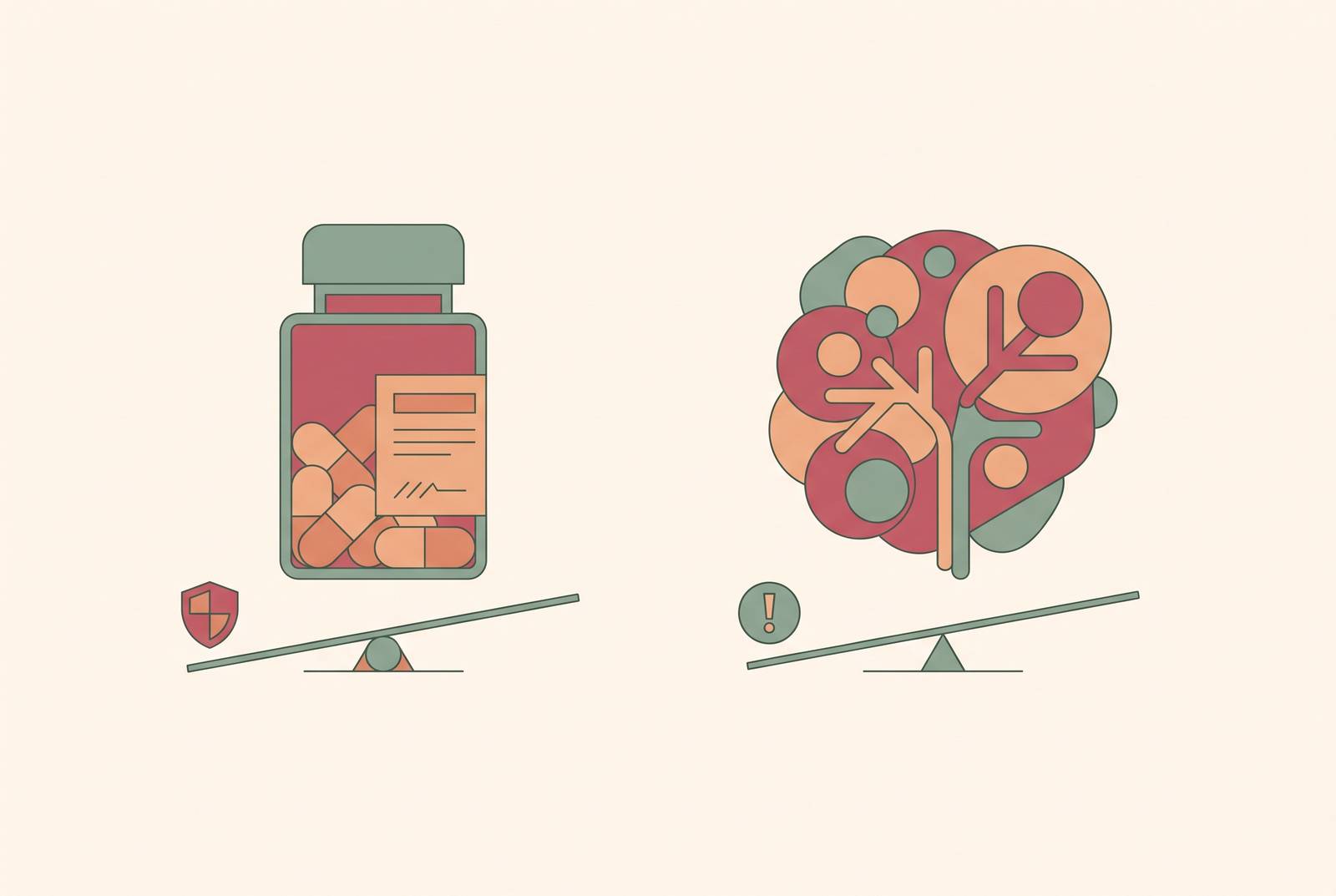
There's also a trade-off built into the capsule method that works against its own premise: the same heat that reduces pathogen load also degrades the hormone concentrations advocates point to as the benefit. MiracleCord's overview notes that estradiol and progesterone in the placenta could interfere with milk production rather than help it, particularly in the first month after birth, undercutting the lactation claim from a different angle. None of this is to say that women reporting better mood or easier recovery after encapsulation are wrong about their own experience. It means those reports have not held up against a placebo in controlled conditions, which leaves a stark asymmetry at the center of this decision. The harms, infant GBS sepsis, heavy metal exposure, hormonal disruption, have mechanisms behind them and at least one documented hospitalization. The benefits, so far, do not have equivalent support.
The regulatory gap
Even the clearest finding from the research, that steaming followed by dehydration reduces pathogen counts more than raw-dehydration alone, runs into a hard limit once it leaves the lab: nothing requires a provider to follow it. The FDA does not regulate the placenta encapsulation process, and there is no federal standard governing temperature, duration, sterility, or pathogen testing for the finished product. The Oregon case shows what that absence looks like in practice. The company involved had no protocol for screening mothers for intrapartum infection, did not ask about infections during or after birth, and worked without any standard for how long or how hot the tissue needed to get. Industry practitioners commonly follow OSHA's bloodborne pathogen standards, but those rules protect the person handling the tissue, not the person who eventually swallows it. The studies showing that steaming eliminates GBS and E. coli were run under controlled laboratory conditions, with equipment and monitoring a home-based encapsulation service is unlikely to match. If a mother chooses encapsulation, she has no way to confirm that her provider reached, or held, the temperatures those studies used. The research on steaming and dehydration shows meaningful but incomplete risk reduction, and that gap is why standardized protocols and oversight matter here. The same absence of oversight appears in how providers process and preserve biological material collected at birth, whether the goal is ingestion or long-term banking.
Anja Health's approach to placenta banking
If you feel drawn to the placenta's biological richness but don't want to eat it, you can bank the tissue instead, which avoids the infection, heavy metal, and hormone concerns described above. Anja Health offers placenta banking alongside cord blood and cord tissue banking, one of the few providers in the space to do so, and it preserves the organ's stem cell content for potential future medical use. The tissue is processed at an accredited lab with more than 40 years of experience in blood processing, the kind of standardized handling and quality verification the encapsulation industry currently has no equivalent for. The company has backing from Y Combinator, Alexis Ohanian's Seven Seven Six fund, the co-founder of Counsyl, now part of Myriad Genetics, and the CEO of Ro, a group whose involvement points to institutional confidence in the underlying science. Ohanian, who co-founded Reddit, is also a customer of the service: "I funded a cord blood banking company. I'm a customer, too. I get to learn so much from investing millions of dollars at the bleeding edge of this technology that I hope will save many lives." Kathryn Cross founded the company in memory of her brother Andrew, who needed a cord blood stem cell donor match, and that history shapes the company's stated mission: make stem cell banking accessible regardless of race or socioeconomic status.
Banking is not a stand-in for the mood or milk-supply benefits claimed for placenta consumption, and nothing about the process promises to prevent postpartum depression or restore iron levels. What it offers instead is a way to act on the placenta's biological value inside a regulated, accredited setting, which is a different goal entirely from the claims made about eating the organ.
What a genuinely informed decision looks like
The evidence supports a clear ranking: steamed-and-dehydrated capsules carry less microbial risk than raw-dehydrated capsules, which carry less risk than raw consumption in any form. None of the three has been shown to eliminate risk. GBS status is the variable that matters most for any individual mother. If you test GBS-positive, you face concentrated risk no matter which method you choose, and the CDC's warning, issued after a capsule-related case, applies with at least as much force if you eat the placenta raw. Other conditions deserve a conversation with a healthcare provider before any form of consumption is on the table: chorioamnionitis, hormonal disorders, a history of blood clots, and smoking or alcohol use during pregnancy all raise the stakes further. Knowing that heat processing matters is a start, but it sits inside a larger picture, one where the benefits most often cited remain unproven in controlled research and where no regulatory body currently verifies that the safer method was the one actually used.
Sources
- Placenta Encapsulation and Safety of Placenta Pills
- Notes from the Field: Late-Onset Infant Group B Streptococcus Infection Associated with Maternal Consumption of Capsules Containing Dehydrated Placenta — Oregon, 2016
- Impact of tissue processing on microbiological colonization in the context of placentophagy - PMC
- Impact of tissue processing on microbiological colonization in the context of placentophagy
- Notes from the Field: Late-Onset Infant Group B Streptococcus Infection Associated with Maternal Consumption of Capsules Containing Dehydrated Placenta — Oregon, 2016
- REGULATION OF ENCAPSULATED PLACENTA GREER DONLEY*