Cord Blood vs Cord Tissue Banking: What Each Actually Preserves
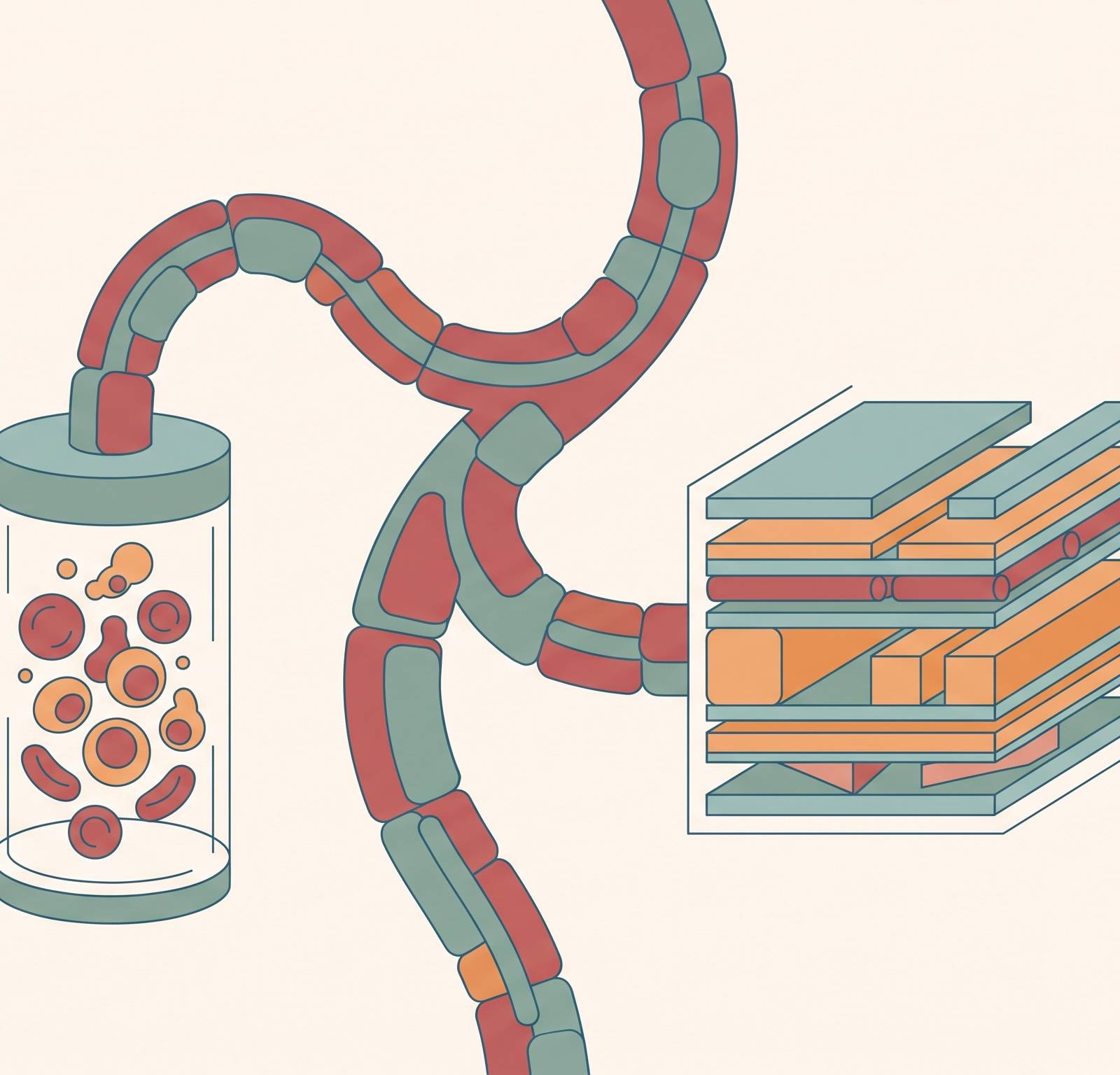
The blood remaining in the umbilical cord and placenta after birth is dense with hematopoietic stem cells, the progenitor cells responsible for generating every blood and immune cell the body produces, including red cells, platelets, and the full white cell repertoire. What makes cord-derived HSCs clinically distinctive is their relative immaturity compared to adult blood-forming cells. Immaturity confers plasticity. Less differentiated cells tolerate a recipient's immune environment more readily and provoke rejection less frequently, which is why cord blood has been a preferred source in unrelated donor transplantation for decades.
Their function is regenerative in the most literal sense. When disease or treatment destroys a patient's blood and immune system, HSCs rebuild it. This is established medicine. FDA-licensed cord blood products include HEMACORD, ALLOCORD, CLEVECORD, and DUCORD, all approved for unrelated donor hematopoietic progenitor cell transplantation. In November 2024, REGENECYTE, developed by StemCyte, became the ninth FDA-approved cord blood therapy and the first cord blood biologics license issued to a commercial biotech. Transplant survival data now shows a 79% three-year rate.
Two constraints deserve direct acknowledgment. When a child's own cord blood carries the same genetic mutation driving the disease, as in sickle cell disease or thalassemia, autologous transplant isn't an option. A matched donor unit is required, and private banking for personal use offers limited benefit in those scenarios. Families with relevant genetic histories are rarely in possession of that information when they make the banking decision. The second constraint is volume: a single cord blood collection historically couldn't yield enough cells to treat an adult. In April 2023, the FDA approved a cord blood stem cell expansion procedure that changes this, allowing a single unit to generate a sufficient cell dose for adult recipients and extending cord blood's clinical reach into populations it previously couldn't serve.
One story carries the stakes more plainly than aggregate statistics. Tommy Bacon, diagnosed at age three with juvenile myelomonocytic leukemia, a disease affecting only one to two children per million annually, achieved remission after a transplant using his newborn sister Aria's banked cord blood. Two bone marrow donors had withdrawn before a match was ever found. The cord blood existed because the family banked before anyone knew it would matter. Families sometimes describe that kind of decision as arbitrary, almost accidental. It never actually is.
Where Cord Blood Research Is Now Reaching Beyond Blood Diseases
The transplant record is the foundation, not the ceiling. Active clinical investigation has extended into conditions well outside hematology, including autism, cerebral palsy, and acquired brain injury. A 2024 study found that cord blood infusion combined with rehabilitation produced modestly better motor outcomes in children with cerebral palsy than rehabilitation alone.
What this suggests is that HSCs participate in repair mechanisms beyond blood regeneration, through paracrine signaling or immune modulation rather than direct cellular replacement. The mechanisms are still being characterized. These applications are investigational, not standard of care. The figure of more than 80 treatable conditions belongs to the transplant context; neurological and developmental applications occupy an earlier phase of clinical validation. Conflating them with the transplant record misrepresents where the science actually stands.
What Cord Tissue Actually Preserves and What Makes Wharton's Jelly MSCs Distinctive
The gelatinous connective tissue surrounding the cord's blood vessels is called Wharton's jelly, and it's the source of the mesenchymal stem cells preserved through cord tissue banking. These don't have blood-forming functions. Their native biological functions are structural support, tissue repair, and immune modulation. Comparing them to HSCs is a category error; the anatomical proximity is coincidental, not functional.
Wharton's jelly MSCs differentiate reliably into the standard mesenchymal lineages, including adipocytes, osteoblasts, and chondrocytes. Studies also document differentiation into endothelial cells, neuron-like cells, hepatocyte-like cells, and insulin-producing beta cells. WJ-MSCs express markers associated with primitive stem cells, including Oct-4, Nanog, Sox-2, and c-Kit, embryonic stem cell markers not typically present in MSCs drawn from adult sources. Their expression correlates with a degree of developmental immaturity that adult-derived MSCs neither carry nor can acquire through processing.
The quantitative difference is substantial. Wharton's jelly contains ten to twenty times more MSCs per unit volume than bone marrow. Cord tissue MSCs also divide faster, exhibit lower immunogenicity, and demonstrate higher proliferative capacity than bone marrow-derived or adipose-derived MSCs. These properties are why WJ-MSCs have increasingly displaced adult-derived MSCs as the preferred source in research settings. That shift didn't happen because of marketing. It happened because the cells perform better.
The Regulatory Gap Cord Tissue MSCs Currently Occupy
No cord-tissue-derived treatment is FDA-approved as of mid-2026, and that baseline shapes everything else.
December 2024 marked a genuine threshold in MSC medicine. The FDA approved Ryoncil, developed by Mesoblast Inc., for steroid-refractory acute graft-versus-host disease in pediatric patients aged two months and older. In the pivotal Phase 3 trial, 70% of children achieved an overall response by Day 28; among those responders, 89% had high-severity Grade C or D disease. Ryoncil is the first FDA-approved MSC therapy in the United States.
It uses bone marrow-derived MSCs, not Wharton's jelly-derived MSCs. The approval validates the cell class, demonstrating that an MSC therapy can satisfy the FDA's standards for safety and efficacy. Ryoncil doesn't constitute approval of cord tissue banking and doesn't close the regulatory gap for WJ-MSC-specific applications. What it establishes is precedent: the FDA will authorize MSC-based therapies when the evidence warrants it. That precedent is meaningful for cord tissue's pipeline, even though it doesn't directly activate it.
The biological advantages of WJ-MSCs are real, but the regulatory authorization covering them isn't yet there.
The Clinical Trial Pipeline That Defines Cord Tissue's Current Moment
More than 1,600 clinical trials have explored MSC therapeutic potential, with over 500 specifically investigating MSC applications across medicine. The conditions under investigation span an unusual range, including osteoarthritis, heart failure, Crohn's disease, multiple sclerosis, lupus, ALS, spinal cord injury, and Parkinson's disease. Cardiovascular research has produced early data indicating cord tissue MSCs support new blood vessel growth and reduce cardiac inflammation. Neurological investigation is active and broadening.
This is no longer a speculative research category. MSC investigation has matured into a structured, multi-disease clinical program with trial infrastructure, regulatory engagement, and measurable endpoints.
The central tension for anyone making a banking decision today is the gap between trial volume and approved therapies. Most applications under investigation are years from regulatory authorization. Cord tissue banked at birth will sit in storage for decades before it becomes clinically relevant, if it does at all. Cell therapy development timelines are measured in years to decades by nature, and the collection opportunity is singular. That asymmetry is worth sitting with, not glossing over.
How Cord Tissue Is Actually Stored and Why the Collection Window Is Irreversible
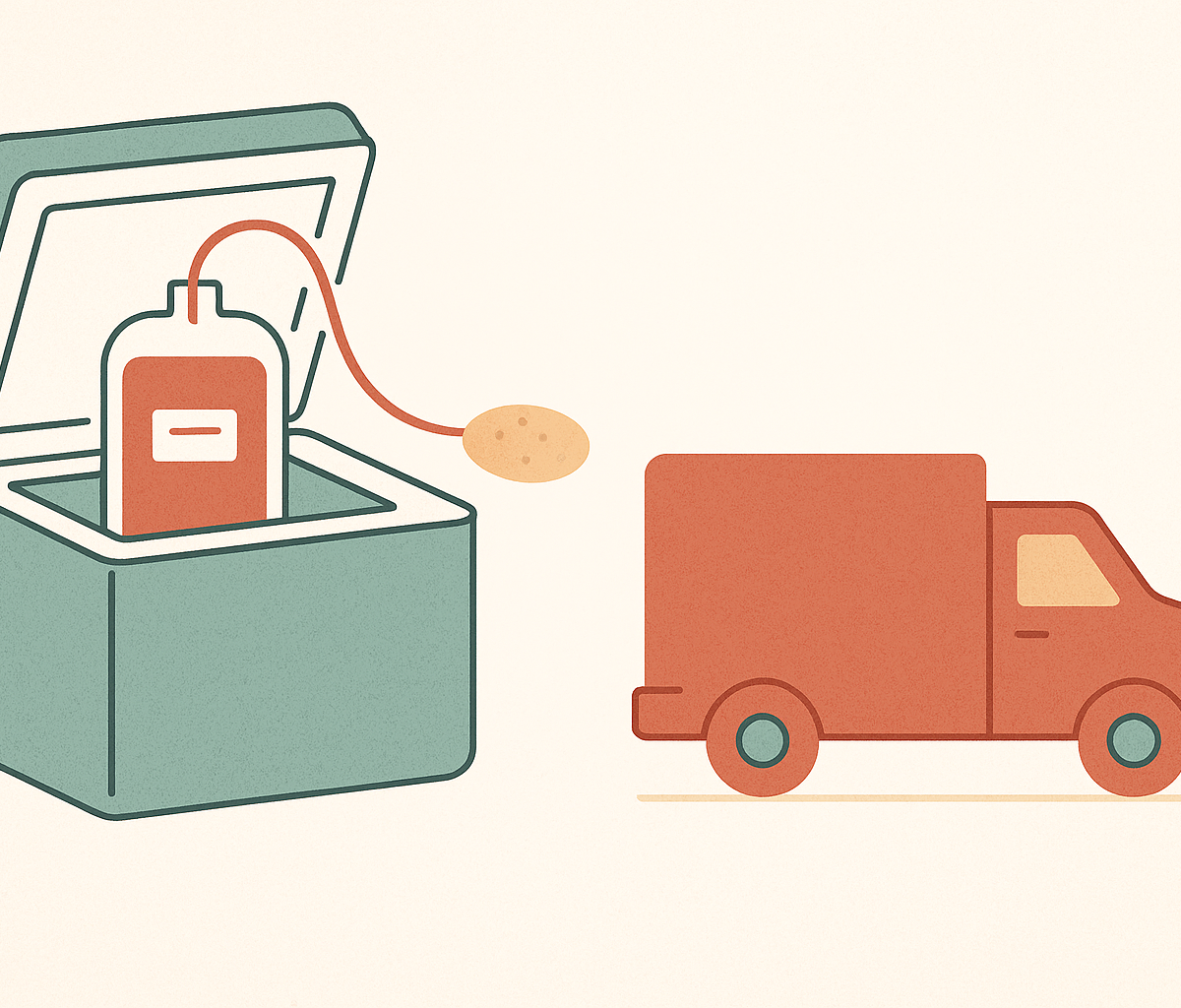
Cord blood and cord tissue are banked through fundamentally different processes, and the difference traces directly to the biology of each cell type.
Cord blood cells are extracted and processed before cryopreservation. What enters storage is a prepared cell product, ready for clinical use upon thawing.
Cord tissue is preserved whole. The cord segment is cryoprotected and frozen intact, because viable MSCs can't be isolated from Wharton's jelly once tissue has been improperly frozen and thawed. Extraction happens after thawing, at the time of intended use. What is banked is preserved tissue from which cells will be isolated later, not a ready-to-administer product.
Research confirms that when cord tissue is cryopreserved using a programmed method, WJ-MSCs extracted post-thaw maintain their surface markers, pluripotent factor expression, and differentiation capacity into osteocytes, adipocytes, chondrocytes, and hepatocytes. The storage method determines whether that biological quality survives decades in a biorepository. Provider selection is consequently a technical decision, not a commercial one, with real downstream consequences that won't be visible until the moment they matter most.
The collection window is birth, and the cord is accessible only once.
What Each Banking Type Realistically Offers a Family Making the Decision Now
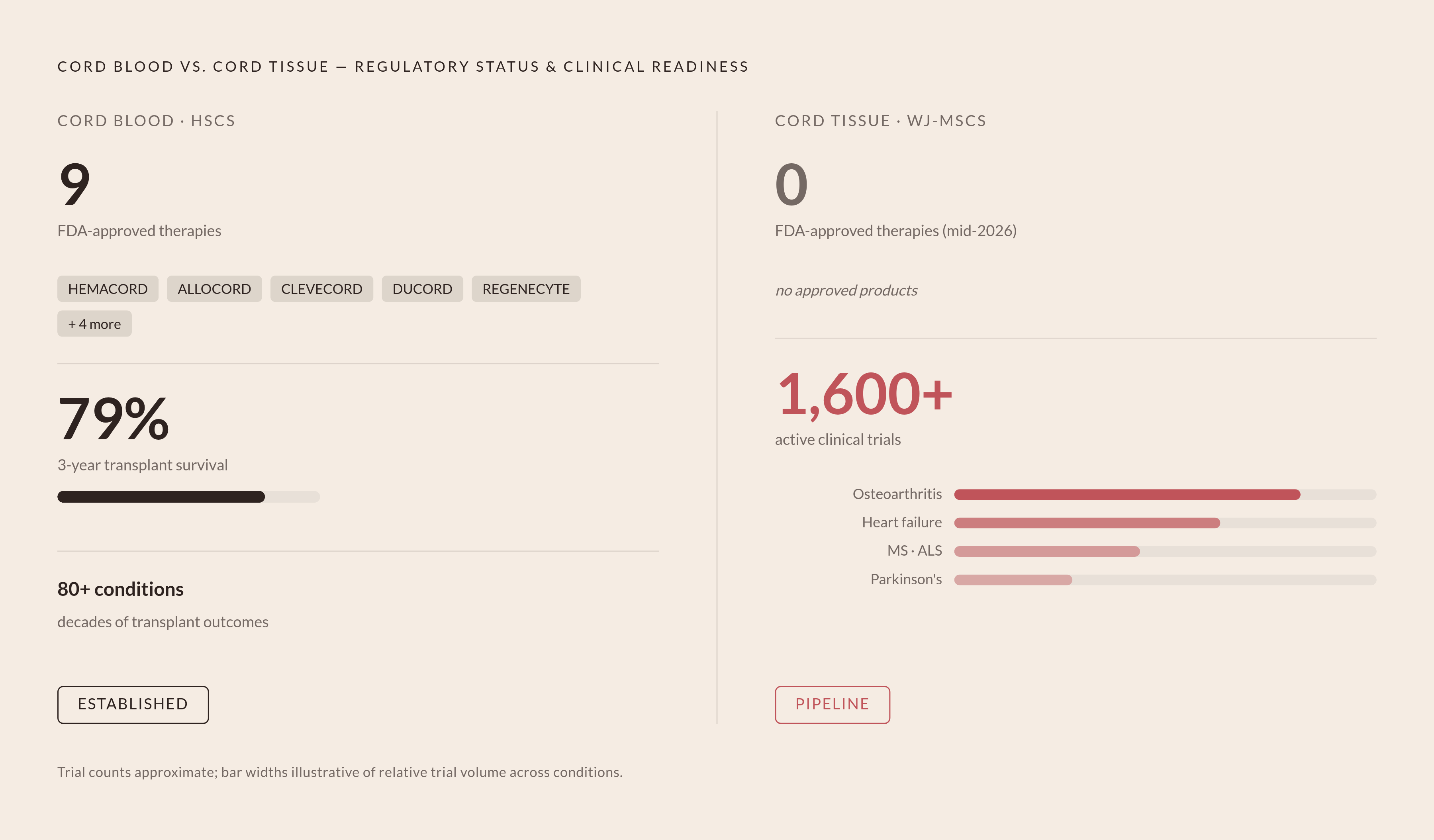
Cord blood banking preserves a cell type with a documented, FDA-approved clinical track record across more than 80 conditions, supported by decades of transplant outcomes and a three-year survival rate that continues to improve. The strongest case for private cord blood banking is a known family history of conditions treatable by HSC transplant, or the potential to provide a matched unit for a sibling or parent. The autologous-use caveat is real: for genetically inherited blood disorders, the child's own cord blood will carry the same mutation and will be unusable. Medical societies including ACOG, the AMA, and the ASBMT have generally favored public donation over private banking absent a specific family indication. Public cord blood donation is free to the donating family and expands the pool available to patients without a family match. Private banking runs several thousand dollars for lifetime storage.
Cord tissue banking preserves a cell type whose biological profile, including higher yield, lower immunogenicity, greater proliferative capacity, and documented differentiation range, positions it within a research pipeline that is active, structured, and accelerating. No cord-tissue-specific therapy is yet FDA-approved. The case for banking rests on demonstrated cell biology and the scale of ongoing clinical investigation, not on approved indications. Families who bank cord tissue are preserving a resource whose value is most likely realized years from now, when applications currently in Phase 2 trials have completed the regulatory arc. That requires a tolerance for uncertainty that not every family will share, and that's a legitimate consideration, not a failure of nerve.
These don't represent competing choices. Cord blood and cord tissue preserve distinct cell populations with distinct biological roles and distinct clinical trajectories. Banking both captures the full range of what the cord contains. Cord Blood Registry offers combined banking programs that preserve both from a single collection.
What the decision comes down to is which biological resources to preserve, and across what timeline a family is willing to plan. The cord is accessible only once.