How Cord Blood Stays Viable From Delivery Room to Transplant Center
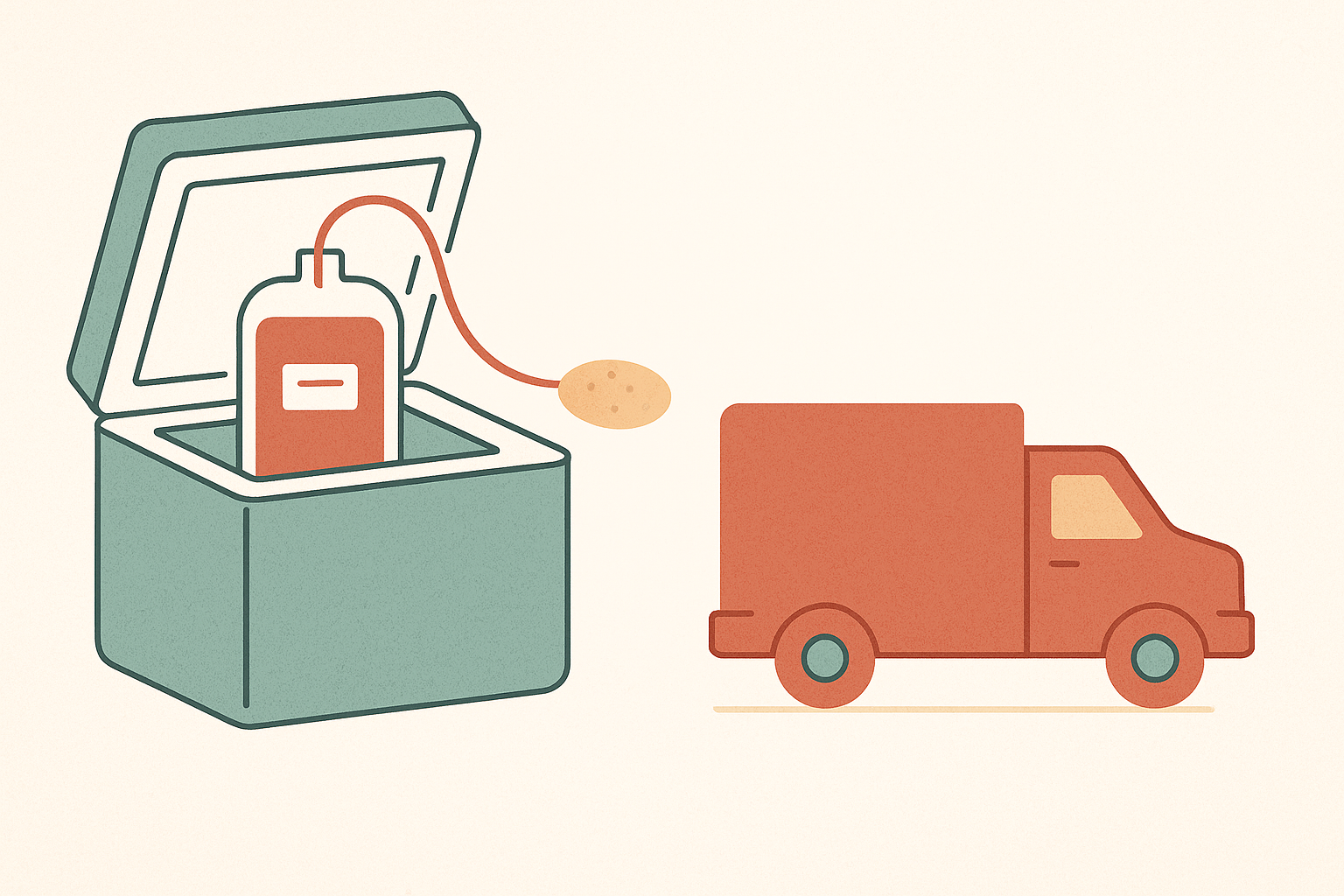
Cord blood banking works because hematopoietic stem cells can rebuild an entire blood and immune system from scratch, treating a range of serious blood and immune disorders. The catch is that the whole enterprise depends on a window that opens for a few minutes after birth and then shuts for good. Whatever isn't captured and preserved correctly in that window is gone. There's no second draw, no do-over, no fallback plan if something goes wrong on day one.
I've spent enough time around this process to know where families' attention usually goes, and it's rarely where it should. The World Marrow Donor Association's global database lists over 800,000 cord blood units available for transplant, and more than 22,000 bone marrow or cord blood transplants took place in the United States in 2024 alone. Behind each of those numbers is a chain running from a delivery room to a liquid nitrogen tank, sometimes for decades, and the cells inside have to survive temperature swings, transport delays, freezing stress, and years in storage before any transplant center will touch them. They're fragile in ways that surprise people who assume freezing just pauses everything neatly. A slow transport van or a freezer running three degrees warm can quietly wreck a unit that looked perfect at collection. That's the story worth telling properly, link by link.
Collection in the delivery room: what happens in the first minutes after birth
Once the umbilical cord is clamped and cut, a clinician threads a needle into the umbilical vein and lets blood drain by gravity through tubing into a collection bag. Nothing about this touches mother or baby, and it doesn't interrupt delivery or those first moments of skin-to-skin contact; the cord's already separate from the newborn by the time anyone reaches for a needle. The bag holds an anticoagulant, usually citrate phosphate dextrose adenine, or CPDA-1, which keeps the blood liquid while it's drawn and while it sits waiting for transport.
Before the needle even comes out, there's consent to get and eligibility to screen. Only then does the draw happen. The unit gets packaged immediately after, and the clock starts.
Here's what most people don't appreciate: the whole downstream chain is capped by what happens in these few minutes. A 2025 study reported an average collection volume of 88.51 mL and a total nucleated cell count of 6.40×10⁸, both above the minimum thresholds banks use for eligibility. Nothing that happens later can add cells that were never drawn out of the cord. No lab technique fixes a thin collection. This is also where kit design matters more than people expect; a standardized kit and a clinician who's done this a hundred times will pull more usable material than a rushed draw with inconsistent technique.
The transport window: temperature and time between hospital and processing lab
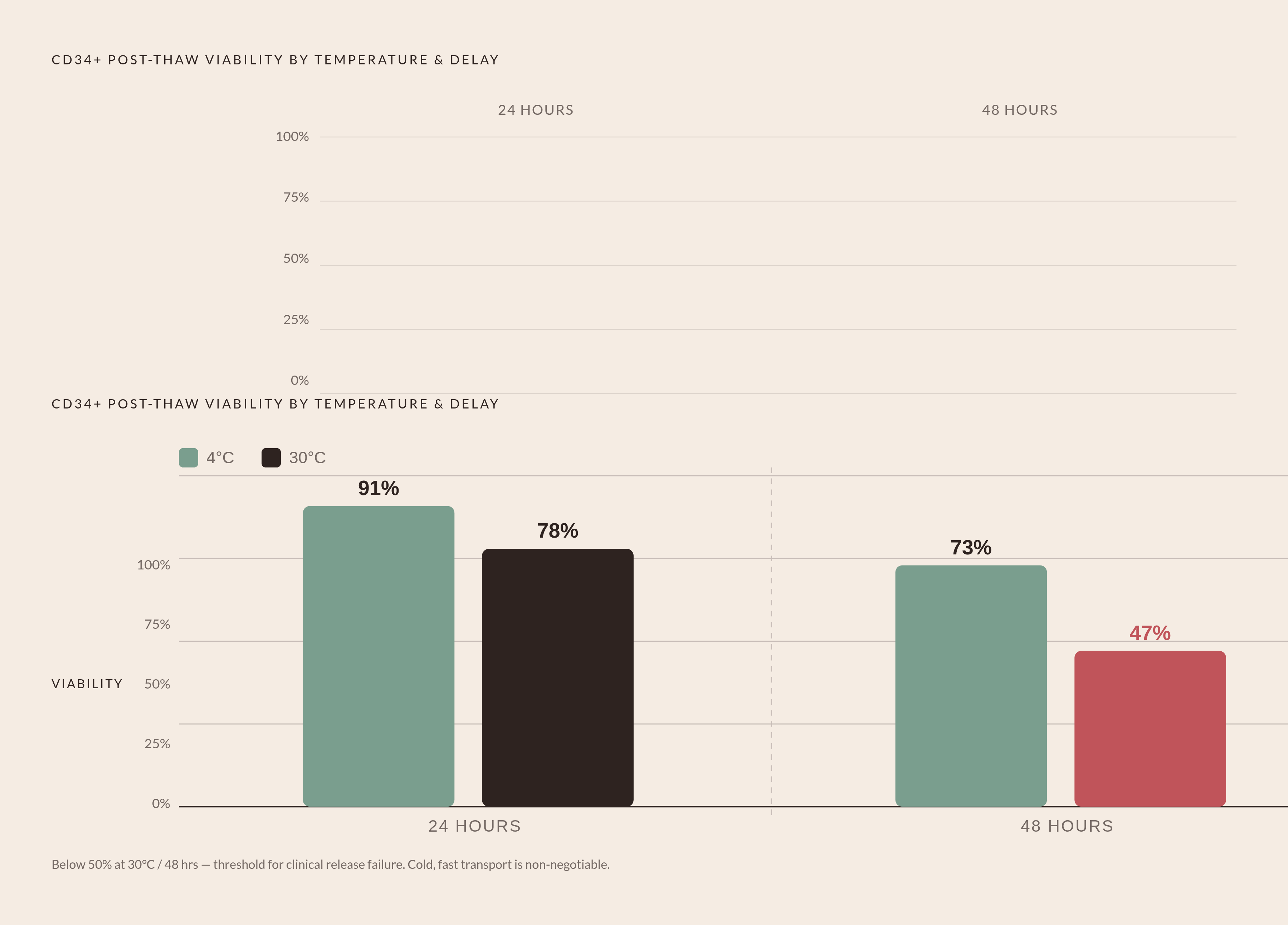
The accepted range for transporting a fresh unit runs from 4 to 30°C, and that range is a little misleading, because you want to live at the bottom of it, not float somewhere in the middle. At 4°C, stem cells hold onto viability much longer than they do at higher temperatures. Warmer conditions accelerate cell death in ways that can compromise a unit no matter how many cells it started with.
The numbers on delay aren't subtle. Cord blood held at 4°C for 24 hours before cryopreservation shows post-thaw CD34+ viability above 90%. Stretch that to 48 hours at 4°C, and viability still sits above 70%. Now compare 30°C: viability drops below 80% after just 24 hours and below 50% by 48. Processing speed matters too. Units processed within 12 hours of collection hold 98.12% viability; push that window to 24 or 36 hours, and it falls to 92.06%.
Six points doesn't sound dramatic on its own. But it compounds, and a unit that arrives at the lab already degraded has far less margin left for processing, freezing, and everything after that. Every serious transport protocol requires a temperature log, or at minimum an indicator strip, documenting that the unit stayed in range the entire trip, with deviations flagged and reviewed rather than shrugged off. What the lab wants at the end of that drive is unglamorous but non-negotiable: cold, anticoagulated, documented, fast.
Laboratory processing: separating what will be frozen from what won't
The lab's first job is subtraction. Red blood cells and plasma get stripped out, leaving a concentrated fraction rich in leukocytes, the part that actually does the transplant work. Pulling the red cells out serves two purposes at once: it shrinks the volume that needs freezing and storage space, and it removes material that turns toxic after thaw, since lysed red cells release byproducts that are harmful once infused into a patient.
Once that concentrate is ready, technicians add a cryoprotectant, typically DMSO mixed with dextran, before freezing starts.
Before any of it goes into a freezer, though, a battery of tests runs. TNC count and CD34+ count come first, since they predict transplant performance better than anything else measured. Collection volume gets logged, along with ABO and Rh typing and full HLA typing. Then microbial testing: aerobic and anaerobic cultures screen for bacteria and fungus, and under current NetCord-FACT standards, a unit that fails those cultures is discarded, full stop. It doesn't sit in a freezer somewhere waiting for a second opinion.
None of this stands still, either. Researchers at Guangdong Cord Blood Bank tracked standardized collection and processing procedures from January 2022 through December 2024 and watched storage success rates climb noticeably. That's roughly one in six units failing shrinking down to closer to one in ten, which is not a small gain when you're talking about units nobody can ever recollect. Automation is doing real work here too, cutting human error and tightening consistency once a bank is running real volume. What comes out of this stage is either a unit with a documented quality profile ready for freezing, or a unit already pulled from inventory. The decision gets made here. Not later, not at the bedside twenty years on.
How the freezing method chosen shapes what survives to the storage tank
Freezing has exactly one job: stop cellular activity without letting ice crystals tear through the cell membranes on the way down. DMSO does the heavy lifting, protecting cellular structures during the freezing process, but DMSO carries its own drawbacks that extend beyond the freezing step itself. Nobody in the field has fully solved that trade-off, and I doubt anyone will soon.
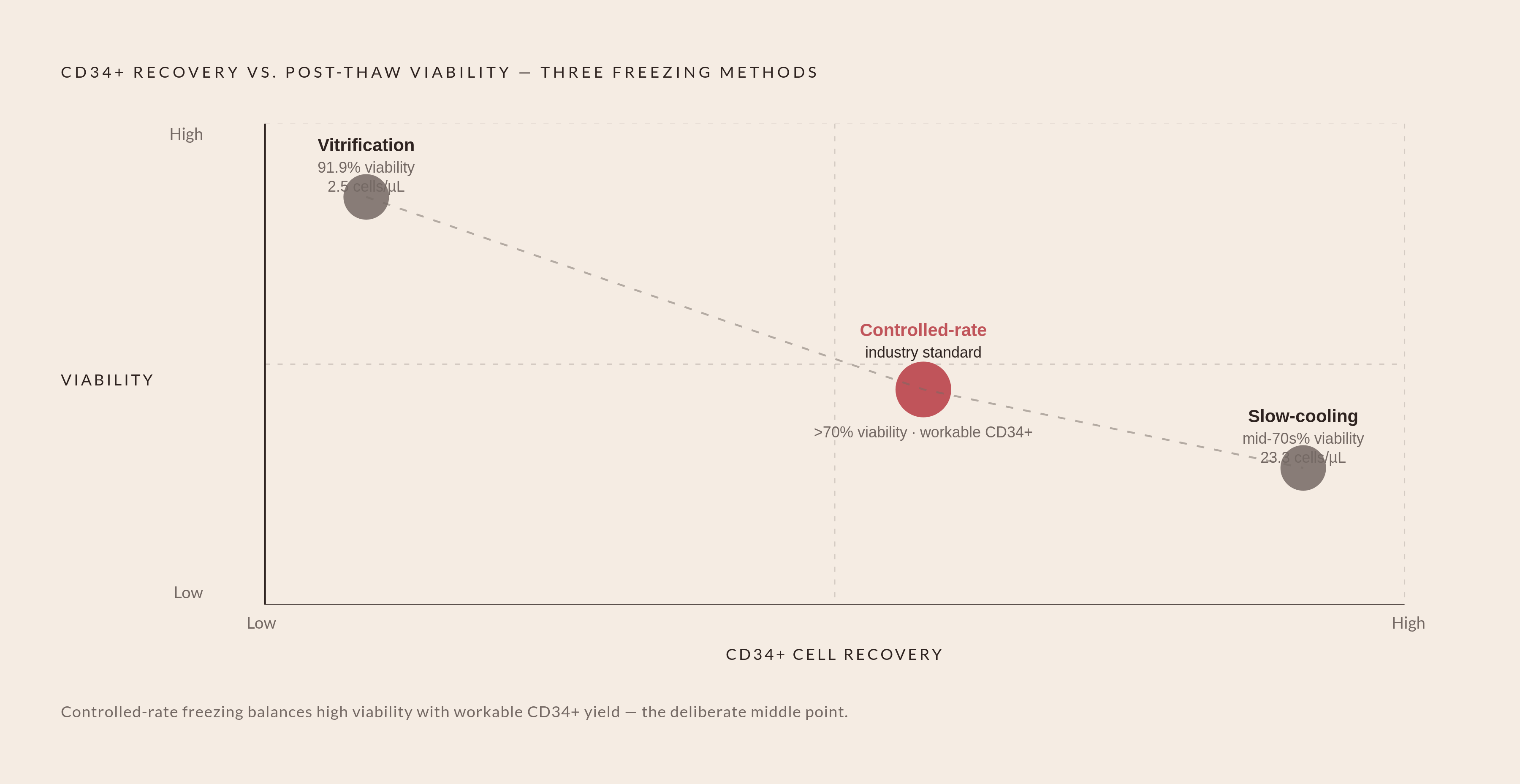
Three freezing methods exist, and none of them wins across the board. Slow-cooling holds CD34+ counts highest, around 23.32 cells/µL, but post-thaw viability lags in the mid-seventies, meaning plenty of cells survive the count but not necessarily the function. Rapid-cooling, or vitrification, flips the trade: viability jumps to roughly 91.9%, while CD34+ recovery collapses to about 2.47 cells/µL. Gain on one axis, lose badly on the other.
Controlled-rate freezing splits the difference, which is exactly why it's become the industry standard. A computer-regulated program brings the temperature down gradually, keeping viability above 70% while holding CD34+ recovery in a workable range, avoiding the extremes at either end. Mechanically, it looks like this: the processed unit goes into a sealed freezing bag, the bag loads into a metal cartridge, the cartridge runs the computer-controlled program, and once finished, the unit moves into a liquid nitrogen rack at roughly -196°C, the point where cellular activity, aging included, stops outright.
Whatever freezing protocol a bank chooses is largely what determines the quality a unit carries into long-term storage, and that decision gets made years before anyone knows which patient might need it.
What actually happens to cells over decades in liquid nitrogen storage
The physics of indefinite storage is not complicated. At -196°C, molecular motion driven by heat essentially stops, and biological aging stops with it. Degradation needs heat to run, and there isn't any down there.
The best evidence on this comes from the José Carreras Cord Blood Bank in Düsseldorf, which holds 21,215 active cryopreserved units and published stability data. Units processed unseparated between 1993 and 1998 showed mean TNC viability of 88.91 ± 5.01% after 29 years. Manually volume-reduced units from 1998 to 2005 came in at 84.22 ± 10.02% after 25 years. Units that went through automated volume reduction hit 88.64 ± 3.91% after 18 years. High-80s viability after nearly three decades, at one institution, across several generations of processing technique. Not a projection; a record. Other published work has shown efficient recovery across multiple time points post-freeze, which lines up with the same conclusion.
The real threat during storage isn't time so much as transient warming, brief spikes above the critical threshold that can happen without anyone catching them in real time. NetCord-FACT sets that threshold at -150°C for cryopreserved cord blood, with cells needing to stay below -130°C, usually maintained through liquid nitrogen vapor phase storage. A unit can look completely frozen on the outside while it's already been damaged by a warming event on the inside. Visual inspection misses this entirely. Only continuous monitoring catches it. Storage conditions and how closely they're watched matter more than raw duration ever will.
The quality thresholds a unit must clear before it can be released for transplant
Two numbers decide most release calls above all others: TNC count and CD34+ count, which carry the most weight for predicting engraftment and survival. The American Society of Hematology sets minimum TNC thresholds at cryopreservation of 2.5 to 3 × 10⁷ cells per kilogram of recipient weight for malignant disease, and a stricter 5 × 10⁷ cells per kilogram for nonmalignant disease. That gap isn't arbitrary. Graft failure in a nonmalignant case is a much harder problem to walk back, since recovery options following graft failure are far more limited.
CD34+ dose is typically set at 1 to 1.5 × 10⁵ cells per kilogram at cryopreservation. Post-thaw viability is a critical release criterion, with evidence showing that viability above 70% is associated with acceptable outcomes and that drops below that threshold raise serious concerns about unit quality.
Everything upstream gets tested at once, right here. A unit with borderline counts at collection, or one frozen with a method that traded CD34+ recovery for viability, or one that sat through an undetected warming event, can fail at this gate no matter how clean the paperwork looked earlier. HLA matching sits on top of all this, checked at banking and rechecked at selection, so eligibility always comes down to two separate questions: is the cell quality there, and is it a genetic match for the patient waiting. What passes through this gate is a unit a transplant center can actually stake a treatment on. That trust is the entire point of the preceding chain.
What the full chain means for anyone deciding whether and how to bank cord blood
A family deciding whether to bank cord blood is really deciding how much they trust a chain they'll never see directly. Processing protocol, freezing method, storage monitoring, and accreditation carry far more weight than price or a glossy brochure, because one weak link anywhere in that sequence can undo the rest. Accreditation is the closest thing to a shortcut available: NetCord-FACT standards cover collection through release criteria, and a bank meeting them has had every link checked by someone outside its own walls, not just its own marketing department.
A few questions are worth asking a bank directly, and the answers should come easily if the bank actually knows its own process. What freezing method do they use, and what post-thaw viability does that method produce in their own data. What's their temperature monitoring protocol during storage, and what happens procedurally if a transient warming event occurs. What's their storage success rate, and how far back does it go. What long-term viability data exists for units stored years, not months.
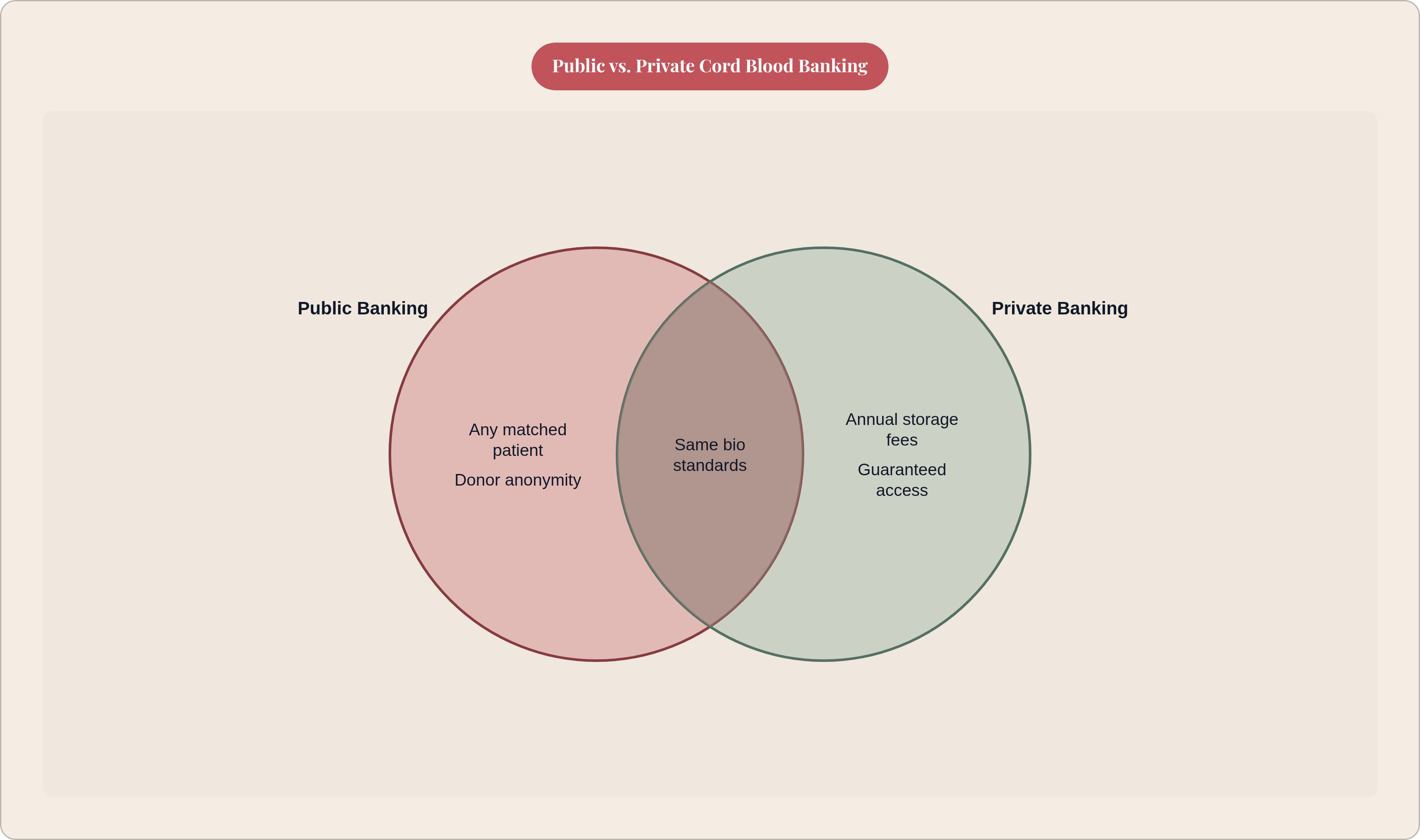
Public and private banking mostly differ on who gets to use the unit later. Public banks make units available to any matched patient; private banks hold the unit exclusively for the banking family. The biological demands at every step between collection and release don't change based on which model a family picks. Some banks also offer additional collection options alongside cord blood, which can give a family more material from the very start.
The market's growth, projected to run from $32.2 billion in 2024 to $47.9 billion by 2030, reflects a bet on exactly this chain holding up. That bet isn't blind faith; it rests on data like Düsseldorf's, units tracked for decades with viability numbers that still hold. None of this is academic for a family standing in a delivery room. It's the difference between banking cord blood as a real medical asset and banking it as an expensive keepsake, and the distinction only shows up twenty or thirty years later, when it's too late to go back and fix.