Placenta Capsule Cost Factors and Price Ranges
Prices range from $130 to $500 depending on location, certification, and processing method.

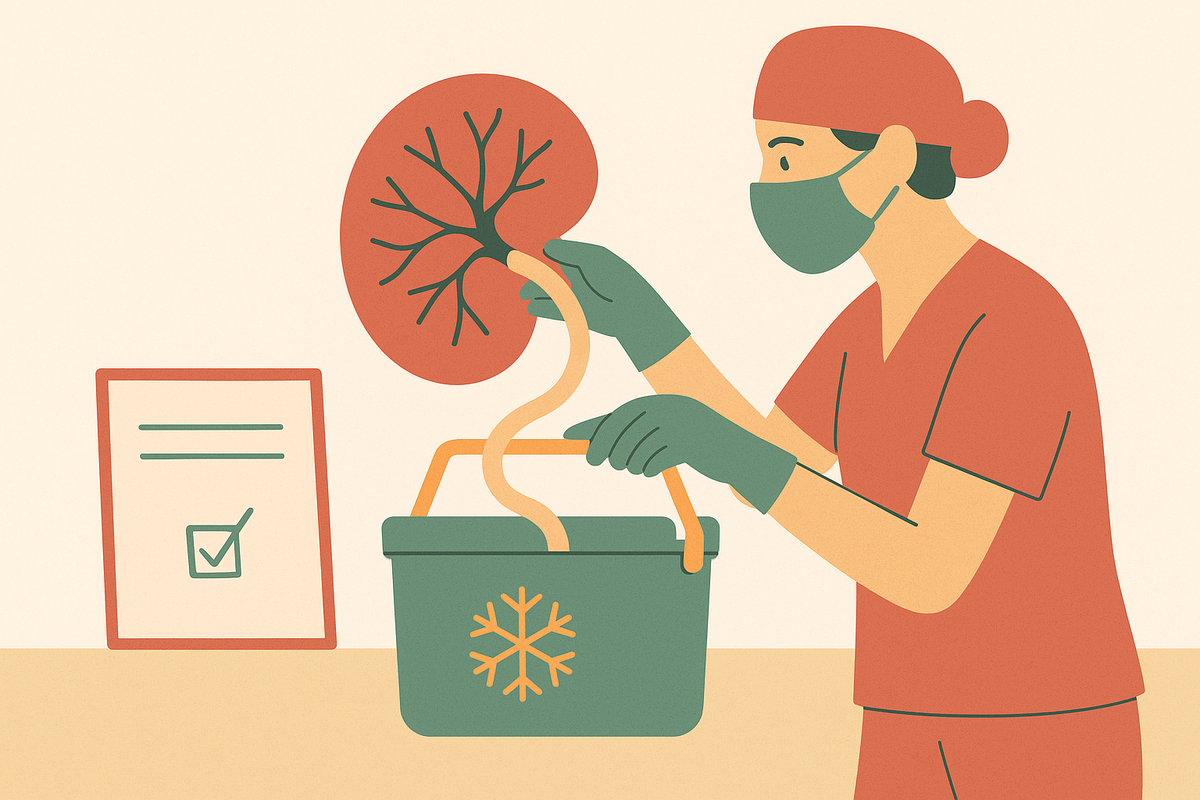
Placenta encapsulation has no set price because it has no set market. There's no licensing board deciding what a specialist can charge, no fee schedule that applies across state lines, and no regulation forcing consistency between one provider's kitchen setup and another's. What clients are paying for is labor, sterile equipment, and specialized training, not the placenta itself, which cannot legally be sold as a product. Nationally, quotes range from around $130 to $500, with the most commonly cited average between $250 and $350. That sizable spread looks arbitrary until you break down what's actually driving it, which is the point of what follows.
What the market charges: real provider prices across the country
A city-by-city look at pricing, drawn from data Mother Rising published, puts the national average at $275. Brooklyn, NY is at the top of that range at $375, while Denver, CO is lowest at $225. Other cities are somewhere in between: Tampa at $250, Dallas at $230, San Francisco at $285, Portland and Albuquerque both at $300, and Atlanta and Nashville each at $275.
Named providers fill in more texture. Hill Country Placentas in Texas runs a tiered system, from a $130 basic drop-off arrangement up to a $240 Premier package that includes pickup and a cooler for transport (a $150 to $170 hardship rate exists for approved cases). A specialist offering placenta encapsulation in one city charges $225 with specialist pickup and delivery, or $200 if the client handles drop-off and pickup themselves. Labor with Kaci in Atlanta bases its service at $275. Chicago Birthworks Collective charges the same $275 but bundles in 80 to 200 capsules plus a personalized keepsake. My KC Doula in Kansas City prices its encapsulation service at $350, and Midwest Placenta Encapsulation charges the same $350 base, tacking on a $50 shipping kit fee for clients who mail their placenta in rather than meet in person. Whole Mama Doulas offers a $333 package that includes vegan capsules, a keepsake jar, a print, and a cord keepsake. Pluscenta Labs, a nationwide mail-in service sold through Amazon, prices its all-in-one kit at $375, covering lab-based processing and prepaid return shipping.
Once you add a keepsake item and factor in local pickup coordination, a realistic all-in total for base service is between $375 and $420. Layering in a tincture, a cord keepsake, and a printed certificate can push the total to $500 or $575. Every one of these numbers reflects a decision point examined below: where the provider operates, what training they've completed, how they process the placenta, how it gets from hospital to lab and back, and what extras get added along the way.
How geography shapes price in ways that don't always make rural areas cheaper
Metro pricing follows a familiar logic. Higher rent, higher cost of living, and higher client volume in cities like Brooklyn or San Francisco push prices up, the same way they push up prices for any personal service performed by a trained specialist. Denver's comparatively low $225 average fits that pattern in reverse.
What doesn't fit the pattern is the assumption that rural areas are automatically cheaper. According to Tree of Life Placenta Services, low population density can concentrate the market down to one or two providers covering an entire region, and when competition disappears, so does the downward pressure on price. A client in a small town might find the only available specialist charging more than someone in a mid-sized city with five providers competing for business.
The practical lesson: location predicts price less reliably than most people assume. A prospective client in a rural area shouldn't default to the nearest provider on the theory that fewer overhead costs mean a lower bill. Searching a wider radius, including specialists who travel or accept mail-in placentas, is often the only way to find out what the local market will actually bear.
Why provider certification raises the price
Certified specialists charge more, and Tree of Life Placenta Services argues they should. No government body licenses placenta encapsulators, so third-party certification is the only quality signal a client has access to, and that credential represents a real investment of time and money on the provider's part.
The Association of Placenta Preparation Arts (APPA) is described as the field's leading training and certification resource. Its program runs eight modules and requires more than 200 hours of study, plus mandatory board reviews of each specialist's Personal Preparation Protocol, covering everything from transportation and handling to sanitation, personal protective equipment, and equipment reserved exclusively for placenta processing. The International Placenta and Postpartum Association (IPPA) offers a self-paced distance program that includes full certification, two years of IPPA membership (valued at $200), and a personalized business assessment. Beyond those two, providers often carry a Bloodborne Pathogens and Infection Control certificate through Biologix Solutions, renewed annually and focused on bacterial and viral risk, and a food handling certificate such as ServSafe, since capsules are, after all, meant for human consumption.
Experience adds its own pricing tier on top of credentials. Newly certified specialists frequently discount their rates to build a client base, while established providers with strong local reputations tend to price at or above the area average. Hill Country Placentas warns that clients should be wary of low-cost encapsulators who haven't completed a certification program or invested in the right equipment, calling encapsulation "not an area where you want to hire the cheapest person." A higher quote from a certified specialist is the visible cost of training that a client can actually verify by asking to see current certificates before booking. It's the visible cost of training that a client can actually verify by asking to see current certificates before booking.
Cost and processing time differences between the TCM method and the raw method
Two processing methods dominate the market, and they cost differently because they take different amounts of time. The Traditional Chinese Medicine (TCM) method rinses the placenta, steams it, then dehydrates it before it's ground into capsules. Steaming kills bacteria that may be present, and Hill Country Placentas notes the method draws on a practice used in TCM for thousands of years.
The raw method skips the steaming step, rinsing the placenta and dehydrating it at a lower temperature. Advocates associate raw processing with a stronger effect on milk supply and energy, though some specialists note individual responses to the two methods can vary. If meconium is present at birth, Hill Country Placentas switches automatically to the traditional method for safety reasons, regardless of what the client originally requested.
Cost-wise, raw processing simply takes longer to dehydrate at that lower temperature, and Mother Rising notes that some certified specialists charge more to account for the added time. Hill Country Placentas also offers a third option: Raw Cubes for Smoothies, priced at $175 with pickup, where the placenta is cleaned but neither steamed nor dehydrated, then frozen in molds for the client to add to smoothies. Some providers will even split the difference, offering raw cubes for the first week postpartum followed by encapsulation of the remainder, a blended approach that comes with its own blended price. Anyone comparing quotes should ask which method is baked into the base price and whether switching to the other one costs extra.
Pickup, delivery, and shipping costs that get added after the base quote
The number quoted on a provider's website is rarely the number a client ends up paying, because logistics fees often sit outside the base price. That same specialist charges a $25 trip fee for pickups more than 25 miles from the specialist's home base, and its price drops from $225 to $200 for clients willing to handle drop-off and pickup themselves. Overnight shipping for clients more than one to two hours away costs roughly $25, according to Mother Rising. Midwest Placenta Encapsulation charges a flat $50 shipping kit fee, due at 34 weeks, for anyone mailing a placenta in rather than meeting in person. Hill Country Placentas accepts overnight shipments from anywhere in Texas for clients outside its normal pickup radius, and its $240 Premier package bundles pickup, a cooler, and delivery into the base price, while a provider's lower-tier option at $200 requires the client to drop off the placenta themselves.
Pluscenta Labs takes a different approach entirely, folding every logistics cost into its flat $375 kit price: hospital collection materials, prepaid return shipping in both directions, lab processing, and tracking are all included up front, with no separate line item to negotiate.
The savings pattern across these examples is consistent. Clients who drop off and pick up in person tend to pay less than those who need a specialist to drive out and back, simply because the provider isn't burning travel time and gas. Doulas who also offer encapsulation as one service among several sometimes fold pickup into a multi-service discount, so clients should ask about this directly.
In-home versus off-site processing costs and transparency
The more common arrangement is off-site processing, where the work happens in the specialist's own workspace or a dedicated lab. The provider controls the environment, owns the equipment, and handles sanitation on their own terms, and the client doesn't need to supply anything.
In-home processing flips that setup: the specialist travels to the client's residence, but the client has to provide the equipment and materials, and the specialist's time on-site stretches out to cover setup, processing, and cleanup. That doesn't translate into a predictable price direction. Some in-home providers charge less because the client is supplying equipment, while others charge more because of the extra hours and travel involved. Tree of Life notes that most professionals price based on time spent rather than equipment cost. The in-home discount, when it exists at all, often isn't as large as clients expect.
There's a real argument for choosing in-home despite the cost uncertainty: clients can watch every sanitation step happen in their own kitchen, in real time, rather than trusting a workspace they've never seen. Some older certification programs required in-home processing outright; others leave the choice to the specialist. Either way, a client should ask this question before booking, not after.
Rush turnaround fees for expedited processing
Standard turnaround time isn't standardized across the industry, and some providers charge a premium to guarantee faster service. According to biologyinsights.com, expedited processing can promise capsules returned within 24 to 48 hours of birth, a window that matters for clients hoping to start taking capsules within the first days of postpartum recovery, when mood and energy support is most wanted.
Combination requests, like raw cubes for the first week followed by encapsulation of the rest, can also stretch out processing time and may carry a surcharge of their own, whether the provider states it upfront or not. The only reliable way to know what to expect is to ask directly: what's the standard turnaround, is a faster option available, and what does that option cost.
Add-on services and how they build toward the real all-in total
Individually, add-ons look cheap. Collectively, they're where a lot of quotes quietly grow. Biologyinsights.com estimates that supplementary products can add $35 to $100 or more onto a base price by the time a client is done customizing an order.
Placenta tincture generally runs $25 to $75 depending on size, though Labor with Kaci prices it lower, at an additional $25. Placenta prints tend to start around $25 to $50 elsewhere, but Labor with Kaci lists the item at just $8. Umbilical cord keepsakes are often folded into base packages at no extra charge, though Labor with Kaci itemizes it separately at $10. Flavored or smaller capsules typically add another $10 to $20. Some specialists also offer placenta salve and nipple butter as optional add-ons, and twin pregnancy surcharges appear as additional line items at some providers.
Bundled packages can undercut the à la carte total. Whole Mama Doulas' $333 package rolls in vegan capsules, a keepsake jar, a print, and a cord keepsake for one price, and Chicago Birthworks Collective's $275 fee already includes 80 to 200 capsules along with a memento. Once a client adds one keepsake to a base service and factors in pickup, the realistic total is between $375 and $420. Adding a tincture, a cord keepsake, and a printed certificate on top of that can push the number to $500 to $575. The only way to know which total applies is to request an itemized quote rather than accepting the headline price at face value, and to compare that itemized breakdown against what a bundled package would cost for the same list of extras.
Whether HSA, FSA, or insurance can offset the cost
Traditional insurance doesn't cover placenta encapsulation. Mother Rising, whose author has more than a decade of encapsulation experience, states that no client has been reimbursed by a standard insurance company for the service.
HSA and FSA accounts are a different story, and sometimes a more forgiving one. According to the same source, these accounts may cover encapsulation under categories like "alternative therapies," "natural remedies," or "health supplements," depending on how the plan is structured. The advice is straightforward: call and ask, and if the first representative on the line has no idea what encapsulation even is, don't take that as a final answer. Escalating the question or asking specifically about alternative therapy coverage often gets a different response.
There's no consistent policy here, and outcomes vary from plan to plan and depend heavily on how the provider codes or describes the service on paperwork. The only sensible sequence is to check HSA or FSA eligibility before booking a provider, not after paying, and to ask whether the specialist can supply documentation that would support a reimbursement claim.
Evaluating a quote before booking
Every number examined in this piece maps back to something concrete: where the provider is located, what certifications they've earned, which processing method they use, how the placenta travels between hospital and lab, and how many add-ons get layered onto the base fee. None of that is arbitrary, and none of it should be treated as noise to average away. A lower quote isn't automatically the better deal, and a higher one isn't automatically overpriced. It depends on what's actually included.
Before booking, a prospective client should ask a provider what certifications they hold and whether those certifications are current, since credentials expire and require renewal. A prospective client should also ask which processing method is included in the base price, whether pickup and delivery cost extra, what the standard turnaround time looks like, and whether a faster option exists at additional cost. A full, itemized quote, not a single headline number, is the only real basis for comparing one provider against another, and a specialist unwilling to break down their pricing that way deserves a second look before signing on.
Sources
- Amazon.com : Pluscenta Placenta Encapsulation Kit with Lab Processing Service, Hospital Collection Kit, Prepaid Return Shipping and Nationwide Tracking : Baby
- Cost of Placenta Encapsulation | Mother Rising
- Cost of Placenta Encapsulation
- Placenta Encapsulation — My KC Doula
- How Much Does a Placenta Cost?
- Encapsulation Services and Pricing — Hill Country Placentas
- Pricing
- biologyinsights.com