Public Cord Blood Bank Donation Eligibility Requirements
Banks screen donations to protect transplant recipients from infectious disease and genetic risks.
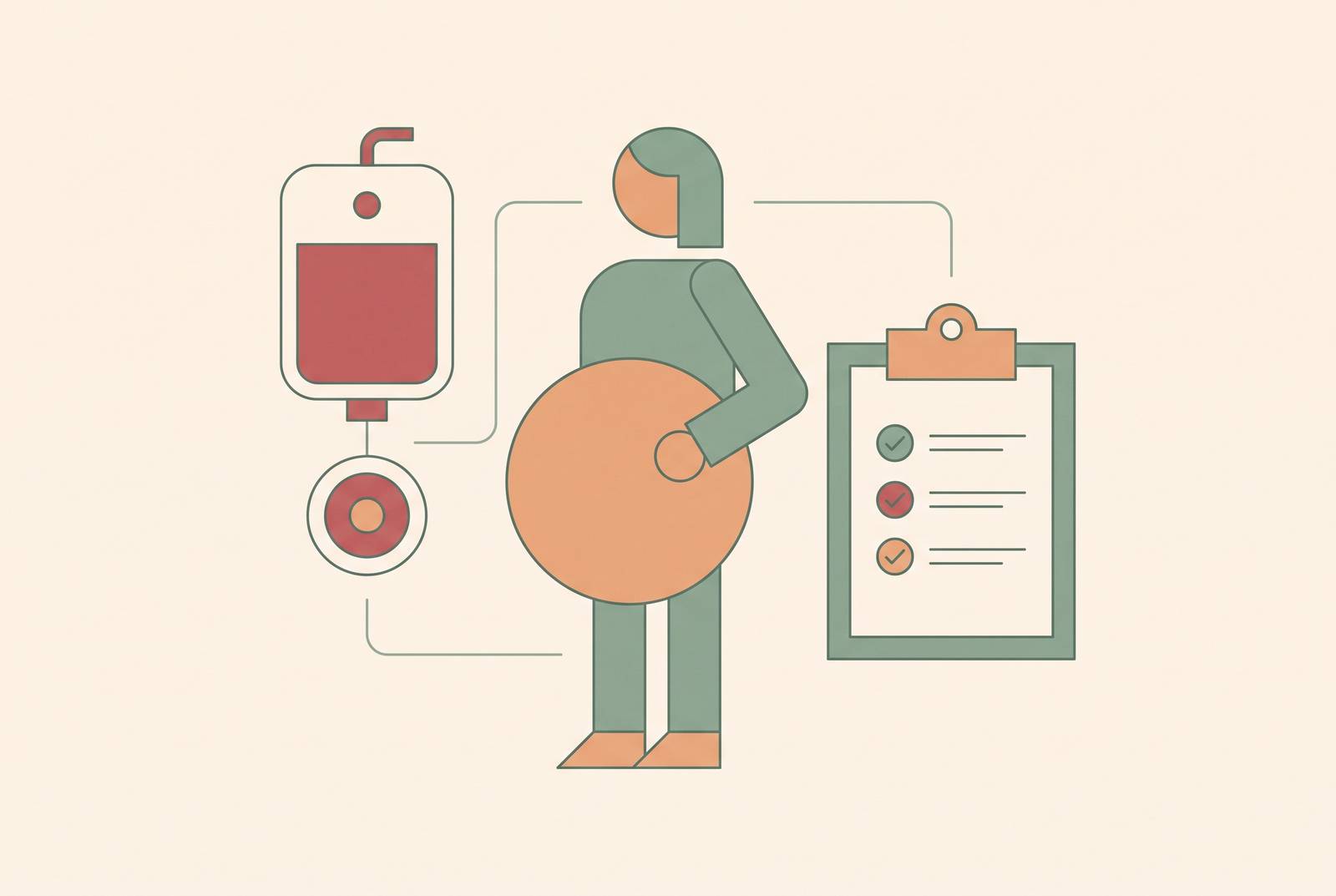
Public cord blood banks protect transplant recipients by checking the mother’s health, the pregnancy and delivery, and the collected unit against their donation eligibility requirements. Understanding these requirements helps expectant parents assess whether donation is possible, but a preliminary checklist cannot replace the bank’s decision. The first step is establishing whether a donation pathway is available before the registration deadline.
Why public cord blood banks screen donors, and what that means for you
Public cord blood banks screen donations to lower the risk of passing infectious disease or genetic conditions to someone who receives a transplant. Recipients typically have compromised immune systems, so the safety threshold is higher than for ordinary blood donation. NMDP explains that eligibility restrictions also reflect the long-term cryopreservation of cord blood and the need to give a transplant the highest chance of success. These restrictions are safeguards for a vulnerable patient.
After birth, cord blood that would otherwise be discarded can be collected, tested, and listed on the NMDP Registry if it meets transplant standards. Public banks cover collection, testing, and storage, so donation carries no cost to the family. In return, the unit is available to any matched patient worldwide. The requirements governing that donation fall into three categories, namely maternal health history, delivery logistics, and unit quality.
Registering on time: why the window between weeks 28 and 34 is a hard eligibility limit
Before health screening can lead to approval, there must be a way to collect the donation. HRSA’s donation guide advises contacting a cord blood bank between the 28th and 34th week of pregnancy. The bank needs time to process the application, which makes last-minute donations impossible in most cases. Missing the relevant bank’s deadline can therefore close the donation pathway even when every health requirement is met. The registration window is an eligibility gate, although a small number of banks accept late requests.
Hospital participation is the first practical question within that window. NMDP works with cord blood banks in 19 states, so most hospitals are outside its public donation pathway even when the mother meets the health requirements. A planned delivery at a nonparticipating hospital is a logistical barrier. Confirming participation early establishes whether routine collection is available or whether another option needs consideration.
Cleveland Cord Blood Center accepts donations with no advanced registration required, while Cord for Life in Altamonte Springs, FL accepts national mail-in donations and requires registration by week 34. Bloodworks Northwest, the first and only public cord blood bank in the Pacific Northwest, collects at partner hospitals in Washington state and through its partner Hawaii Cord Blood Bank. Prospective donors who will give birth outside those hospitals should ask a coordinator about other options, since public banks differ in how they collect donations.
Maternal health history: the conditions that disqualify a donor
Once the timing and plans for collection are in place, screening relies mainly on the maternal health questionnaire. Its questions are much like those on standard blood-donor questionnaires, but stem cell transplantation calls for further restrictions. The donor must be 18 or older. NMDP emphasizes that ineligibility does not reflect the health of the mother or baby, a distinction that matters when reviewing conditions or exposures that may have occurred long before pregnancy.
NMDP’s eligibility page lists a previous diagnosis of aplastic anemia, hereditary spherocytosis, hereditary elliptocytosis, hypogammaglobulinemia, or polycythemia as disqualifying. It also lists any exposure to or infection with hepatitis B or C, HIV, West Nile virus, or tuberculosis. Treatment for syphilis or a positive test within the last 12 months is another exclusion. These questions distinguish lifetime history from recent events, so the period specified in each question is part of the requirement.
Treatment history is assessed separately from diagnoses. NMDP lists any previous chemotherapy and any use of specified immunosuppressants as disqualifying. Those medicines are interferon, infliximab, etanercept, methotrexate, 6-mercaptopurine, azathioprine, mycophenolate mofetil, cyclosporine, and tacrolimus. Its criteria also cover a personal or immediate-family history of any cancer or leukemia, including skin cancers, with the baby’s father or siblings included in the family-history screening.
Exposure and lifestyle questions complete this part of the assessment. NMDP lists contact during pregnancy with anyone who received the smallpox vaccine, any needle use for non-prescribed drugs, and sexual contact in the last 12 months with someone who has used such needles. Tattoos or ear, skin, or body piercings within the last 12 months are disqualifying where shared or non-sterile instruments were used. Being related by blood to the baby’s father, such as being first cousins, is also listed.
Conditions that require case-by-case review rather than automatic disqualification
HRSA notes that hepatitis A or diabetes only during pregnancy, known as gestational diabetes, does not automatically disqualify a donor. Medication-dependent diabetes requires review. These distinctions make it important to ask the bank about the actual diagnosis and treatment rather than assume that a general label settles eligibility.
Eligibility after the use of donor eggs or donor sperm depends on the accreditation of the facility that handled the material and the bank’s review of that donor’s medical history. Banks also assess whether the mother lived in or traveled to areas with active Zika virus transmission during pregnancy. NMDP lists red blood cell transfusion support in the last 12 months as disqualifying, but donors should discuss the timing and circumstances directly with the bank. Bank staff make the final determination in ambiguous cases, so uncertainty is a reason to call.
Pregnancy and delivery factors that affect eligibility
NMDP and Bloodworks Northwest require a singleton pregnancy. NMDP also identifies the absence of known fetal abnormalities as a distinct eligibility criterion. Bloodworks Northwest requires the pregnancy to be full-term when the baby is born, which it defines as 37 weeks of gestation. An otherwise healthy prospective donor can therefore be ineligible because of pregnancy-specific requirements.
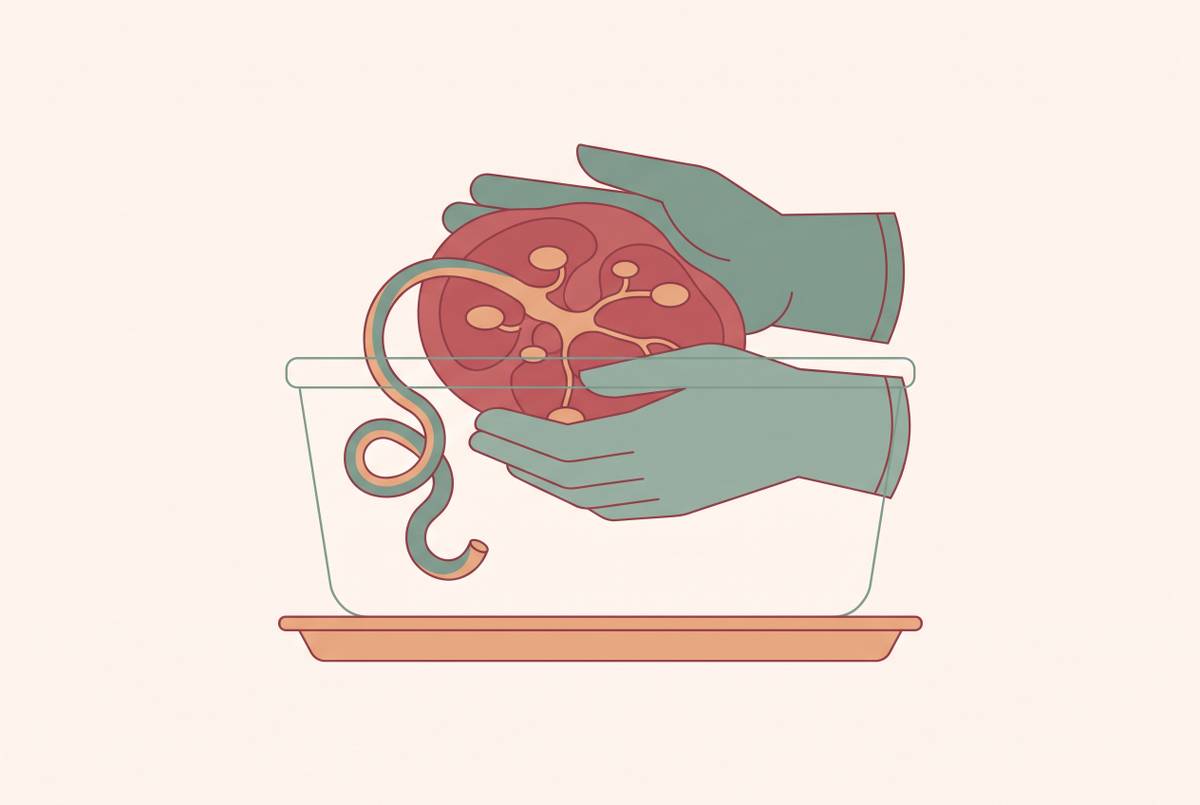
Delivery method is not generally the same kind of barrier. HRSA states that most public cord blood banks collect after either vaginal or C-section delivery. Collection takes place after the baby is born and the cord has been clamped and cut. The blood is drawn from the remaining cord and placenta. The procedure is non-invasive, presents no risk to mother or baby, and does not interfere with birth or bonding.
The hospital still needs to know that collection is planned. On arrival, the mother should tell the labor and delivery nurse that she is donating cord blood. The collection itself requires nothing further from the donor, but it remains subject to the pregnancy and delivery criteria.
What happens to the cord blood unit at the bank, and why many donations are not stored
HRSA’s FAQ says that the cord blood must have enough blood-forming cells for a transplant, meet the requirements for the mother’s health history and blood test, be free from contamination, and arrive within the time limit set for processing. A mother can meet every health and delivery criterion while the collected blood does not qualify for storage.
It is common for donations not to be stored, particularly because they contain too few blood-forming cells or take too long to reach the bank. These limits are a structural feature of collecting material for transplantation. Registration and successful collection create the opportunity for donation, but they do not guarantee a transplant-ready unit. NMDP’s donation process page says that units that meet the requirements are processed soon after they arrive and cryopreserved at -150°C (-238°F).
Units that do not qualify for transplant may be used for research with parental permission, or they may be discarded. LifeSouth Cord Blood Bank, the first and only federally licensed public cord blood bank in Florida, Georgia, and Alabama, provides non-clinical units to qualified researchers working to advance medicine. HRSA also says that the registry gives priority to high-quality units from genetically varied backgrounds. Storage decisions therefore affect not only the suitability of individual units but also which patients may eventually find a match.
Why diverse donations matter and what prospective donors from underrepresented groups should know
Genetic diversity matters because patients are far more likely to find a matched unit from a donor of similar ancestry. Representation in the available inventory therefore has a direct clinical role in transplant access. Cord blood is especially important for patients who cannot find matched adult donors in the registries that are available. Racial and ethnic minorities are disproportionately represented in that group, making eligible donations from underrepresented backgrounds especially valuable.
Bloodworks Northwest explains that people from non-Caucasian ethnic groups are less likely to find a match because so few bone marrow donors of color are registered. Its donor information says that cord blood donations from diverse families are especially important for that reason. Low awareness of cord blood banking compounds the participation gap.
The eligibility criteria themselves do not vary by ethnicity. The additional value of a diverse donation does not remove the requirements for maternal health, delivery arrangements, or unit quality. Instead, it provides further motivation for eligible families who are deciding whether to donate.
How to find out quickly whether you are likely eligible and what to do next
Between weeks 28 and 34, start by discussing donation with your doctor or midwife, as HRSA recommends. Confirm whether your delivery hospital participates by consulting the NMDP participating hospital list. If no participating hospital is nearby, consider whether a mail-in bank such as Cord for Life serves your area, allowing for its week-34 registration deadline. These questions establish whether there is a practical route to donation before you spend time on a full application.
Next, work through the NMDP eligibility checklist as an initial screen. Most of its disqualifying conditions concern medical history or exposures you will already know about. Call the cord blood bank directly if you are unsure about details such as travel, medications, or the use of donor eggs or sperm. Most healthy women carrying one baby who register on time will at least be assessed, but bank staff have the final word.
If the bank proceeds with your application, complete the health history and consent forms according to its instructions. Some banks require forms to be mailed, while others complete them at the hospital. When you arrive for delivery, tell the labor and delivery nurse that you are donating. If cord blood donation is not possible, NMDP lists other ways to support patients, including joining the bone marrow registry. A reliable preliminary answer can often begin with a single conversation, so the decision to donate starts with that conversation rather than a medical review you must conduct yourself.