What Hospitals Do With Placentas After Delivery
Most hospitals incinerate placentas by default unless parents request otherwise beforehand.
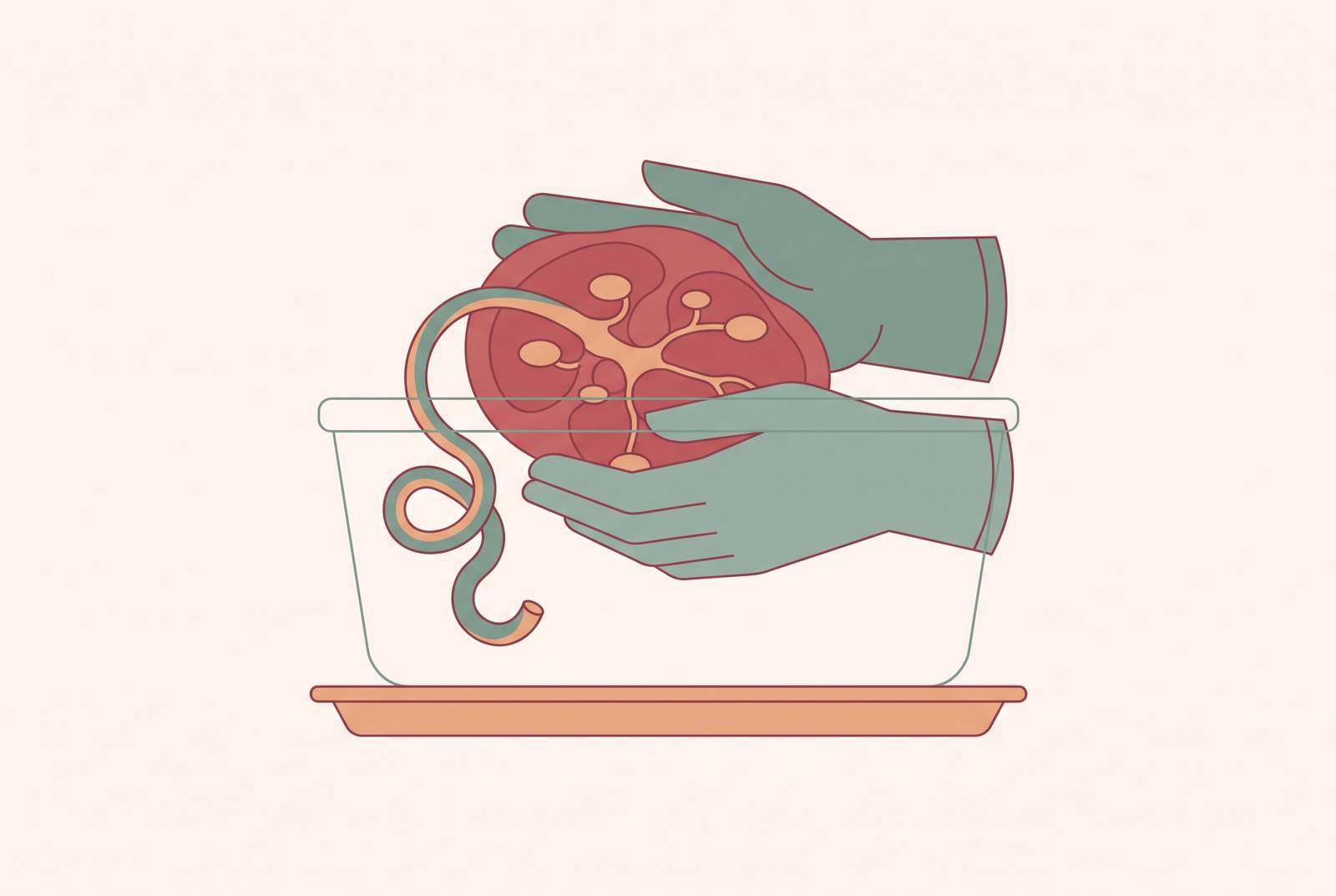
Placentas do not have to end up as medical waste, and yet most of them do, because the system is built to burn them by default unless a parent actively intervenes before labor starts. For roughly forty weeks the organ manages nutrient and gas exchange between mother and fetus, produces the hormones that sustain the pregnancy, and keeps the immune system from rejecting the fetus as foreign tissue. Once delivered, it exits the body intact, still recognizably an organ, and someone has to decide what happens to it next. That decision almost never gets made on purpose, and incineration itself carries no danger; the failure is that almost nobody tells families a choice existed at all.
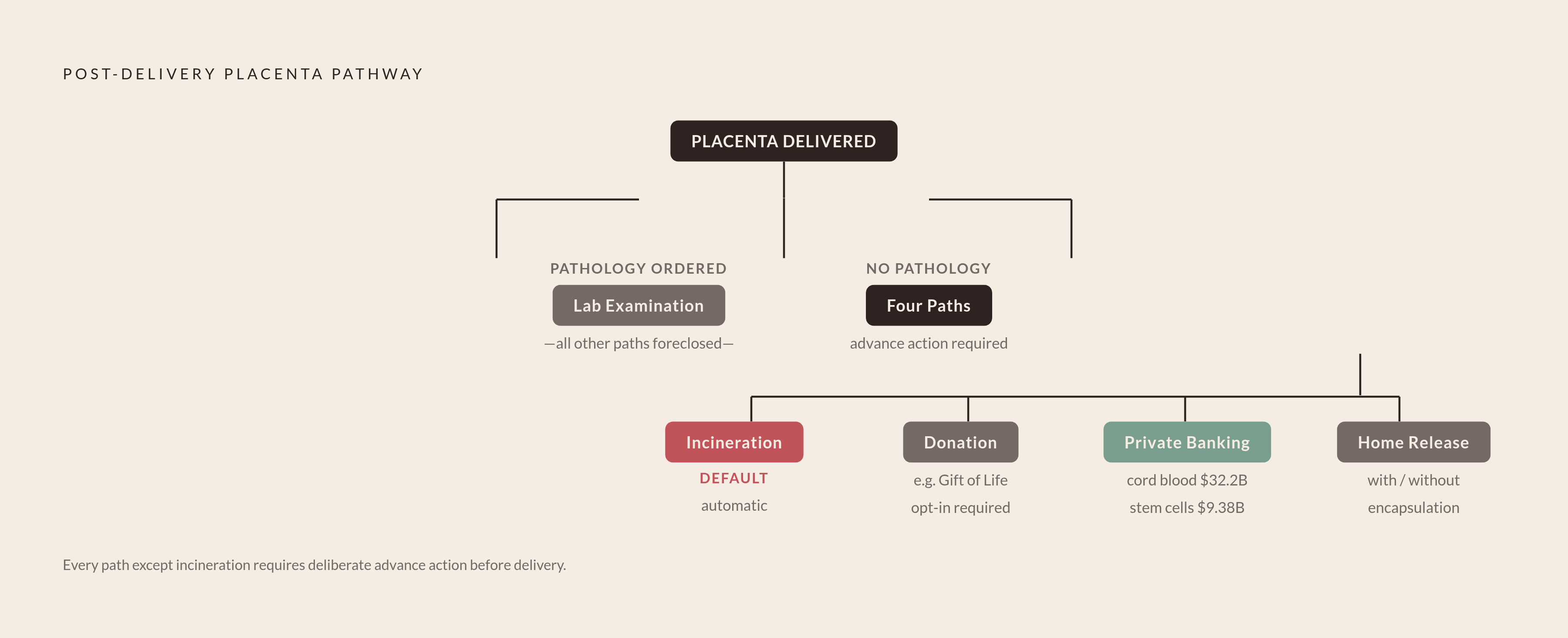
Hospitals classify a freshly delivered placenta as a biological specimen first, its disposition undetermined until a clinician reviews the delivery record and decides whether the organ needs closer inspection. That decision matters because the placenta functions as a record of the pregnancy: its color, weight, and the presence of clots, calcification, or unusual lesions can reveal complications that occurred weeks before anyone noticed a symptom. Pathology or not, that is the first fork in the road, and everything downstream depends on which branch a given placenta takes.
When and why hospitals send the placenta to pathology
The College of American Pathologists laid out three categories in 1997 that justify sending a placenta for formal examination: maternal indications such as preeclampsia, fetal or neonatal indications such as growth restriction or a poor Apgar score, and placental indications such as abnormal appearance at delivery. The Amsterdam Consensus Criteria later refined those categories, standardizing how institutions diagnose the placental lesions that actually correlate with clinical outcomes, since earlier practice varied widely from one hospital's pathology department to the next.
The process itself follows a set sequence. Gross inspection of the disc, membranes, and cord comes first, followed by histology on tissue sections to check for lesions tied to specific outcomes: infarction, chorioamnionitis, villous immaturity. These are the findings that explain a difficult delivery or flag risk in the next one.
Here is a gap that should alarm parents more than it currently does. One university hospital study found that 52.2% of deliveries met CAP criteria for examination; of those, only 81.8% were actually sent. A meaningful share of placentas that should have gone to pathology, by the hospital's own written criteria, simply did not. The reasons placentas that meet criteria still don't get sent are institutional and practical, rooted in the everyday friction of busy delivery units. Fixing that friction would cost little, but it requires someone to pay attention, and right now, not enough people do.
For parents, this section is the gate, and it closes fast. Once pathology is ordered on maternal, fetal, or placental grounds, the organ is no longer available for donation, banking, home release, or anything else, and there is no negotiating this after the fact. A placenta sent to the lab has left the pool of options entirely.
How hospitals handle placentas that don't go to pathology: the default disposal pathway
Absent a pathology indication, the placenta gets reclassified as regulated medical waste, biohazardous material bound for incineration, handled by whatever waste contractor the hospital already uses for other biological byproducts of delivery. No consent form, no patient request, no coordination with an outside program. It happens automatically unless someone actively intervenes, and most people don't, because nobody told them there was anything to intervene on.
Donation, private banking, taking the placenta home: every one of these requires a parent to identify the hospital's specific policy, track down the right contact person at the facility, fill out the required paperwork, and sometimes bring an appropriate container. None of this happens spontaneously in the hour after delivery. Incineration is what happens when nobody asks for anything else, and it deserves to be named plainly as a default built for administrative convenience, not for the family.
Donating the placenta for medical use
Donation requires explicit opt-in, and it changes nothing about the delivery itself. There is no additional risk to mother or baby, since the tissue gets collected only after the placenta has already been delivered and separated. Consent is documented in advance, and the process runs parallel to the birth, not in competition with it.
One legal detail shapes the entire framework: federal law prohibits payment for donated human tissue, placental material included. Donation is structured as a gift, which is why parents who donate receive no compensation.
Programs such as Gift of Life Michigan work to collect donated placentas through participating hospitals, but participation is still hospital-specific. A program running at one delivery site does not guarantee it runs at the hospital down the road, and asking directly is the only way to know; asking late is the same as not asking at all.
What donated placental tissue is used for in medicine and research
Donated placental tissue feeds a surprisingly wide range of downstream products. Amniotic membrane, the thin, tough layer that lined the amniotic sac, has anti-inflammatory, anti-scarring, and pro-healing properties useful in chronic wound care. Products like EpiFix, a dehydrated amnion and chorion allograft made by MiMedx Group, are used in wound care settings.
Ophthalmology has an even longer track record with the tissue. Amniotic membrane grafts are used in ocular surface reconstruction, patching or rebuilding damaged corneal tissue, a practice with more than 25 years of clinical use behind it and upward of 700 peer-reviewed publications documenting outcomes, according to parentsguidecordblood.org.
Beyond wound and eye care, placental tissue has become a working material in regenerative medicine generally, prized because it is ethically accessible, comparatively cheap to obtain, and free of the animal-derived components that complicate other cell culture work. It carries little of the controversy that has historically slowed embryonic stem cell research and funding. Investigators are studying placental stem cells across a range of conditions, alongside separate work on immune therapies and cancer treatment.
There is also a quieter, consequential use: drug research conducted directly on donated tissue via ex vivo perfusion models. At least 80% of pregnant women in Europe take at least one medication during pregnancy, and and pregnancy-specific safety data for many of those medications remains limited. Perfusion studies, in which a donated placental cotyledon is kept functioning outside the body long enough to measure how a drug crosses from one circulation to the other, are one of the only ways to study that transfer directly. Active clinical trials are recruiting donated placentas for exactly this kind of cotyledon perfusion work.
The current pipeline of commercial products and active clinical trials represents the modern extension of a long-established medical use case.
Private banking of cord blood and placental stem cells
Cord blood, the blood left in the umbilical cord and placenta after delivery, contains hematopoietic stem cells, the same cell type responsible for producing blood and immune cells. Placental tissue itself contains a separate, non-hematopoietic population of stem cells with a distinct therapeutic profile. The two are collected differently and marketed differently, even though both come from the same delivery.
Cord blood has the stronger clinical record, and this is exactly where the sales pitch gets ahead of the science. The FDA has approved its use in more than 80 conditions, and that approval history is what private cord blood banks lead with in their marketing. The market reflects the confidence: global cord blood banking services were valued at USD 32.2 billion in 2024 and are projected to reach USD 47.9 billion by 2030, a compound annual growth rate of 6.8%, according to BusinessWire's 2025 reporting.
Placental stem cell banking is a smaller, faster-growing segment, valued at USD 9.38 billion in 2024 and projected to reach USD 18.59 billion by 2032, a CAGR of 8.92%, per Wise Guy Reports. It has a shorter history than cord blood banking; placental stem cell banking has a shorter commercial history than cord blood banking.
Here is the point most banking marketing will not say out loud, and parents deserve to hear it stated flatly: cord blood's approved uses are real, but the conditions it treats are rare in any individual family's lifetime, and the placental tissue research, the placental tissue research mentioned above is still investigational, not proven. Banking is a hedge against an uncertain future need, and it is not a treatment sitting in reserve. A family that believes otherwise has been sold a story the data does not back. Banking is also mutually exclusive with donation; tissue banked privately for a family's own future use cannot also go to a research or wound-care program, and that choice is final at the moment of collection.
Taking the placenta home: patient rights, encapsulation, and what the evidence says
The placenta belongs to the patient, and hospitals cannot legally withhold it once the patient requests it. In some states that right is written directly into state law rather than left to hospital policy. Elsewhere the right exists in practice, but the mechanics of exercising it vary by institution.
The typical release procedure involves placing the organ in a biohazard bag and keeping it refrigerated until pickup, following standard safe-handling protocols. Parents usually supply their own container. As with every other alternative pathway, this cannot be arranged spontaneously; patients need to request it in advance, complete whatever paperwork the hospital requires, and know beforehand who on staff actually handles the request.
Once home, some parents pursue encapsulation, sometimes called placentophagy: the placenta is dehydrated, ground, and packed into capsules by a private service, marketed with claims of postpartum mood support, increased energy, reduced bleeding, and improved milk supply. Take the claims for what they are: unproven, and the panel should say so without hedging. Reviews of the available research have found no scientific evidence of clinical benefit in humans. The scientific case for a physiological benefit once the capsules are ingested has not been established. Parents considering this option deserve the honest answer up front: the pills do not do what the marketing says they do.
There is also a documented safety concern, and it is not theoretical. Documented safety cases have linked encapsulated placenta to serious infant infections, illustrating that inadequate processing of the tissue can have direct consequences for a nursing newborn. No standardized protocol governs how these services process or preserve the tissue, so outcomes depend entirely on whichever provider a family chooses. At least one legal review has argued the FDA should regulate encapsulated placenta as both a dietary supplement and a low-risk human tissue product. For now, that regulatory question sits unresolved, and the practice sits in a gap between categories, which is exactly why nobody can guarantee the safety of any given batch of capsules.
Lotus birth: what it involves and where hospitals draw the line
Lotus birth means leaving the umbilical cord unclamped and uncut, so the placenta stays physically attached to the infant until the cord dries out and separates on its own, typically about a week after birth. It is exceedingly rare in hospital settings, and most facilities will not facilitate it as part of a birth plan, and that refusal is correct; the clinical reasoning behind it is not close.
Once delivered, the placenta has no circulation, no active blood supply keeping it alive, so it is functionally dead tissue attached to a living newborn for days at a time. The Royal College of Obstetricians and Gynaecologists has warned that infection in the retained placenta can spread directly to the infant, and it recommends close monitoring of any newborn kept in this arrangement. That warning is not hypothetical: a Victorian Coroners Court concluded in 2017 that a newborn died of sepsis sixteen hours after birth in the context of a lotus birth, the clearest documented illustration of the risk regulators point to. Hospitals that decline to facilitate this practice are responding to a case where the theoretical risk became a dead infant, and that is reason enough to stop treating it as a matter of preference.
The broader commercial and research ecosystem the placenta now feeds
The organ hospitals once treated as pure biohazard now sits at the center of a market with real financial weight. The global placenta market, spanning pharmaceuticals, cosmetics, and medical products, was valued at USD 599.45 million in 2024 and is projected to reach USD 1,404.87 million by 2034, growing at a compound annual rate of 8.9%, according to Polaris Market Research.
Part of that growth is cosmetic, and the distinction matters more than the market data lets on. Placental extracts show up in skincare marketed for elasticity and wrinkle reduction, and in hair care marketed for strengthening and reducing hair loss, categories with far less rigorous evidence behind them than the wound-care and ophthalmology applications discussed earlier. Buyer beware applies here more than almost anywhere else in this ecosystem; the burden of proof sits with the marketing copy, not with the skeptic, and skepticism is the correct default.
On the research side, the 2025 Loke Centre for Trophoblast Research Annual Meeting at Cambridge highlighted a newer idea: the placenta as a diagnostic tool, one whose structure and cellular signature at delivery might help predict long-term health outcomes for both mother and child, well beyond the immediate postpartum period. Meanwhile, laboratory science is quietly reducing the field's dependence on donated whole organs. Stem cell-derived trophoblast lines, 3D organoid models, and placenta-on-a-chip platforms are emerging as substitutes for some of the research currently done on donated tissue, which means the next generation of placental research may not need the same volume of physical donations that today's pipeline depends on.
For parents, the relevant takeaway is not the market size itself but what it implies. An organ that spent decades treated as pure waste now sits inside a genuine, multibillion-dollar web of clinical, cosmetic, and research interests, and that is exactly why so many pathways exist for it now, and why so many different parties have a stake in which pathway a given placenta takes.
What parents need to do before delivery day to get the outcome they want
Every alternative to incineration described here shares one requirement: advance planning. Donation, banking, home release, encapsulation, none of it gets arranged in the delivery room after the baby has arrived. The paperwork, the consent forms, the courier arrangements, the collection kits, all of it has to be in place beforehand. Waiting until labor starts means defaulting to incineration by accident, and that accident is exactly what this entire piece has been arguing against.
Work the sequence in order. First, find out whether pathology is likely for a given delivery, given any high-risk factors or expected complications; if pathology is likely, every other option downstream may already be foreclosed regardless of preference. Second, decide among the remaining alternatives: donation, private banking, or taking the placenta home. These are mutually exclusive choices, not a menu that can be combined.
If donation is the goal, confirm directly with the delivery hospital whether it participates in a donation program and what consent documentation is required beforehand; participation is hospital-specific, and assuming it is available is a mistake that forecloses the option entirely. If banking cord blood or placental tissue is the goal, select a bank, arrange a collection kit, and confirm the hospital's willingness to cooperate with that bank's collection protocol well ahead of the due date. If taking the placenta home is the goal, confirm hospital release policy, complete the paperwork, bring a proper container, and, if encapsulation is desired, choose a service with full awareness of both the CDC's documented infection case and the absence of any FDA oversight governing how these services operate.
These conversations belong with the OB or midwife and with the hospital's patient services or birth plan coordinator, well before the due date, not somewhere in the middle of labor when nobody has the bandwidth to track down a form. Get the hospital's policy in writing, and state the decision explicitly in the birth plan; that is the only way the choice actually holds once delivery day arrives. The placenta sustained the pregnancy for nine months, and what happens to it afterward should be decided on purpose, not by whichever outcome fills the silence when no one bothers to ask.