What Doulas and Midwives Can Do During Cord Blood Collection
Midwives can collect cord blood successfully, but doulas can't—here's what each role actually does.
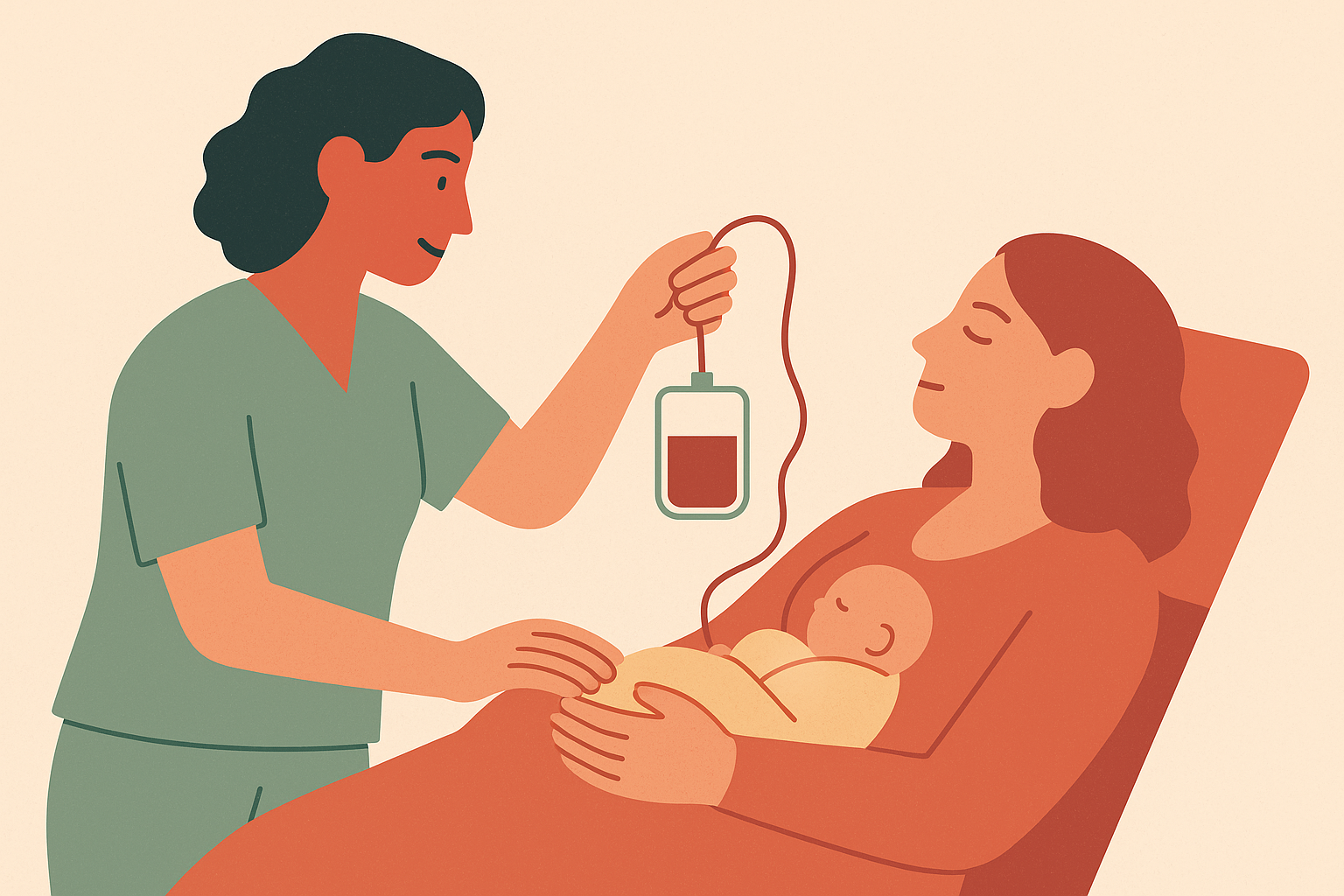
I've caught babies in hospitals with a full transplant team on standby and I've stood in a bedroom in Queens with nothing but a kit, a flashlight, and a doula who'd done this exactly once before. The fifteen-minute window for cord blood collection doesn't care which one you're in. Average yield sits around 110 mL, anything under 40 mL usually gets tossed as unusable, and no bank employee is anywhere near the room when it happens. Whoever delivers the baby and whoever the family brought for support are the only two people who make a collection succeed, and I've watched families lose a sample because the kit sat zipped in a bag nobody opened.
What midwives are — and why their clinical training qualifies them to collect
Midwifery isn't one credential, and the differences matter less than people think. Certified Nurse Midwives are registered nurses who finished a midwifery program and passed a national exam. Certified Midwives and Certified Professional Midwives aren't nurses, but their training holds to a comparable bar. All three land in the same place professionally: licensed to run exams, order labs, manage a delivery, and collect cord blood when the moment arrives.
That clinical scope, not the title on the badge, is what separates a midwife from a doula. A doula's role stays entirely non-clinical. Families planning a hospital birth should also know the person catching the baby might be an OB-GYN, not a midwife at all; the mechanics of collection don't change depending on who holds the needle, only who's in the room to run them.
How a midwife performs the cord blood collection, step by step
Collection starts once the cord is clamped and cut, full stop. No blood is ever drawn from the newborn, at any point, for any reason. The provider preps the cord site with povidone-iodine, then alcohol, and threads the needle into the umbilical vein, working low to high.
Bag placement is where most people underestimate the physics. The bag sits below the placenta so gravity does the draining. Handle the cord too much and volume drops fast, sometimes faster than you'd think for something that looks so passive. Collecting before the placenta delivers tends to pull more blood than collecting after; once the placenta is out, someone has to hold it above the bag to keep gravity working the right direction. Clamp close to the baby and more usable blood stays in the cord instead of the infant. Done well, the whole thing takes under ten minutes, though I've seen it stretch past that when the cord is short or the placenta is stubborn.
There's a second piece people forget about. The kit includes tubes for a maternal blood draw, testing for infectious disease, which can happen anytime within 48 hours of birth and often gets folded into a routine IV start. It still has to finish before the kit ships, though. Then comes the paperwork: the attending provider fills out the kit forms and labels the bag with the mother's ID. Public donation adds a layer, since the provider needs specific training completed in advance and has to formally take responsibility for the collection.
How the collection works when birth happens at home
Home birth doesn't rule out private cord blood banking. The midwife follows the same kit instructions a hospital provider would; only the room changes. Request the kit during the second or third trimester, four weeks out from the due date at minimum if you can manage it, so it's sitting in a closet rather than stuck in transit when contractions start.
Once collection wraps, the midwife or a birth partner packages the kit per the bank's instructions and arranges pickup. Samples hold viability for up to 72 hours, which buys enough room for a courier even when logistics get messy. They usually do, in my experience; something about home births and courier schedules never quite lines up on the first try. Public donation generally isn't available to home births at all, which leaves private banking as the only real path.
A midwife who has collected cord blood before, or one at least willing to walk through the kit instructions ahead of time, makes a failed draw far less likely. It's a small ask, and it pays off at the one moment nobody gets to redo.
What doulas actually do — and what they are not permitted to do
A doula's job is support: emotional, physical, informational, delivered before, during, and after birth, centered on the birthing person. She isn't a medical professional. She can't deliver a baby, perform a procedure, or give medical advice, and she works alongside whoever holds the clinical role, physician or midwife.
That boundary is the whole point of the role. Her attention isn't split by clinical responsibility, so it stays fixed on how the family experiences the birth. Inside that non-clinical lane, a doula still does real work toward a successful collection, and most of it happens long before anyone's in labor.
How doulas prepare families for cord blood collection before labor begins
Doulas steer families toward evidence-based information and raise questions a family might never think to ask while building a birth plan. Cord blood banking belongs on that list: whether to bank at all, private versus public, and which consent and testing steps need locking in before labor starts.
ACOG requires family medical history, maternal blood testing, and consent, all finished before labor begins. A doula who surfaces these requirements at a routine prenatal visit, rather than in a delivery room at two in the morning, is often the reason a collection doesn't collapse. That prep usually looks like a short walk-through: bank chosen, kit ordered, delivering provider looped in with the kit already in hand, plan written into the birth document, one named person responsible for the kit and the courier call. By delivery day, none of this should be improvised. I've seen what improvised looks like, and it isn't pretty.
What the doula does in the room when collection is happening
Once labor starts, the doula's job shifts to advocacy: making sure the birth plan, cord blood instructions included, actually gets communicated to the clinical team. Something unexpected tends to come up. When it does, she helps the family navigate it without losing track of what they'd already decided weeks earlier.
Ask a doula what she does once the vials are filled, and the honest answer is smaller than most people expect: she calls the bank and asks for prompt pickup. That's the coordination piece, and field guidance backs it up directly, recommending one named person, partner, relative, or doula, to handle the kit, hand it to the medical team, and notify the courier. Hospital staff rarely have the bandwidth to take that on themselves.
During the collection window, measured in minutes, the doula's real job is guarding the room's atmosphere. Midwives and doulas share this instinct: the collection shouldn't intrude on the bonding happening between parents and newborn. In practice, that means holding space for the birthing person and partner through a moment that could otherwise feel clinical and rushed.
Delayed cord clamping and what it means for collection volume
Delayed cord clamping is now the standard recommendation across most obstetric and midwifery guidelines, and it sits in direct tension with maximizing cord blood volume. Even the guidelines don't agree with each other, which tells you something about how unsettled this still is. Some major guidelines call for at least 30 to 60 seconds of delay for most vigorous term and preterm infants. Some obstetric guidelines push that to at least two minutes. Other guidelines go further, suggesting 2 to 5 minutes for both term and preterm babies.
Still other guidance draws its own line: early clamping within 60 seconds versus delayed clamping at one to three minutes, or until pulsations stop entirely. Delayed clamping raises blood flow from placenta to newborn by roughly 48%. Every extra minute of delay is a minute of blood moving into the baby instead of the bag, and there's no way around that arithmetic.
None of this is unworkable, though. ACOG has said plainly that delaying clamping and banking cord blood aren't mutually exclusive, and it suggests a 30 to 60 second delay for healthy full-term infants as a workable middle ground. Families do need to say the priority out loud before labor, not during. The midwife needs to know ahead of time so she can sequence the collection correctly, and the doula needs to know too, so she can represent it accurately if the subject resurfaces mid-labor. Nobody blindsided by this trade-off in the moment is in a position to weigh it carefully.
How to brief your birth team before delivery day
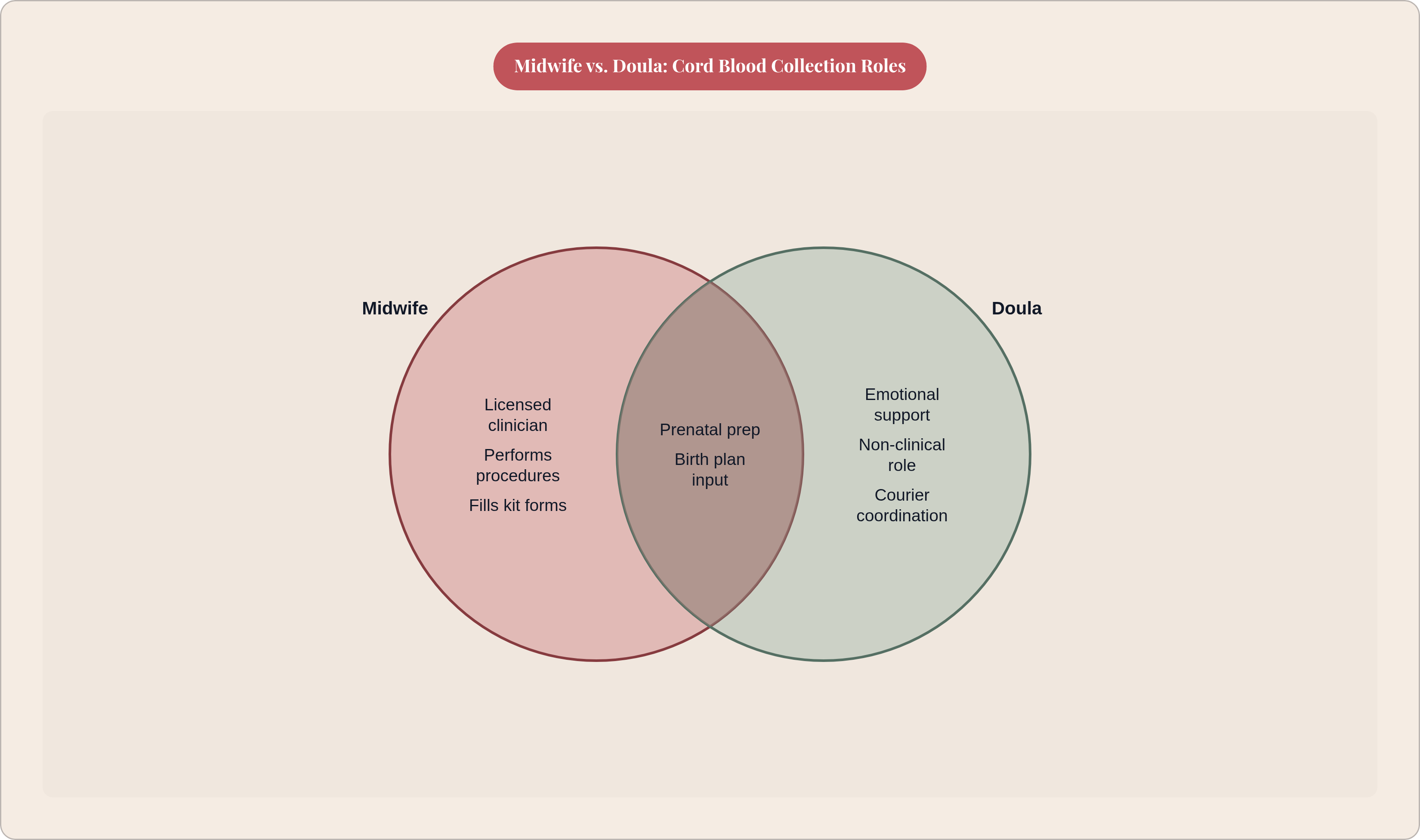
Two conversations need to happen, and they aren't interchangeable. With the midwife: confirm she's reviewed the bank's collection protocol, knows exactly where the kit will sit at the birth location, and understands the family's clamping preference going in. With the doula: confirm cord blood banking is written into the birth plan, she knows who's responsible for the kit, and she already has courier contact information on hand.
A short logistics check covers the rest. The kit needs to be at the birth location, hospital bag or home birth space, before labor starts. The maternal blood draw gets coordinated with the midwife or nurse, usually paired with the IV start. One specific person, doula, partner, or other family member, gets named to package and hand off the kit once collection wraps, and courier or shipping arrangements get made in advance, so the 72-hour viability window doesn't burn away on phone calls made after the fact.
Cord blood banking is one of the only decisions made across an entire pregnancy that resolves itself in the first few minutes after birth. By that point, the prep has either happened or it hasn't. Do it early, with people who already know which part of the job is theirs.