How Long to Delay Cord Clamping and Still Collect Cord Blood
Delayed clamping beyond 60 seconds drastically reduces viable stem cells for banking.

At the moment of delivery, roughly one-third of a newborn's total fetal blood volume is still circulating through the placenta and umbilical cord. That blood moves toward the infant through a pressure- and gravity-driven process called placental transfusion, continuing for several minutes after birth. The longer it runs, the less remains in the cord. Every cord blood banking decision navigates this biological reality, whether families appreciate it or not.
What makes cord blood worth banking is its concentration of hematopoietic stem cells, the progenitor cells responsible for generating every cell type in the human blood and immune system. These are categorically distinct from the mesenchymal stem cells found in cord tissue, which carry their own regenerative and anti-inflammatory properties. The two populations are therapeutically complementary, not interchangeable, and conflating them leads to genuine strategic errors when families are planning what to collect.
The metric that governs banking viability is not collection volume in isolation. It is total nucleated cell count, the raw number of biologically active cells in a given unit. Volume and TNC don't depreciate at identical rates as clamping is delayed, which is precisely why a 60-second delay can still yield a bankable outcome. Whether it does depends on the precise shape of the transfer curve.
How Blood Transfers in the First Three Minutes, and Where Most of the Benefit to the Baby Occurs
The transfer curve is steep, and then it isn't. By 10 to 15 seconds after birth, approximately 67% of cord blood has already transferred to the infant. By one minute, that figure reaches roughly 80%, representing approximately 80 mL of blood. An additional 115 mL transfers by three minutes. The incremental gain per second after that first minute is real but diminishing rapidly, and the shape of that deceleration is the central fact that every banking and clamping conversation should be organized around.
For term infants, the physiological returns on placental transfusion are substantial, with up to one-third more blood volume, 50% more red blood cells, and meaningful gains in iron stores and oxygen-carrying capacity. A 2023 randomized trial found that children whose clamping was delayed by three minutes showed better social and motor skills at age four, suggesting developmental effects that persist well beyond the neonatal period.
The preterm case is different in kind, not just degree. A Lancet meta-analysis of more than 6,000 preterm infants found that delayed cord clamping reduces preterm mortality by 32%, with a two-minute delay identified as most effective. For these infants, delayed clamping is a survival intervention. Any banking discussion that doesn't acknowledge this at the outset has its priorities inverted.
What the Research Shows About Collection Viability at 30, 60, and 120 Seconds
The most actionable evidence comes from the Programa Concordia study, published in Blood Transfusion in 2025 by Manchanayake and colleagues, examining 719 cord blood units from vaginal deliveries with clamping stratified at 30 seconds, 60 seconds, and 120 seconds or more.
At both 30 and 60 seconds, collection volume drops relative to immediate clamping, but TNC count is maintained and the number of units eligible for banking remains similar across both intervals. Volume and TNC are not falling in lockstep. This is exactly what the biology predicts, and it is the reason the 60-second interval has emerged as a clinically defensible compromise rather than an arbitrary one.
Beyond 60 seconds, the picture changes sharply. Delays of 120 seconds or more decrease both TNC content and volume significantly. The study authors described this outcome as "drastically reducing the chances of obtaining a clinically useful unit." That is not a gradual decline families can manage with better processing. It is a discontinuity.
The New York Blood Center study by Ciubotariu and colleagues, published in Transfusion in 2018 and examining 1,210 deliveries, found that units collected after more than 60 seconds showed significantly lower volumes and TNC counts than those clamped before that mark. The 60-second threshold appears repeatedly in the literature not because it's a convenient round number but because it tracks the biology. Transfer accelerates most sharply in the first minute, then decelerates. The threshold is where the curve bends.
A 2023 Scientific Reports study of 103 full-term neonates undergoing elective cesarean delivery added one more important finding: 60-second delayed cord clamping produced significantly higher hemoglobin, hematocrit, TNC, and CD34+ cell counts in the infant compared with 30-second clamping. Sixty seconds is the interval where the baby captures most of the transfer benefit while enough cells remain in the cord for a viable banking outcome.
The Public Banking Threshold That Makes the One-Minute Line So Consequential
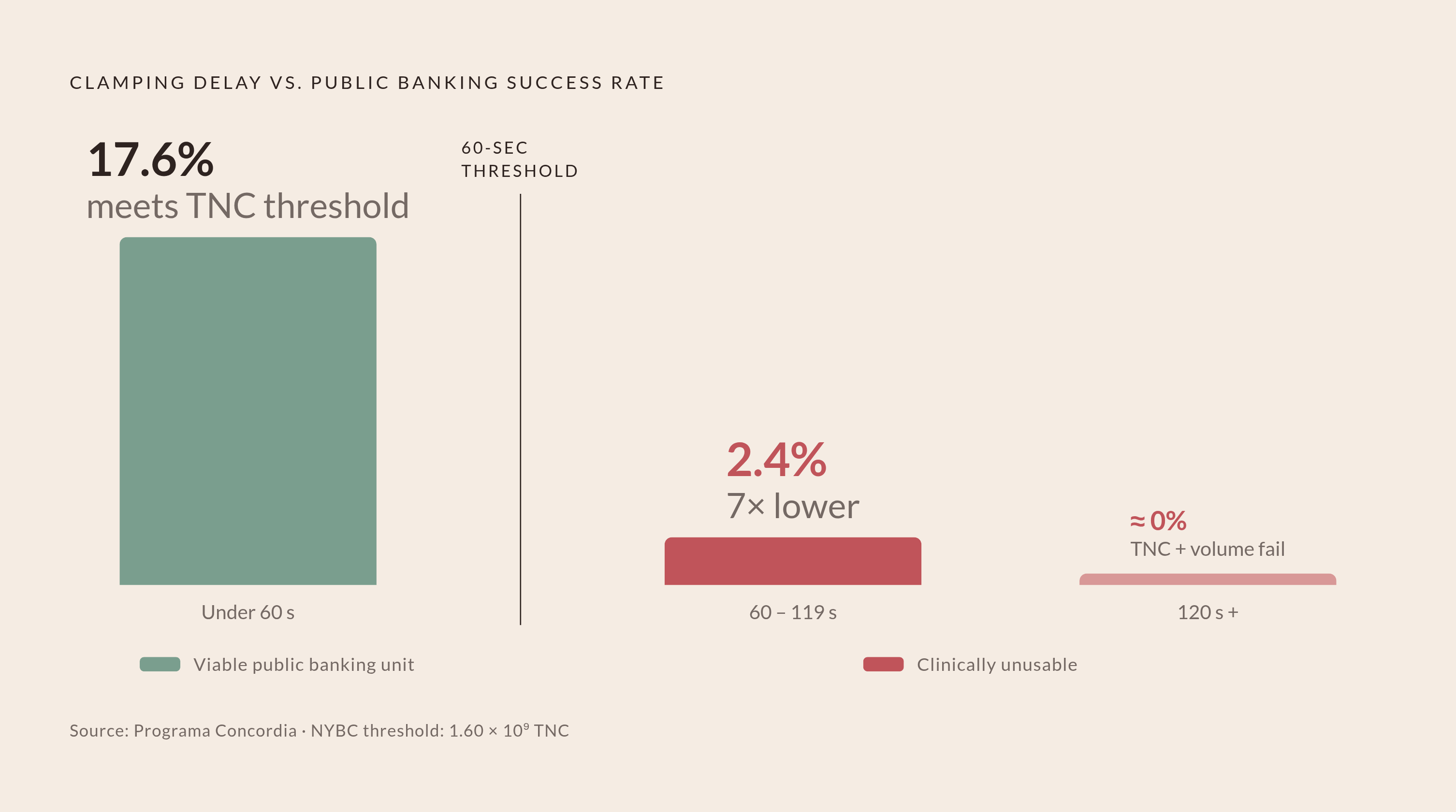
The New York Blood Center sets its minimum for processing and cryopreservation at 1.60 × 10⁹ total nucleated cells. That threshold reflects what's required to make a donated unit therapeutically useful, with enough cells to engraft in a recipient at clinically validated dosing. Transplant protocols generally require at least 25 million TNC per kilogram of patient body weight. A unit can be stored, listed, and still be therapeutically insufficient.
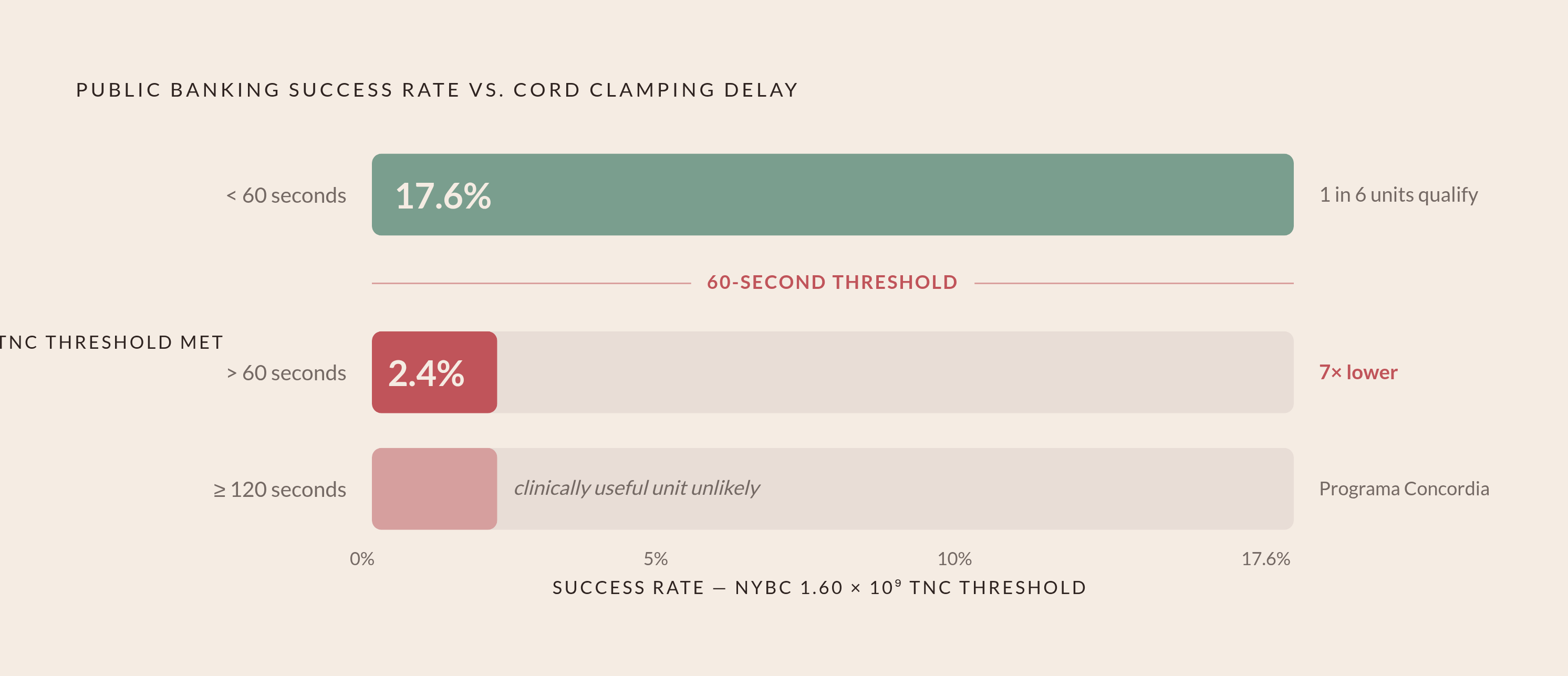
The Ciubotariu et al. data make the stakes concrete. The probability of reaching the public bank's processing threshold drops to 2.4% when clamping is delayed beyond 60 seconds. With clamping before 60 seconds, that figure is 17.6%, more than seven times higher. Families who plan to donate publicly need to understand what delays beyond one minute actually cost them before labor begins.
Private banking operates with lower minimums that vary by institution. Some private banks list volume floors as low as 50 mL; others set minimums in TNC terms. The EBMT Handbook, 8th edition, published in 2024, notes that many UCB banks now process only units above 150 × 10⁷ TNC, reflecting a tightening standard even in the private sector. Private banking families have more flexibility than public donors, but TNC count remains the clinically meaningful variable regardless of where a unit is stored, and delays beyond 60 seconds depress it materially.
Where the Major Clinical Guidelines Land, and Why They Point in Different Directions
The major clinical guidelines agree that delayed cord clamping is beneficial. They disagree on duration, and that divergence is not a rounding error. It reflects genuinely different weightings of neonatal outcome data across different clinical populations.
ACOG recommends at least 30 to 60 seconds for term infants, the narrowest of the major guidelines and the most compatible with cord blood banking. A July 2025 ACOG Clinical Practice Update, drawing on systematic reviews and individual participant data meta-analyses published in November 2023, now recommends 60 seconds or more for preterm infants under 37 weeks who don't require immediate resuscitation.
The American Heart Association and American Academy of Pediatrics, in their 2023 joint guidance, recommend at least 30 seconds for term and late preterm infants at 34 weeks or more who don't require resuscitation. The World Health Organization recommends 1 to 3 minutes for all births, a range that at its upper end substantially compromises public banking viability. The American College of Nurse-Midwives recommends up to 5 minutes for term and preterm infants, a position that, under the banking evidence, would effectively preclude cord blood collection in most cases.
One exception applies universally: infants requiring immediate resuscitation should not have clamping delayed. WHO specifically does not endorse delayed clamping for newborns needing positive-pressure ventilation.
The 30-to-60-second ACOG window is the interval the banking evidence supports for preserving both goals. Longer delays are clinically defensible and sometimes strongly indicated, and they carry a banking cost that families should understand before labor begins.
What Birth Weight and Delivery Type Mean for How Much Flexibility a Family Actually Has
Birth weight is the single largest predictor of cord blood collection success. Larger infants produce more cord blood, which creates some buffer for slightly longer delays in high-birth-weight neonates while still meeting TNC thresholds. Smaller infants offer less margin. No timing plan guarantees a collection outcome.
Delivery type adds complexity that families often underestimate. The Programa Concordia study focused on vaginal deliveries; cesarean logistics differ in important ways. Families with planned cesareans have more precise control over timing than those in unplanned or rapidly progressing labor, where executing a specific clamping window can be genuinely difficult even with a written birth plan in hand.
Preterm deliveries present the sharpest version of this tradeoff. Cord blood from premature neonates tends to be more concentrated in stem cells, so a smaller collection can carry more therapeutic value per milliliter. But the mortality benefits of delayed clamping are also most pronounced in this population. Families anticipating a preterm birth face a more acute tension that requires its own dedicated conversation with the care team, not an assumption that standard term guidance applies.
Families banking for a specific purpose, particularly those with an older child who requires a stem cell transplant, face a different calculus entirely. For them, transplant-quality collection warrants prioritizing early clamping. General guidance yields to specific clinical need.
Cord Tissue Banking as the Option Unaffected by Any Clamping Delay
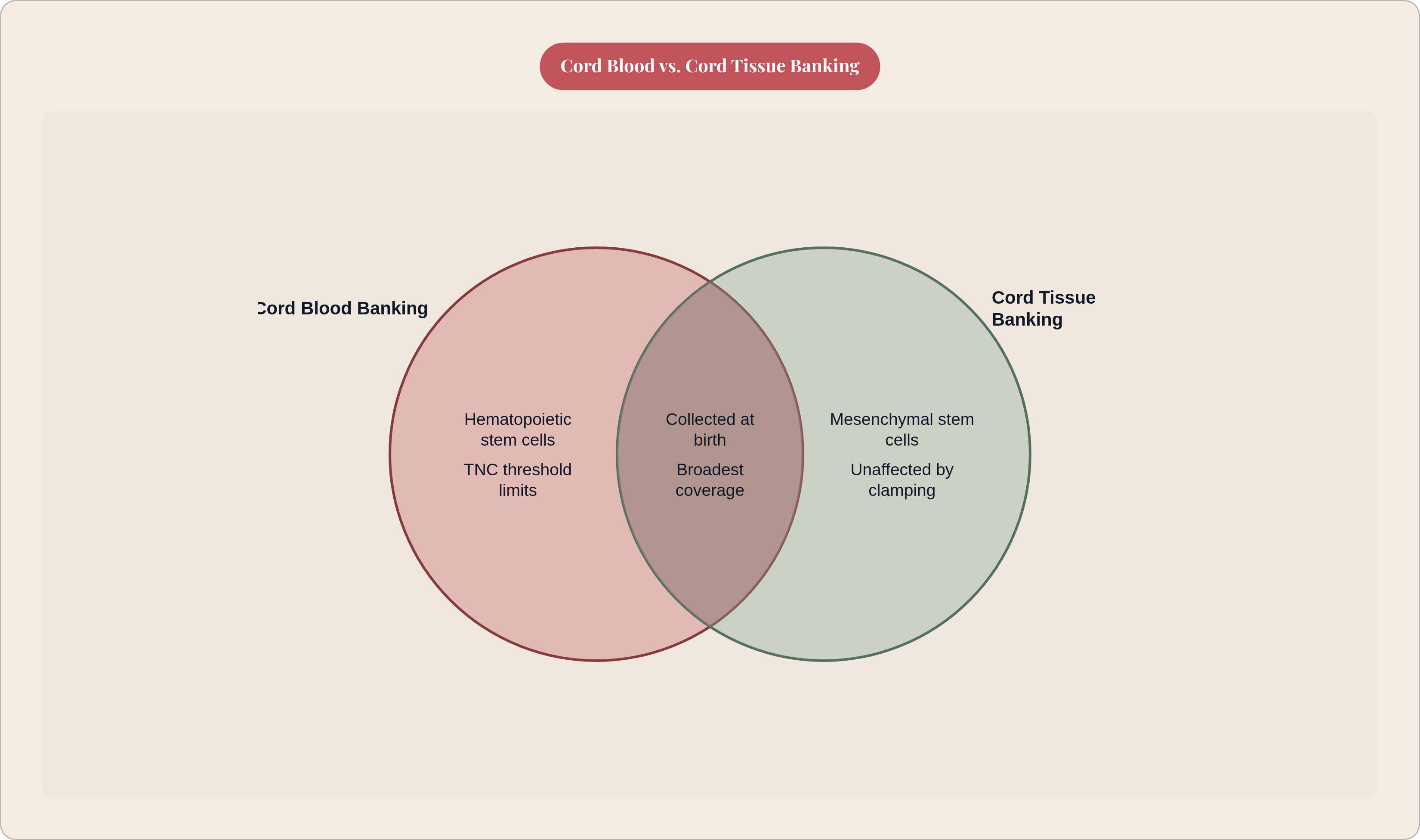
Cord tissue banking exists entirely outside the clamping timing discussion. The decision about when to clamp has no bearing on the availability of cord tissue, amnion, or placenta for collection. For families committed to a longer delayed cord clamping interval, or whose provider recommends waiting until the cord stops pulsing, cord tissue banking preserves a substantive biological option without any timing conflict.
Cord tissue contains mesenchymal stem cells with anti-inflammatory and regenerative properties and the potential to differentiate into bone, cartilage, muscle, and nerve cells. These are distinct from the hematopoietic stem cells in cord blood, which have an established clinical history in treating blood cancers and immune disorders. MSC applications remain largely in research and early clinical phases, though the pipeline is active and the therapeutic rationale is solid.
Banking both, when cord blood collection succeeds, provides the broadest biological coverage. For families whose clamping preference or clinical circumstances push them past the 60-second window, cord tissue banking captures a cell population that cord blood collection doesn't address.
The Emerging Processing Technology That May Partially Offset Lower Collection Volumes
Some private banks position advanced processing methods as a partial answer to the volume reduction that accompanies delayed clamping. Cells4Life's TotiCyte technology claims two to three times more viable stem cells at point of treatment compared to standard processing, through improved CD34+ cell recovery after thawing. The premise is that a smaller post-DCC collection, processed with superior technology, delivers an effective stem cell yield comparable to a larger standard-processed unit.
Families evaluating this option should ask directly for peer-reviewed evidence supporting the specific recovery rates cited and should confirm whether those figures apply to the volume range likely to be collected after a 60-second delay. The figure originates with the vendor. That doesn't make it wrong, but it does mean independent validation matters before families treat the claim as settled.
Even accepting the processing gains at face value, their scope is bounded. Improved processing makes the 60-second window somewhat more forgiving for private banking families. It does not alter the biological discontinuity that occurs beyond 60 seconds for TNC count, and it has no bearing on the public banking threshold. Public banks apply fixed TNC minimums regardless of the collecting bank's downstream methodology. TotiCyte is a meaningful variable for private banking clients. For public donation, it is irrelevant.
How to Have the Timing Conversation With a Care Team Before Delivery
This conversation must happen before delivery. The delivery room is not where clamping timing gets negotiated. Providers need to know the plan, and the cord blood collector needs to be positioned and ready to begin the moment clamping occurs. That sequencing requires coordination among the obstetrician or midwife, the labor and delivery team, and the cord blood collection representative. None of it happens automatically when providers haven't been briefed.
Tell the provider you're planning delayed clamping of up to 60 seconds and that you're banking cord blood. Ask them to confirm the collector will be ready to begin immediately at the moment of clamping. Write it down. Put it in the birth plan with the time target named explicitly.
For public bank donors, expectation-setting matters. The 17.6% success rate reported in Ciubotariu et al. means that most donations, even under near-ideal conditions, don't meet the public bank's threshold. Donating is still worth attempting, and the population-level benefit of public banking is real. But individual-level uncertainty is the baseline.
Private banking families should confirm the bank's minimum volume and TNC requirements in writing before delivery and ask directly how the bank's processing method handles lower-volume collections. Families who anticipate or prefer a delay beyond 60 seconds should discuss cord tissue banking before delivery as a primary strategy.
Families expecting a preterm birth, or banking with a specific sibling recipient in mind, need a separate, clinically focused conversation with both their obstetric provider and the banking program. Standard guidance does not map cleanly onto those situations. The goal in all of these conversations is a written birth plan entry that names the clamping time target explicitly and confirms that every party in the delivery room understands the sequence before labor begins.