Cord Blood Banking for Rare Disease Candidates Beyond Hematology
Cord blood now treats metabolic diseases and shows promise for neurological conditions.
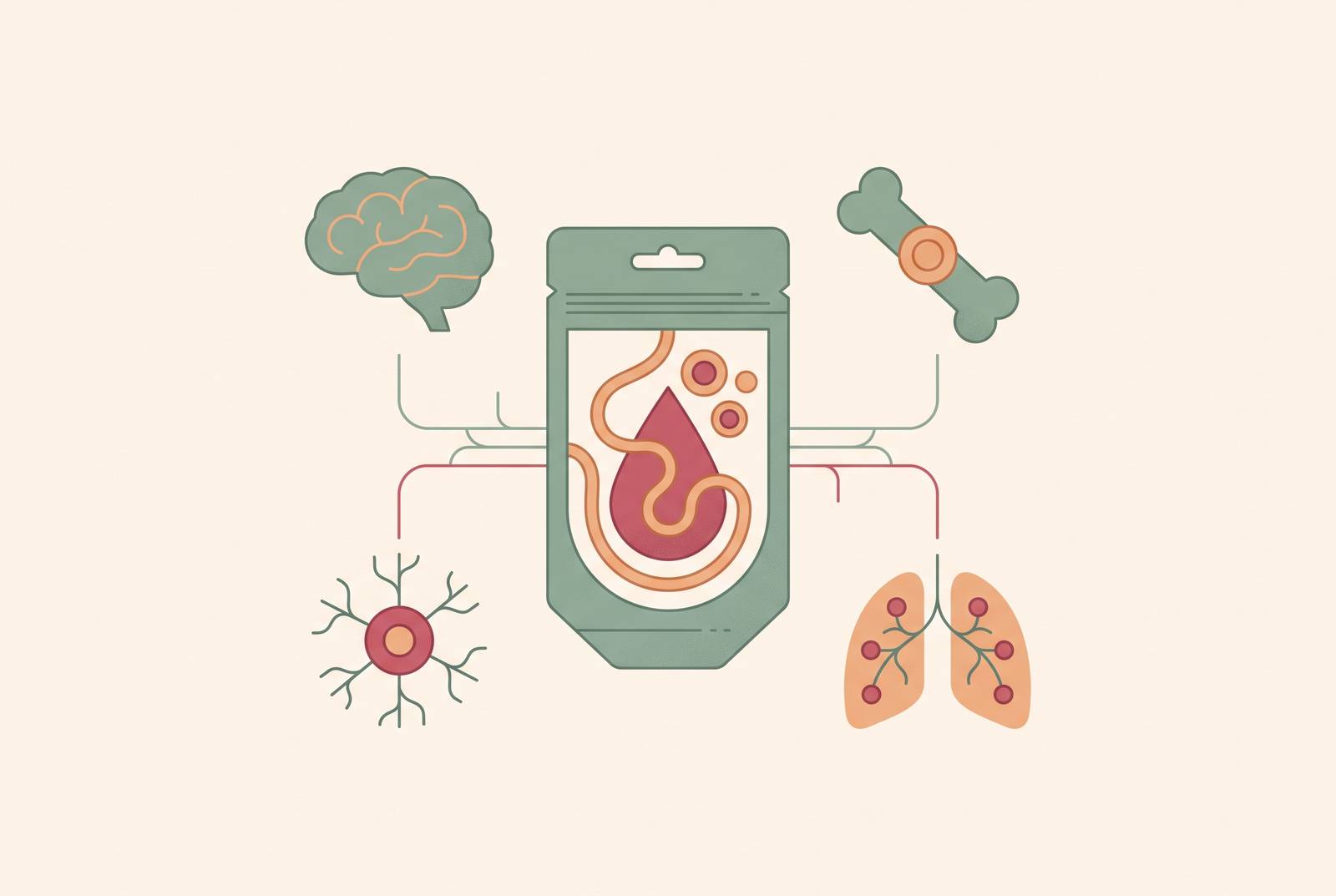
Cord blood banking has always been sold on the strength of blood cancers and immune disorders. That's the story most parents hear at their OB's office: bank the cord blood in case of leukemia, in case of a bone marrow transplant is ever needed. But the clinical evidence has moved well past that pitch. Cord blood is now standard of care for a set of metabolic diseases outside the blood system entirely, and it's under active study for cerebral palsy, stroke, and several rare pediatric conditions with no other treatment path. This article maps where that evidence actually stands, condition by condition, so families weighing a banking decision can separate what's proven from what's still investigational.
Cord Blood's Therapeutic Uses Outside the Blood System
Cord blood stem cells are young and highly proliferative, and they carry a lower risk of transmitting disease than adult bone marrow does. That's not a marketing claim; it's a basic biological difference that explains why cord blood behaves differently in the body depending on what a treatment is trying to do.
There are really two separate mechanisms at work, and mixing them up is where a lot of confusion about cord blood therapy comes from. The first is a stem cell type known for its blood-forming activity: these are the cells that rebuild blood and immune function after a transplant. In metabolic disease treatment, donor HSCs don't just repopulate bone marrow, they migrate into the brain and start producing enzymes the child's own cells can't make. The second mechanism is paracrine or immunomodulatory action, where cord blood cells calm and redirect inflammation without engrafting into tissue. That's the logic behind most of the neurological and autoimmune trials discussed later in this piece: the goal isn't to replace cells, it's to protect them or retrain the immune system.
One more property matters a great deal here: cord blood tolerates a partial HLA (human leukocyte antigen) mismatch far better than bone marrow does. That widens the donor pool considerably, and it's the specific reason cord blood, not bone marrow, is the preferred source for metabolic disease transplants where speed and mismatch tolerance can decide the outcome. Cord blood contains regulatory T cells, the immune cells that dial down autoimmune attacks, which becomes the mechanistic thread connecting type 1 diabetes and multiple sclerosis research later on.
Cord tissue and cord blood are not the same product. Cord tissue yields mesenchymal stromal cells (MSCs), a different cell type running on a parallel track to the HSCs found in cord blood. Both show up in later sections of this piece, and keeping them distinct now avoids confusion when trials of the cord tissue-derived cell type appear alongside cord blood trials.
Metabolic and lysosomal storage diseases: where cord blood is already standard of care
This is the category where cord blood therapy stopped being experimental years ago. Lysosomal storage disorders and peroxisomal disorders, including Hurler syndrome, Krabbe disease, metachromatic leukodystrophy, and adrenoleukodystrophy, all follow a similar path without treatment: progressive damage to the central nervous system, loss of cognitive function, and early death.
Umbilical cord blood transplant (UCBT) changes that trajectory. Donor-derived cells take up residence in the brain and other organs and start producing the enzyme the child's body was missing. That halts toxin buildup and, in many cases, stabilizes the disease before further damage occurs. Cord blood is preferred over bone marrow specifically because of its mismatch tolerance, which raises the odds of achieving full donor chimerism, meaning nearly all of the child's blood-forming cells eventually come from the donor.
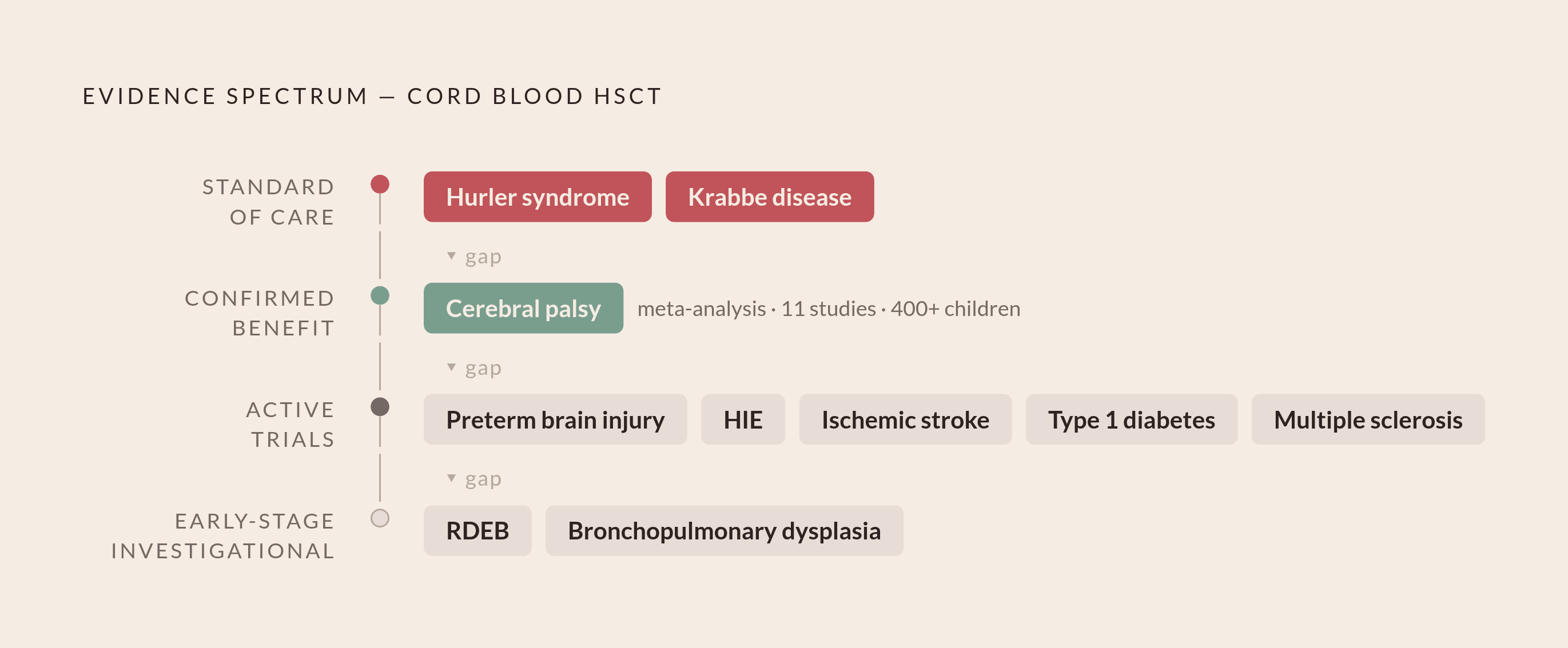
For Hurler syndrome and Krabbe disease specifically, hematopoietic stem cell transplant (HSCT) is the standard of care. It's the standard of care. In mid-2016, Dr. Paul Orchard at the University of Minnesota treated seven-month-old Lyla Edgington, diagnosed with Hurler Syndrome (MPS Type 1), using a perfectly matched cord blood unit. It illustrates the process at its cleanest: matched unit, early diagnosis, early transplant.
Timing decides everything in this category, and the same principle resurfaces in nearly every condition covered later in this article. For Krabbe disease, outcomes differ measurably between children transplanted before 30 days of age and those transplanted after. Several states. states have added Krabbe disease to newborn screening panels for exactly this reason: early detection is the only thing that makes early transplant possible. That timing pressure is what turns cord blood banking from a speculative hedge into something closer to time-critical infrastructure, at least for families with a known history of these disorders. A stored, matched unit sitting in a freezer removes the search-and-match delay that can otherwise cost a child weeks they don't have.
None of this should be framed as a cure. Cord blood transplant stops the toxin accumulation and many children regain skills they had started to lose, but the honest description is stabilization and prevention of further decline, not reversal of damage already done.
DUOC-01: bridging the gap between cord blood transplant and brain engraftment in metabolic disease
Even a well-matched, successfully performed UCBT has a weak spot: it takes time for donor cells to reach the brain and start working, and neurologic decline in metabolic disease patients often continues right through that window. Whatever damage happens in those months tends to be permanent.
Duke University developed DUOC-01, a monocyte-derived cord blood cell product, specifically to close that gap. DUOC-01 serves as a bridge rather than a replacement for transplant, designed to speed up delivery of therapeutic cells to the central nervous system while the transplanted cord blood is still working toward full engraftment. It's given intrathecally, meaning injected directly into the spinal canal, which puts it in more direct contact with the brain and spinal cord than an IV infusion would allow.
The Duke trial's primary objective is safety and feasibility: testing whether intrathecal DUOC-01 can be safely given as an add-on therapy to patients with inborn errors of metabolism who already show early signs of demyelinating CNS disease and who are undergoing standard UCBT. A secondary objective looks at whether the combination of UCBT plus DUOC-01 shows better outcomes than UCBT alone.
The same remyelination science behind DUOC-01, developed in Dr. Joanne Kurtzberg's group at Duke, is also the scientific basis for looking at cord blood in multiple sclerosis, a connection explored later in this piece. For families with a known metabolic disease risk in the family, DUOC-01 adds a layer of relevance to the banking decision: a stored cord blood unit isn't just source material for a transplant anymore, it could eventually feed both the transplant and an adjunctive therapy designed to protect the brain during the wait.
Cerebral palsy: the strongest neurological evidence and the most instructive cautionary case
Cerebral palsy is where the neurological evidence for cord blood is furthest along, and it's also where the field's biggest cautionary tale played out. Both threads matter, and they shouldn't be flattened into one simple story.
A meta-analysis in Pediatrics pooled individual patient data from 11 studies covering more than 400 children with cerebral palsy. Children who received a cord blood infusion showed greater improvement in motor function than untreated controls, measured at both six and twelve months. Higher cell doses produced bigger gains, and younger children showed the clearest benefit. Most of the studies used the child's own, autologous cord blood. Private banking carries specific relevance for families with a cerebral palsy diagnosis or strong family history of it.
Duke has been the anchor institution for this research for more than a decade, with Dr. Joanne Kurtzberg leading multiple trials, including NCT01147653 and NCT02599207. A substantial number of patients have been infused with autologous or sibling-donated cord blood across that body of work. In June 2024, Duke modified its Expanded Access Program (EAP) so that children with cerebral palsy could be treated with unrelated, allogeneic cord blood from Duke's public bank if a matching unit turns up. That's a meaningful expansion: it opens compassionate access to children whose families never banked privately and who have no sibling match available.
Autism is where the story turns cautionary. Autism was removed from Duke's EAP at the end of 2022. A commercial partnership on pediatric neurological conditions built around cord blood therapy collapsed, with significant reported damages. The plain reading of that collapse is that a company moved to commercialize an unproven indication ahead of completed efficacy trials, without confirmed results to back it up, and the failure was expensive and public. The cerebral palsy evidence stands on its own data. It does mean families and providers need to hold two facts at once: cord blood has a real, data-backed neurological application in cerebral palsy, and it has also been oversold in at least one adjacent condition where the science wasn't ready yet.
Autism research on cord-derived cells hasn't stopped, it's just moved to a different population and a different product. A Phase I trial at Duke tested the safety of a single IV infusion of umbilical cord tissue-derived mesenchymal stromal cells (hCT-MSC) in adults with autism spectrum disorder. That's cord tissue MSCs, not cord blood HSCs, tested in adults, not children, at a safety stage, not an efficacy stage. Treating it as an extension of the pediatric cerebral palsy results would be a mistake.
Other neurological conditions under active investigation
Preterm brain injury is one of the more active fronts right now. Australian researchers have shown that infusing extremely premature infants with their own cord blood is feasible and well tolerated, though collecting enough volume from a tiny preterm baby's own cord is often difficult in practice. That practical limitation is pushing trials toward testing donated cord blood as well. According to ClinicalTrials.gov, this area shows up among the actively recruiting studies worldwide.
Hypoxic-ischemic encephalopathy (HIE) and related neonatal brain injuries make up a separate eligibility track within Duke's EAP. Patients up to age 26 with cerebral palsy, hydrocephalus, hypoxic brain injury, stroke, or apraxia may qualify for compassionate access there when no active clinical trial applies to their specific condition. This is listed apart from the cerebral palsy work above, since the eligibility categories don't overlap cleanly.
Ischemic stroke in adults has its own trial history at Duke, testing a single IV infusion of unrelated donor cord blood to see whether it improves functional recovery. The mechanistic case rests on the same paracrine and allocrine (cell-secreted-signal) activity discussed earlier: cord blood cells calming inflammation and potentially protecting neurons from further damage while promoting repair. It's the same immunomodulatory logic driving the cerebral palsy work, applied to an adult population with a very different injury profile.
Across all of these, the autologous-versus-allogeneic distinction has real practical teeth. Preterm infants often can't supply enough of their own cord blood for treatment, which pushes that field toward donor units regardless of what a family banked. Cerebral palsy trials, by contrast, now accept allogeneic cord blood too, following Duke's 2024 EAP change. A family's privately stored unit might turn out to be what's needed in one scenario and simply beside the point in another. None of this puts preterm brain injury or stroke on the same evidentiary footing as cerebral palsy. The 2025 Pediatrics meta-analysis is specific to cerebral palsy, and treating these other conditions as equally proven would misstate where the field actually stands.
Autoimmune conditions: type 1 diabetes and the leukodystrophy-to-MS pathway
Type 1 diabetes research using cord blood isn't chasing blood reconstitution. The goal is to reset immune tolerance and, ideally, help the pancreas regenerate the beta cells an autoimmune attack destroyed. Cord blood's large supply of regulatory T cells is the mechanism researchers are counting on, since these cells may be able to suppress the immune response that targets insulin-producing tissue.
One active trial, run at Second Xiangya Hospital in Hunan, China, is testing "Umbilical T Cells Plus Liraglutide," pairing cord blood-derived regulatory T cells with liraglutide in patients with type 1 diabetes. Separately, research into umbilical cord-derived mesenchymal stromal cell (UC-MSC) infusions in type 1 diabetes patients is ongoing, and no settled answers have emerged yet. This isn't an area with settled answers yet, and it shouldn't be described as one. One practical note for families who didn't bank: UC-MSCs carry low immunogenicity, so they don't provoke a strong immune reaction even when they come from an unrelated donor, which makes allogeneic treatment feasible without requiring a matched stored unit.
The leukodystrophy work described earlier connects to a different autoimmune condition entirely: multiple sclerosis. Research at Duke and other centers has shown that cord blood transplants can address the underlying metabolic defect in leukodystrophies such as Krabbe disease, metachromatic leukodystrophy, and adrenoleukodystrophy, extending life and, in some cases, producing measurable gains in neurocognitive function. The remyelination science developed in the leukodystrophy work is connected to growing interest in cord blood approaches for multiple sclerosis. MS research here isn't a new, unrelated claim bolted onto the cord blood story, it's a downstream application of evidence that's already established in a different disease category.
Type 1 diabetes and multiple sclerosis share a common thread: the therapeutic mechanism in both is immune modulation, not engraftment. That distinction means these treatments may eventually work just as well with allogeneic units as with a child's own banked cord blood, loosening the tie between private banking and access to future therapy in this particular category.
Rare skin diseases, cardiac applications, and other conditions in early-stage investigation
The ClinicalTrials.gov lists more than 100 actively recruiting studies worldwide using cord blood or cord tissue-derived cells. That breadth is real and worth taking seriously, but breadth isn't the same thing as depth of evidence, and most of what's listed here sits far earlier on the evidence curve than the cerebral palsy or lysosomal storage disease work covered above.
Recessive dystrophic epidermolysis bullosa is one condition in this category: a rare, inherited skin disease with severe symptoms and limited treatment options, where cord-derived cells are now in active trials among newborns and children. It's investigational, not established, and families should hear it described that way.
Bronchopulmonary dysplasia, a chronic lung disease that affects premature infants, is also under active trial using cord-derived cells. Mechanistically, it sits close to the preterm brain injury research discussed earlier, since both conditions stem from the vulnerabilities of extremely early birth and both are testing whether cord blood's anti-inflammatory action can limit long-term damage.
Taken together, this last group of conditions represents where the field is headed. Families evaluating a banking decision on the strength of these applications should treat them as genuine, active lines of research and nothing more than that, at least for now.
Sources
- Cord blood banking: Balancing hype and hope in stem cell therapy - PMC
- Cord Blood Banking for Potential Future Transplantation - PMC
- Editorial: Umbilical cord blood and tissue in novel therapies and haematopoiesis research - PMC
- celltrials.org
- statnews.com
- Frontiers | Umbilical cord blood derived cellular therapy: advances in clinical development
- ashpublications.org
- insights.bio