Donor Eligibility Determination for Perinatal Tissue Under 21 CFR 1271
Federal rules require testing the birth mother instead of the newborn for perinatal tissue donors.

21 CFR Part 1271 exists for one stated purpose: to stop communicable disease from moving through human cells, tissues, and cellular and tissue-based products, or HCT/Ps, and into a patient who had no way to know the risk was there. Perinatal tissue, meaning placenta, amnion, cord blood, and cord tissue, falls squarely inside that regulatory net, named in the same breath as musculoskeletal, cardiovascular, skin, and ocular tissue. Anyone building a donor eligibility program for these tissues needs to understand exactly how the rule defines an HCT/P and where the boundary lines sit, because the classification decision made at the outset determines everything that follows.
Under § 1271.3(d), an HCT/P is any article made of or containing human cells or tissue meant for implantation, transplantation, infusion, or transfer into a person. That definition covers a processed amnion graft as readily as it covers a femoral head. Each HCT/P, however, falls under one of two distinct regulatory tiers, and the split has real teeth.
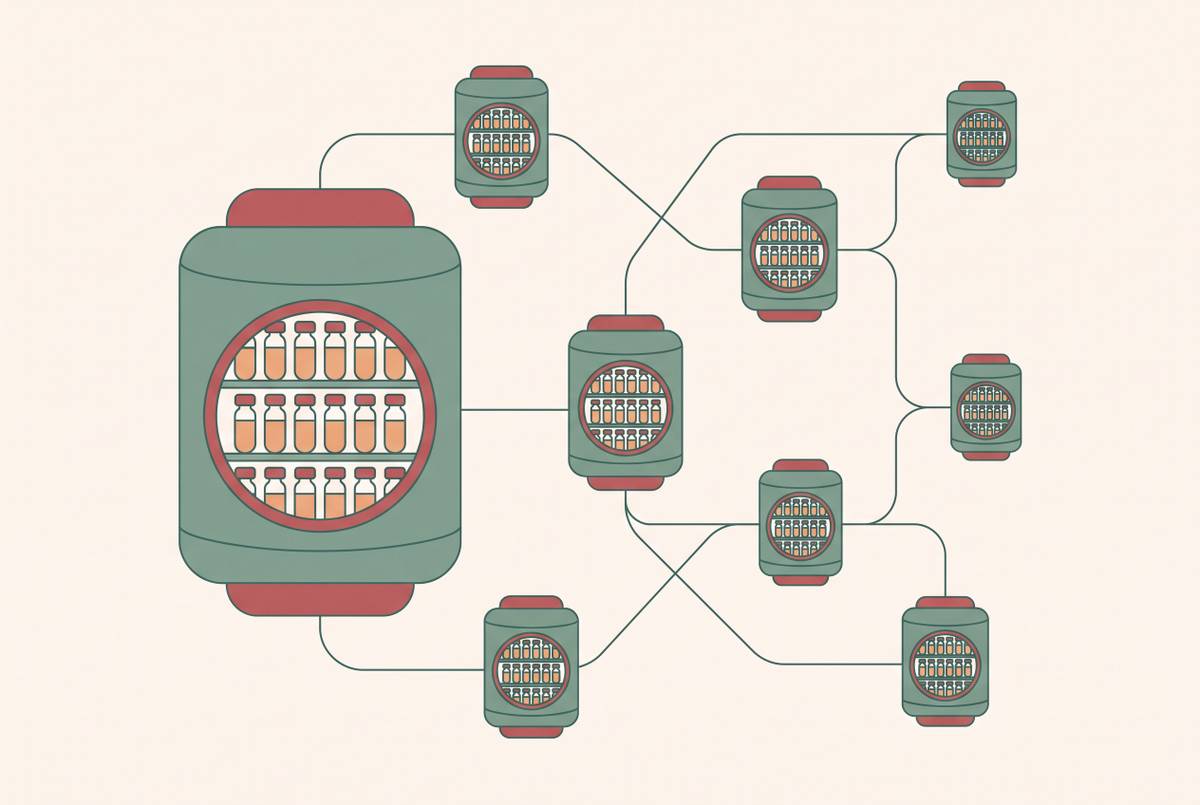
Section 361 HCT/Ps are the ones that meet the specific criteria laid out in § 1271.10(a), governing how a product is manipulated, used, and whether it relies on the metabolic activity of living cells, among other requirements. Products that clear those four bars are regulated solely under Part 1271, no biologics license required. Section 351 products are everything else, and they trigger the full weight of biologics licensing under the Public Health Service Act. Most processed placental and amniotic tissue lands in the 361 category. Cord blood intended for unrelated allogeneic hematopoietic use does not, and that exception matters enough to warrant its own discussion later in this piece. A tissue bank that calls its product a 361 HCT/P when regulators would call it 351 has misjudged the single most consequential classification decision in the entire compliance chain. The gap between the two paths represents the difference between following an SOP and filing a Biological License Application.
The structure of donor eligibility determination under Subpart C
Subpart C is where the donor eligibility rule actually lives, and it applies to every donor of cells or tissue destined for an HCT/P, with the narrow carve-outs found in § 1271.90. The governing prohibition is blunt: no HCT/P may be implanted, transplanted, infused, or transferred until the donor has been found eligible, and the only escape hatches are the ones written into §§ 1271.60(d), 1271.65(b), and 1271.90.
Getting to "eligible" means working through three sequential steps, and each one has to hold up on its own. First comes donor screening under § 1271.75, a review of the donor's medical history and records. Second comes donor testing, governed by § 1271.80 for what must be tested and § 1271.85 for how the testing has to be done. Third comes the final eligibility determination and its documentation under § 1271.50, the point where all the prior work gets certified and put on paper.
None of this happens by default or by delegation. A "responsible person," a role defined in § 1271.3(t), inside the establishment performing the recovery or processing has to make and document the determination. The standard that responsible person is checking against: the donor must show no risk factors for, and no clinical evidence of, infection from the relevant communicable disease agents, and no risk tied to xenotransplantation. Skip a step, or perform one poorly, and the whole determination is compromised, not just the piece that was skipped.
Donor screening under § 1271.75: the layered review of medical records
Screening starts with a universal tier that applies to every HCT/P donor without exception. Under § 1271.75(a), the establishment has to review the donor's relevant medical records for risk factors and clinical evidence of HIV, Hepatitis B, Hepatitis C, human transmissible spongiform encephalopathy (Creutzfeldt-Jakob disease being the named example), and Treponema pallidum, the organism that causes syphilis. Xenotransplantation-related risk gets folded into this same review.
Section 1271.75(b) adds a second tier for any tissue that contains viable, leukocyte-rich material, requiring screening for Human T-lymphotropic virus, or HTLV, on top of the base panel. This tier lands directly on several common perinatal products: cord blood, cord tissue (the Wharton's jelly matrix), and fresh or cryopreserved amniotic membrane all tend to retain viable leukocytes. Whether a specific product formulation actually falls into this category is not something to guess at. It has to be worked out at the SOP level, tied to the establishment's own processing method, because two amnion products processed differently can land on opposite sides of that line.
Then there is a third tier, triggered by geography rather than cell biology. Section 1271.75(c) applies when tissue is recovered at or near the genitourinary tract, which is exactly where placenta sits. That triggers a requirement to screen for communicable diseases of the genitourinary tract per §§ 1271.75(c)(1) and (c)(2). There is an out: if the recovery method itself ensures freedom from contamination by organisms that might be present in that anatomical area, genitourinary screening isn't required. But that exception is not self-executing. The establishment has to document the recovery method and justify why it prevents contamination, and that justification needs to hold up under inspection.
Put those three tiers together and a placenta or amnion bank can find itself needing to satisfy all of them at once, on the same donor, for the same recovery event. That layering is easy to underestimate when a screening protocol gets drafted in isolation, tier by tier, instead of as one integrated review.
Donor testing under §§ 1271.80 and 1271.85: required tests and the birth mother rule
Testing requirements track the screening tiers closely but run through blood, not records. Every HCT/P donor requires testing for HIV types 1 and 2, Hepatitis B, Hepatitis C, and Treponema pallidum.
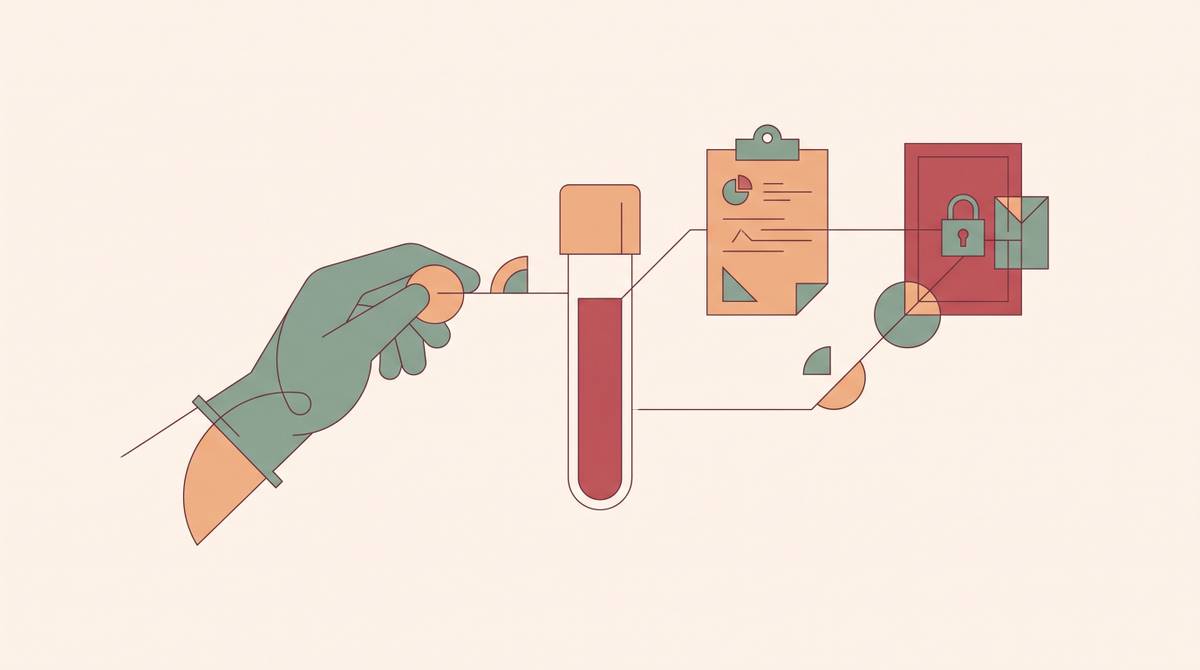
The provision that reshapes perinatal donor programs more than any other is the birth mother proxy rule. For any donor one month of age or younger, the establishment tests a specimen from the birth mother instead of the neonate. That is the default scenario for perinatal tissue banking, not an edge case. Cord blood, cord tissue, placenta, and amnion are all recovered at delivery, from a newborn who is, by definition, under the one-month threshold. Consent forms, specimen collection logistics, and chain-of-custody protocols all have to be built around the mother from the start, because a neonatal framework was never designed to fit the situation.
Timing carries its own constraint. The specimen has to be drawn at the time of recovery, or within a window of 7 days before or after it. For a perinatal tissue bank, that translates into a maternal blood draw that has to land inside a 7-day bracket around delivery, a window that leaves little room for scheduling slippage.
Every one of these tests has to run through a laboratory certified under CLIA, the Clinical Laboratory Improvement Amendments (42 U.S.C. 263a and 42 CFR Part 493), or one CMS has determined meets equivalent standards. A reactive CMV result doesn't automatically disqualify a donor, but it does require the establishment to have a written SOP governing whether and how that HCT/P can still be released, a provision that matters directly for cord blood and amnion products carrying viable leukocytes. Beyond CMV, a reactive result on any required screening test under § 1271.85 makes the donor ineligible, full stop, with one narrow carve-out: a donor who tests reactive on a non-treponemal syphilis screen but negative on the specific treponemal confirmatory test is not automatically disqualified on that basis alone.
Quarantine requirements under § 1271.60 and how they govern the period before eligibility is complete
Until the eligibility determination under § 1271.50 is finished, the HCT/P sits in quarantine, a physical and documented status rather than a mere paperwork label. Section 1271.60 requires the tissue to be physically or systemically distinguishable from anything cleared for release, labeled clearly enough that no one downstream could confuse the two.
Shipping a quarantined product before the determination is complete is possible, but only under conditions that leave no ambiguity. The product has to stay in quarantine throughout shipment, and the records traveling with it must name the donor, state plainly that the eligibility determination isn't finished, and state that the product cannot be implanted, transplanted, infused, or transferred until it is, unless an urgent medical need applies. Where urgent need does justify release before determination, the product has to carry two specific warnings, prominently displayed: "NOT EVALUATED FOR INFECTIOUS SUBSTANCES" and "WARNING: Advise patient of communicable disease risks."
For perinatal tissue banks, this section collides directly with processing windows that are already tight. Fresh amniotic membrane, in particular, doesn't leave much runway. The pressure to move quickly through specimen collection, lab turnaround, and the responsible person's sign-off is built into the biology of the tissue itself, not just into business incentives to move product faster.
Exceptions and ineligible donor pathways under §§ 1271.65 and 1271.90
Two categories of donors skip the eligibility determination requirement entirely under § 1271.90: autologous donors, where the tissue returns to the same person it came from, and reproductive cells or tissue donated by a sexually intimate partner of the recipient for reproductive use. Neither applies to the standard allogeneic perinatal tissue scenario, so they matter more as boundary markers than as everyday tools for most perinatal tissue banks.
Section 1271.65 opens a different door: the use of tissue from a donor who was found ineligible, but only through three narrow pathways. Urgent medical need is the first, applicable when no comparable HCT/P exists and the recipient faces death or serious illness without it, and the justification has to be documented, not just asserted after the fact. The second is allogeneic use in a first- or second-degree blood relative. The third is directed reproductive use. Each pathway carries its own labeling, documentation, and notification requirements that have to be satisfied on top of invoking the exception itself, rather than functioning as a general waiver.
Of the three, urgent medical need is the pathway a perinatal tissue bank is most likely to actually encounter. That is exactly why the SOP for it needs to exist before the situation arises, written and reviewed in a calm moment, rather than assembled under the pressure of a specific patient's timeline.
Cord blood earns special mention here because it sits partly outside this framework. Cord blood that is minimally manipulated and intended for unrelated allogeneic hematopoietic use is treated as a 351 biologic, requiring a Biological License Application in addition to full compliance with the donor eligibility rules already described as a 361 product subject to Subpart C. Establishments without a BLA can still use unlicensed units, but only under an Investigational New Drug Application. That dual burden, both licensing and donor eligibility, sets cord blood banking apart from most other perinatal tissue work, and it is one of the clearest illustrations of why the 361/351 classification decision at the front of this piece is not academic.
Documentation and recordkeeping obligations that close the compliance loop
None of the screening, testing, or quarantine work matters if it can't be produced on demand. Records tied to a given HCT/P have to be kept for at least 10 years after the date of administration, or, if that date is unknown, at least 10 years from distribution, disposition, or expiration, whichever comes latest. Those records also have to be scrubbed of the donor's name or anything else that could identify them; accompanying documentation is not the place for that information to travel.
The determination itself has to be documented as part of the regulatory requirement, carrying the same weight of proof that a signature carries for a contract.
Establishments don't have to invent every procedure from scratch. Technical manuals from organizations such as AATB or AABB can serve as a starting scaffold, provided the establishment has actually verified that those procedures meet or exceed what Part 1271 demands. That verification step can't be skipped; adopting someone else's manual without checking it against the regulation leaves the underlying compliance obligation unmet.
A complete records package for a perinatal tissue donor should show, at minimum: the findings from every applicable screening tier under § 1271.75, the birth mother's specimen identification and collection date confirming the 7-day window was met, CLIA-certified lab results for each required communicable disease agent, the CMV result and evidence the CMV SOP was followed if that result came back reactive, a quarantine status log paired with the release authorization, the responsible person's signed determination, and, where an ineligible-donor exception was used, the specific basis for it along with the required labeling. Miss one of these, and an inspector doesn't have to question the science behind the whole eligibility determination to flag it as invalid. A gap in the paperwork is a gap in the compliance chain, and under Part 1271, that chain has to hold end to end.