Multipotent vs Pluripotent Stem Cell Classifications in Perinatal Products
Perinatal stem cells don't fit neatly into multipotent or pluripotent categories.
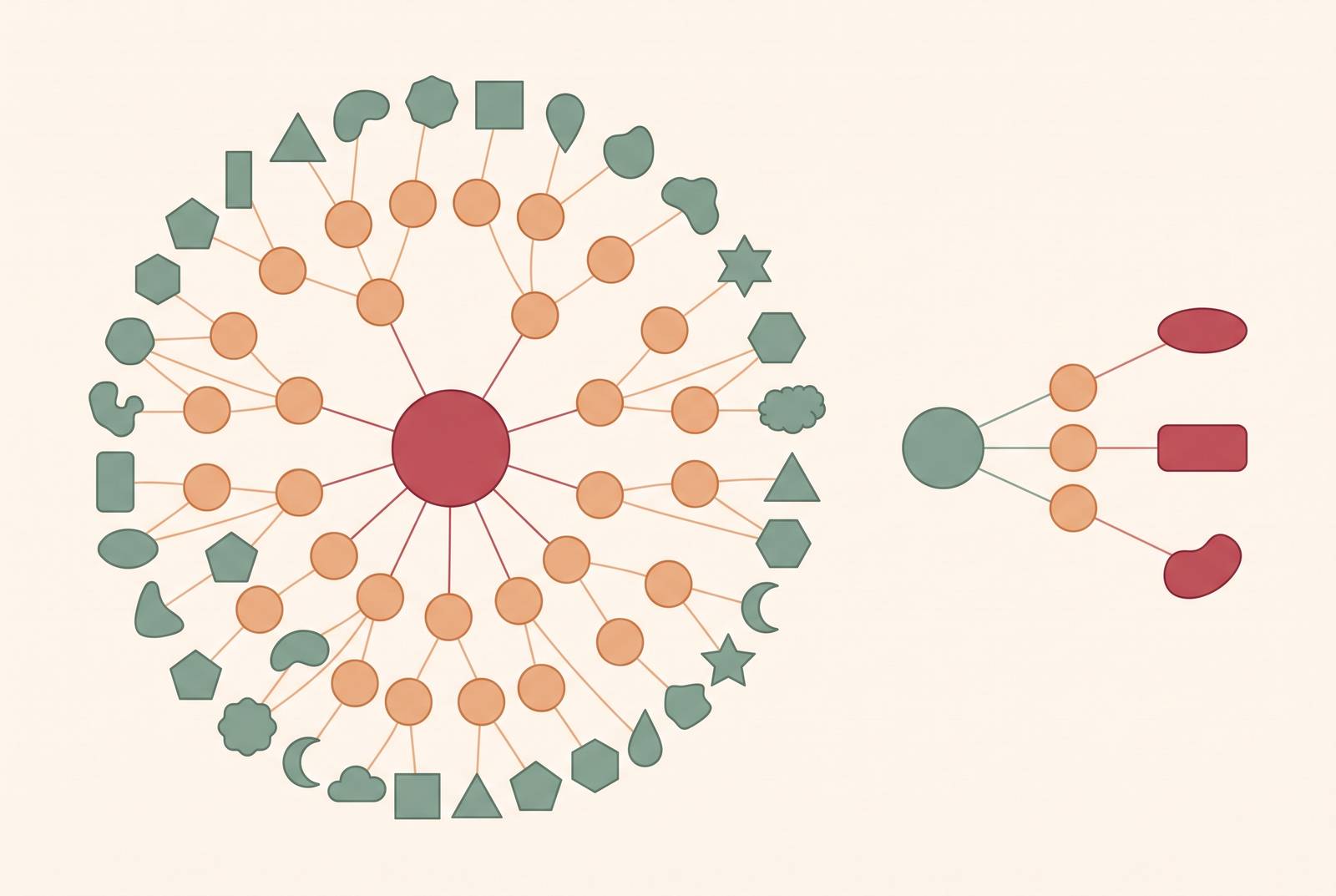
Every stem cell falls somewhere on a scale that runs from totipotent to pluripotent to multipotent, and where a given cell lands determines what it can and cannot become. Totipotent cells sit at the top of that scale. Only the zygote and its earliest blastomere descendants qualify, and they can build an entire organism, including extraembryonic tissue like the placenta, not just the body that results from it. Pluripotent cells come from the inner cell mass of the blastocyst a few days later, and they can turn into any of the three germ layers, ectoderm, mesoderm, and endoderm, but they've lost the ability to make the placental and cord tissue that totipotent cells still can. Multipotent cells sit a rung below that: they're locked into a related family of cell types tied to one tissue or organ system, and they can't jump lineages the way pluripotent cells can. Perinatal tissues, as this article lays out, don't fit neatly into just one of these tiers. Different sources within the same birth tissue, cord blood, placenta, amniotic fluid, are at different points on this scale, and getting the classification right matters for anyone trying to figure out what a given perinatal product is actually capable of doing.
Perinatal products and their tissue sources
Perinatal stem cells come from tissue collected around the time of birth, shortly before or shortly after, from material that would otherwise get thrown away. That sourcing detail matters beyond logistics: because the tissue is discarded regardless, using it for stem cell recovery avoids the ethical fight that surrounds embryonic stem cell research.
The tissue comes from three general areas, amniotic fluid and membrane, the placenta, and the umbilical cord. Each of those breaks down further. Placental tissue is split by anatomical district into the amnion (the amniotic membrane itself), the chorionic villi, and placental blood vessels and associated fractions. The umbilical cord splits into two very different compartments: cord blood, which holds the hematopoietic fraction most people associate with cord blood banking, and Wharton's jelly, the gel-like connective tissue found inside the cord. Each of these six or so sub-sources carries its own cell population, its own marker profile, and, as it turns out, its own potency classification. Treating "perinatal stem cells" as one category glosses over real differences between what a chorionic villus sample can do and what Wharton's jelly can do.
The default "multipotent" label for perinatal cells is accurate but incomplete
Most sources say perinatal stem cells are multipotent. That's the standard classification, and it's not wrong. Perinatal stem cells differentiate into a range of subtypes within mesodermal lineages, and unlike embryonic stem cells, they can't divide indefinitely once they're in a culture dish. New York State's stem cell research program, NYSTEM, lists cord blood stem cells explicitly as multipotent, using them as something close to the textbook example of what an adult-type stem cell does.
The lineages that back up this classification are well established: osteoblasts for bone, chondrocytes for cartilage, adipocytes for fat, myocytes for muscle. That's a real, working repertoire, but it's also a fixed one. A mesenchymal stromal cell (MSC) from perinatal tissue remains confined to its mesodermal lineage repertoire regardless of its developmental age.
The label runs short, though. Research on these cells increasingly places their differentiation potential somewhere between embryonic stem cells and adult somatic stem cells, not squarely at the adult end of the spectrum. That middle position matters because a flat "multipotent" tag, while defensible as shorthand, misses something the underlying biology is trying to say.
The epigenetic and metabolic evidence that complicates a clean multipotent classification
Gaggi and colleagues looked directly at this middle-ground question, and what they found doesn't fit comfortably inside the standard multipotent box. Perinatal stem cells showed low expression of the classic pluripotency genes, NANOG, OCT4, SOX2, and C-KIT, which is what you'd expect from a multipotent cell. But when the researchers checked the DNA-methylation patterns at the promoters of those same genes, the perinatal cells looked only marginally different from human induced pluripotent stem cells (hiPSCs). The genetic machinery for pluripotency wasn't methylated shut the way it would be in a fully committed adult cell.
That gap between gene expression and promoter accessibility points to a specific mechanism: post-transcriptional regulation. The study found that a specific microRNA moved in the opposite direction from the stemness markers, which lines up with a model where the stemness-associated genes are being suppressed after transcription rather than blocked at the genetic level. The genes are there, and the genetic material around them is still open enough to read, but something downstream is keeping the proteins from getting made in any quantity.
The metabolic side of the same study adds another wrinkle. Perinatal stem cells showed redox activity comparable to, and in some measures higher than, hiPSCs, which suggests a metabolic profile closer to pluripotent cells than the marker data alone would imply. At the same time, the same research points to shorter telomere lengths and different patterns of oxidative metabolism between hiPSCs and the fetal tissue-derived cells, factors that could cap how far these cells can actually differentiate regardless of what their epigenetic profile suggests is possible. The picture is one of some pluripotent-like features held in reserve rather than hidden pluripotency waiting to be unlocked. It's a cell type with some pluripotent-like features held in reserve, and other, separate biological constraints keeping it from acting on them.
Human amniotic epithelial cells: the perinatal source with the strongest pluripotency-adjacent evidence
Of all the perinatal sources, human amniotic epithelial cells (hAECs) come closest to blurring the multipotent-pluripotent line, and the reason traces back to where they come from developmentally. hAECs arise from the epiblast, the embryonic layer from which the inner cell mass is derived, which puts their origin story much closer to pluripotent cells than to the mesenchymal stromal cells found in cord tissue or placenta.
The marker profile backs that up. hAECs express OCT4, SOX2, NANOG, SSEA3, SSEA4, TRA1-60, REX1, and E-cadherin, a panel that overlaps heavily with the markers used to identify human pluripotent stem cells (hPSCs). And the functional evidence goes further than markers alone: hAECs can differentiate into cell types from all three germ layers, endoderm, mesoderm, and ectoderm. That three-germ-layer range is, by definition, outside the boundaries of standard multipotent behavior.
The cells also hold onto this profile in culture, at least for a while. Through passages P0 through P3, hAECs kept expressing OCT4, SOX2, NANOG, TFE3, KLF4, SSEA3, SSEA4, TRA-1-60, and E-cadherin. When exposed to specific growth factors and small molecules, they went on to express markers tied to cortical progenitors and neurons, TBR2, OTX2, NeuN, and beta-III-tubulin, showing they can be pushed down a directed neural path in the lab. None of this makes hAECs pluripotent stem cells in the strict sense. But among perinatal sources, they carry the strongest evidence that the potency ceiling sits above where a simple multipotent label would put it.
Wharton's jelly MSCs: well-characterized multipotency with advantages over adult sources
Wharton's jelly is the gel-like connective tissue packed inside the umbilical cord, sitting between the amniotic epithelium on the outside and the umbilical blood vessels on the inside. It's become one of the more heavily used sources for regenerative medicine and tissue engineering work, and its classification isn't in dispute the way hAECs invite dispute. Wharton's jelly MSCs (WJ-MSCs) are multipotent, full stop, and they're also hypoimmunogenic, so they don't provoke much of an immune response even when used across donors.
Their differentiation lineages match the standard MSC playbook: osteoblasts, chondrocytes, and adipocytes, the same mesodermal repertoire seen in bone-marrow-derived MSCs. What sets WJ-MSCs apart isn't a different tier of potency, it's a set of practical advantages over adult MSC sources like bone marrow or adipose tissue. Isolating them doesn't require a donor procedure, since the tissue is collected after birth rather than pulled from a living adult through a biopsy or liposuction. They proliferate faster in culture than adult-sourced MSCs, and they show a broader differentiation capacity as well. Their lower immunogenicity makes them a better fit for allogeneic use, where the recipient isn't the person who supplied the tissue. And because the source tissue is discarded birth material rather than embryonic tissue, WJ-MSCs carry none of the ethical baggage tied to embryo-derived cells. None of that changes their classification. It does change why so many labs reach for Wharton's jelly over an adult MSC source when multipotency is all a project needs.
Amniotic fluid stem cells: multipotent classification with contested marker evidence
Amniotic fluid stem cells (AFSCs) share a lot of overlap with stem cells pulled from bone marrow, adipose tissue, placenta, and umbilical cord, but their developmental origin gives them a few things those other sources don't have: enhanced multipotency within their lineage, tissue-specific genetic profiles, and the ability to grow into colonies starting from a single cell. That last trait, clonogenicity from a single cell, is a meaningful functional marker in its own right, separate from whatever surface markers the cell displays.
There's a practical upside to this source, too. Amniotic fluid can be collected during a routine amniocentesis, the cells are non-tumorigenic, they proliferate quickly even after being passaged many times in culture, and they hold up well in vitro.
The marker data, though, pushes back hard against any claim that AFSCs are pluripotent. NANOG, SOX2, KLF4, and DNMT3b all showed up in the positive control (human embryonic stem cells) but not in the amniotic fluid stem cells tested. The one partial exception was REX1, which did show expression. One marker out of four doesn't move the needle on classification. AFSCs stay multipotent. Anyone pointing to REX1 alone as evidence of pluripotency is reading one data point while ignoring three that say otherwise.
Cord blood hematopoietic stem cells: multipotent, lineage-specific, and numerically rare in the harvest
Cord blood hematopoietic stem cells (HSCs) are multipotent within one lineage, and that lineage is blood. They give rise to red blood cells, white blood cells, and platelets, covering the full range of what the hematopoietic system needs, but they don't cross over into unrelated tissue types. That's the defining trait of a multipotent cell: real range, but range with a fence around it.
The number that matters most here isn't about what the cells can do, it's about how many of them are actually in the sample. Cord blood cells expand easily once isolated, but the stem cell fraction itself makes up less than 1% of the cells collected in a typical cord blood unit. The therapeutic fraction makes up only a small part of what gets frozen and stored.
Developmentally, HSCs trace back to the hemangioblast, a proposed mesodermal precursor whose role remains a subject of ongoing research. Their self-renewal capacity is genuine, but it stays inside hematopoietic borders. Under normal conditions, these cells don't produce neural tissue, epithelial tissue, or anything else outside the blood system. That boundary is the whole story behind cord blood banking as a proposition: whatever a stored cord blood unit can eventually treat, it's bounded by that small hematopoietic fraction and the lineage it belongs to, not by some broader, more flexible differentiation potential the marketing around banking sometimes implies.
Potency classification's role in driving the FDA regulatory pathway for perinatal products
None of this is academic. Potency classification determines which FDA pathway a perinatal product has to go through, and the gap between those pathways is enormous in terms of cost, time, and evidentiary burden.
Products classified as 361 HCT/Ps receive a lighter regulatory touch, generally tied to minimal manipulation and homologous use, and do not require pre-market approval. Products that fall outside those criteria are regulated as 351 HCT/Ps, treated as biologics and subject to the full pre-market approval process the FDA applies to drugs.
Pluripotent stem cell-derived products generally face the more demanding regulatory pathway. The manufacturing steps needed to take a pluripotent-derived cell line and turn it into something clinically usable typically involve extensive processing, making the lighter regulatory track difficult to qualify for.
Amniotic membrane makes the line between the two pathways easy to see in practice. Used as a replacement covering, for example over a wound, it can qualify as a 361 product, since the tissue is doing roughly the same structural job it did before it was recovered. The moment a product built from the same starting material gets marketed for a broader therapeutic claim that goes beyond that structural, homologous role, it risks crossing into 351 territory, requiring clinical trials, a biologics license application, and years of additional review. The potency classification a company settles on is the fact that decides which regulatory road the product has to travel. It's the fact that decides which regulatory road the product has to travel.
Sources
- Pluripotent and Multipotent Stem Cells
- Epigenetic Features of Human Perinatal Stem Cells Redefine Their Stemness Potential
- stemcell.ny.gov
- What are Perinatal Stem Cells? Your Definitive Guide
- Current Status and Future Prospects of Perinatal Stem Cells
- Multipotent fetal stem cells in reproductive biology research
- Frontiers | Advances in human amniotic placenta membrane-derived mesenchymal stromal cells (hAMSCs) for regenerative medicine: enhancing therapeutic potential with biomaterials and scaffolds
- pmc.ncbi.nlm.nih.gov